A Warm Embrace in Tel Aviv
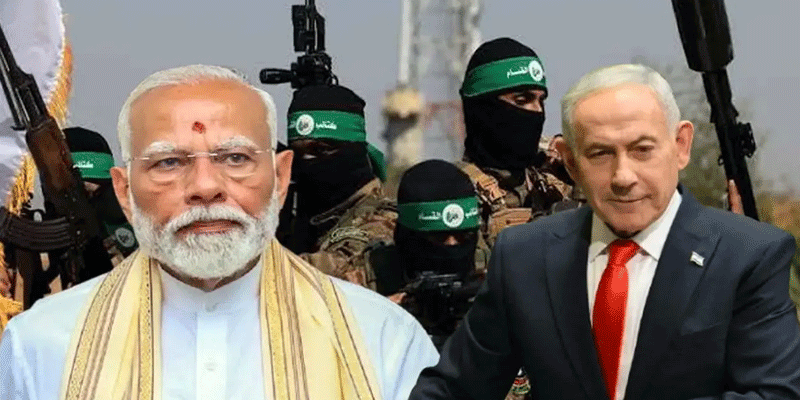
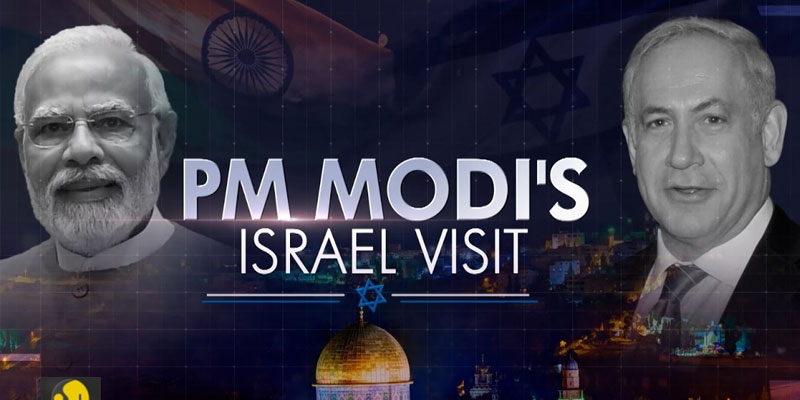
Prime Minister Narendra Modi began his two-day 2026 state visit to Israel with a display of warmth that instantly set the tone for the engagement. Welcomed by Israeli Prime Minister Benjamin Netanyahu, Modi’s arrival was marked by effusive hugs, laughter, and a symbolic car ride together through Tel Aviv. In a gesture that blended diplomacy with personal flair, Netanyahu donned a saffron “Modi jacket,” underscoring not only camaraderie but a deeper cultural resonance.
The optics were powerful, but they reflected more than personality politics. Much like Modi’s visible rapport with leaders such as Vladimir Putin and Emmanuel Macron, the bonhomie with Netanyahu illustrates how personal chemistry has become a force multiplier in India’s foreign policy. What began as discreet defense cooperation after full diplomatic ties were established in 1992 has now matured into a confident, public, and strategic embrace.
A Strategic Agenda for a Changing World
Behind the warmth lay a carefully structured agenda shaped by geopolitical flux. Central to discussions were joint ventures in artificial intelligence, cybersecurity, and agricultural technology—fields where Israel’s innovation ecosystem aligns seamlessly with India’s scale and digital ambition. The collaboration aims not merely at technology transfer but co-development, ensuring long-term strategic autonomy.
Defense cooperation remains a cornerstone. From drone technologies to advanced missile systems, both sides signaled a push toward co-production aligned with India’s self-reliance drive. Notably, Israel’s support during the Kargil War laid the foundation for trust in security cooperation; this visit elevates that legacy into structured, future-facing defense manufacturing.
Economic targets are equally ambitious. Bilateral trade, currently robust, is projected to reach $20 billion by 2030, driven by semiconductors, water management systems, and climate-resilient agriculture. In parallel, discussions around the India-Middle East-Europe Economic Corridor (IMEEC) reflect shared interests in secure supply chains and energy transit, particularly amid instability in West Asia.
Diplomacy with Balance: Israel, Palestine and Multipolarity
Navigating Middle East tensions requires nuance. India continues to maintain a principled position supporting dialogue and a two-state solution, even as it deepens ties with Israel. In his historic address to the Knesset—becoming the first Indian Prime Minister to do so during a second state visit—Modi invoked shared civilizational resilience, from ancient traditions to modern startup cultures.
He referenced Holocaust remembrance and the scourge of terrorism, drawing parallels to India’s own cross-border security challenges, while subtly reaffirming support for peaceful coexistence. This calibrated messaging underscores India’s broader foreign policy shift: engaging all sides without succumbing to binary alignments.
For India, closer ties with Israel help counterbalance the China-Pakistan axis, diversify defense imports amid sanctions affecting Russian supplies, and accelerate its AI and semiconductor ambitions. For Israel, India represents a democratic, demographically dynamic partner in Asia—an anchor in an evolving multipolar order.
Soft Power and Cultural Diplomacy
Beyond strategy, the visit showcased cultural warmth. A private dinner featuring Indian comfort foods—tadka dal, thepla, and dhokla—prepared by Israeli chefs symbolized people-to-people bonds. The culinary diplomacy evoked Modi’s Gujarat roots while reinforcing India’s soft power appeal.
Such gestures, though seemingly symbolic, strengthen public goodwill and normalize a partnership once conducted largely behind closed doors.
A Partnership Poised for Exponential Growth
Modi’s Israel visit blended personal rapport with hard-headed statecraft. It formalized an upgraded strategic partnership that spans defense, technology, trade, and global governance. Challenges remain—domestic criticism in India over Palestine and external pressures from Western powers—but the trajectory is unmistakable.
By pairing hugs with high strategy, the visit signals that India-Israel relations have entered a new phase: visible, ambitious, and central to the architecture of a multipolar world.
(With agency inputs)