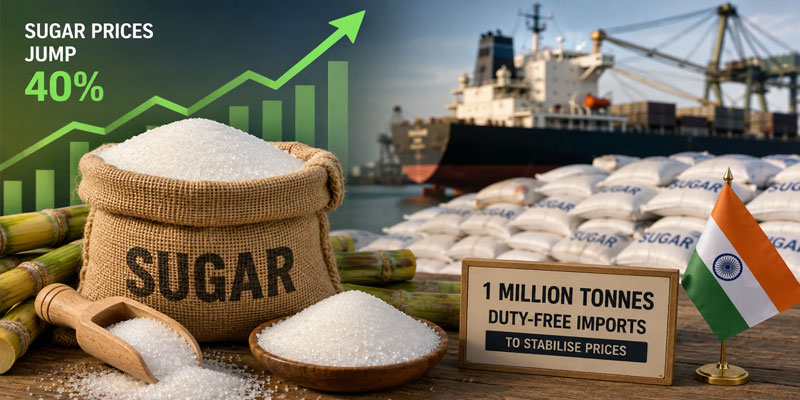
India has taken the unusual step of allowing duty-free imports of 10 lakh metric tonnes (1 million metric tonnes) of raw sugar until October 31, 2026, in a bid to cool domestic prices that have climbed to a 16-year high ahead of the festive season. The temporary tariff-rate quota (TRQ) marks a significant policy reversal for a country that normally imposes a 100% import duty on raw sugar to protect domestic producers. By permitting eligible mills and refiners to import, process and sell refined sugar within India, the government aims to increase supplies before Diwali demand peaks.
A Rare Shift in Sugar Policy
India is one of the world’s largest sugar producers and has often been an exporter. Against that backdrop, opening the domestic market to duty-free imports is an exceptional intervention designed to address a short-term supply squeeze rather than signal a permanent change in trade policy.
Key Features of the Duty-Free Quota
The new scheme includes several operational conditions intended to ensure that imported sugar reaches consumers quickly.
· Quota: 10 lakh tonnes of raw sugar can be imported at zero duty.
· Validity: The concession remains in force until October 31, 2026.
· Eligibility: Only mills and refiners capable of converting raw sugar into refined sugar can participate.
· Application window: Online applications are open from August 21 to August 28.
· Domestic sale: Sugar refined under the scheme must be sold within India by October 31.
· Port-based refiners: Facilities that traditionally refine imported sugar for export can now sell the refined output domestically.
The compressed timeline is intended to ensure that additional supplies enter the market during the crucial festival period.
Why Sugar Prices Reached a 16-Year High
The price surge resulted from multiple overlapping pressures rather than a single supply failure.
· Low opening stocks: India entered the 2026–27 sugar season with opening stocks estimated at 40–42 lakh tonnes, with some estimates placing them as low as 32–35 lakh tonnes, compared with roughly 50 lakh tonnes considered necessary before fresh crushing begins.
· Ethanol diversion: Nearly 3 million tonnes of sugar—around 10% of annual production—was diverted for ethanol blending, reducing supplies available for household and industrial consumption.
· Weather concerns: Lower rainfall in Maharashtra and Karnataka raised concerns about future cane availability, prompting markets to anticipate tighter production.
· Festival demand: Purchases by households, sweet makers and food-processing companies traditionally accelerate before Diwali, intensifying pressure on already limited stocks.
· Local market tightness: Wholesale prices rose sharply despite adequate national supply estimates, prompting the government to impose stockholding limits to discourage hoarding.
The scale of the escalation has been dramatic. Prices in Kolhapur, a key trading centre, reportedly jumped from around ₹4,100 per quintal at the start of the monsoon to about ₹6,400 per quintal by August—a rise of nearly 56%.
Domestic and Global Market Impact
The announcement immediately lifted international sugar prices by around 4%, as India unexpectedly returned to global markets as a significant buyer after nearly a decade. International exporters stand to benefit, while domestic coastal refiners could gain from processing imported sugar for local sale.
For Indian mills, however, lower prices could squeeze margins, even as farmers closely watch whether the intervention affects cane payments or future pricing decisions.
Balancing Consumers and Producers
The duty-free import window highlights the government’s delicate balancing act between protecting consumers from food inflation and safeguarding the interests of sugarcane farmers and mills. While the quota is designed to bridge an immediate supply gap before the new crushing season begins, it also exposes deeper structural challenges involving ethanol diversion, weather-related production risks and inventory management.
The real success of the policy will depend not only on faster imports and refining but also on building a more predictable sugar strategy that ensures price stability without undermining long-term agricultural and energy objectives.
(With agency inputs)