A Milestone Birthday for India’s Prime Minister
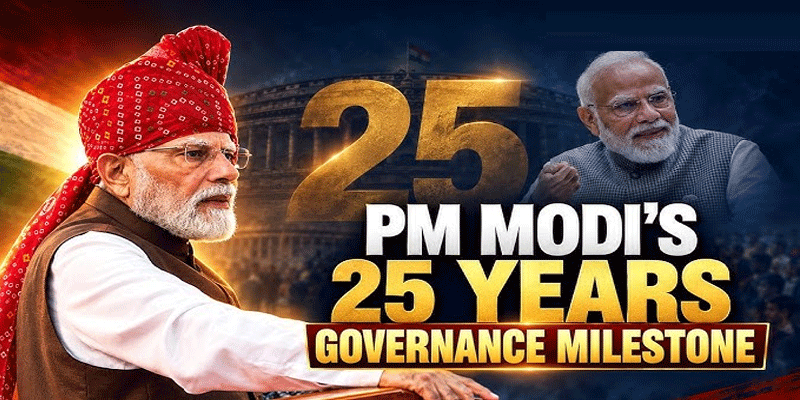
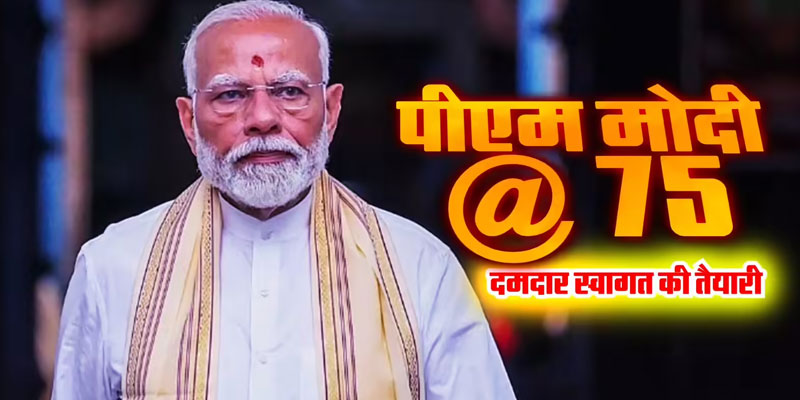
On September 17, Prime Minister Narendra Modi turns 75, marking not just a personal milestone but also a defining moment in India’s political journey. Over the past 11 years at the helm, Modi has reshaped governance, revitalized India’s development agenda, and carved a new place for the country on the global stage. From streamlining administration to pioneering economic reforms and redefining foreign policy, his tenure has been a blend of bold decisions and transformative policies.
Streamlining Governance for Everyday Citizens
When Modi assumed office in 2014 after a landslide mandate, one of his earliest interventions targeted bureaucratic red tape. By allowing self-attestation of documents in place of gazetted officer verification, he reduced the intimidation ordinary citizens felt in dealing with government departments. This small but symbolic step reflected his broader vision of a government that is efficient, less intrusive, and more people-centric.
JAM Trinity: The Digital Leap
In 2015, the JAM Trinity—Jan Dhan, Aadhaar, and Mobile—ushered India into a new era of digital governance. The initiative provided universal access to banking, ensured targeted delivery of subsidies through Aadhaar authentication, and leveraged mobile connectivity for digital payments and service delivery. This combination laid the groundwork for financial inclusion and positioned India as a pioneer in digital transformation among developing nations.
Transparency and Innovation in Public Procurement
Another significant reform came through the Government e-Marketplace (GeM), launched in just five months. By digitizing procurement for government departments and public sector units, GeM introduced transparency, efficiency, and competitiveness in state spending. Tools like e-bidding and reverse e-auctions helped cut costs and enhance accountability in public procurement.
Bold Economic Decisions: Demonetisation and GST
Modi’s economic reforms often carried bold strokes. The 2016 demonetisation of ₹500 and ₹1,000 notes, though contentious, was aimed at curbing black money, counterfeit currency, and corruption while nudging citizens toward digital transactions. The following year, the Goods and Services Tax (GST) replaced a labyrinth of indirect taxes with a unified national tax structure. This marked a watershed in India’s fiscal federalism, simplifying compliance while strengthening Centre–state financial cooperation. More recently, GST 2.0 reforms consolidated tax slabs, further streamlining the system.
Swachh Bharat: A Mission for Collective Responsibility
Few campaigns connected with the public imagination like the Swachh Bharat Abhiyan. Personally spearheaded by Modi in 2014, the movement mobilized millions to take part in cleanliness drives. It not only improved sanitation infrastructure but also reshaped civic consciousness, embedding hygiene and public health into the national development narrative.
Institutional Reform: From Planning Commission to NITI Aayog
The replacement of the Planning Commission with NITI Aayog signaled a break from centralized planning. NITI Aayog was envisioned as a think tank fostering cooperative federalism by involving states in shaping development strategies. By integrating expert advice, citizen feedback, and regional perspectives, it positioned itself as a more adaptive and forward-looking policy institution.
Expanding Horizons: Act East and Neighbourhood First
On the foreign policy front, Modi recalibrated India’s regional and global engagement. The Act East Policy deepened ties with ASEAN nations, emphasizing trade, connectivity, and strategic cooperation in the Indo-Pacific. Simultaneously, the Neighbourhood First Policy strengthened relationships with South Asian nations, highlighting connectivity, cultural exchanges, and economic integration. Both policies underscored Modi’s belief in India as both a regional anchor and a global player.
Self-Reliance Through Atmanirbhar Bharat
The COVID-19 pandemic spurred the Atmanirbhar Bharat initiative in 2020, aimed at building resilience in domestic industries, agriculture, and infrastructure. With an economic stimulus of nearly 10% of GDP, the program sought to reduce external dependencies while boosting local production. It reflected Modi’s philosophy of aligning economic growth with strategic autonomy.
Security First: A Firm Stand Against Terrorism
Modi has consistently emphasized a tough stance on terrorism. From cross-border strikes to unambiguous messaging against nuclear blackmail, his policies signaled India’s willingness to defend its sovereignty proactively. His security approach aligned with a broader doctrine of assertive foreign policy and strengthened India’s global image as a decisive power.
Electoral Record: An Unbroken Winning Streak
Remarkably, Modi has never lost an election in his career spanning over five decades. From managing the 1987 Ahmedabad municipal polls to winning successive Gujarat assembly elections in 2002, 2007, and 2012, he built a formidable political base. His leadership extended nationally with decisive victories for the BJP and NDA in the 2014, 2019, and 2024 Lok Sabha elections. By winning three consecutive terms, he joined Jawaharlal Nehru as one of the few leaders to achieve this rare feat.
Modi at 75—A Legacy Still Unfolding
As Narendra Modi turns 75, his journey offers a compelling narrative of political resilience and transformative leadership. His policies have redefined governance, modernized the economy, and amplified India’s global stature. Yet, challenges remain—from bridging socio-economic divides to ensuring sustainable growth in a rapidly changing world. Modi’s legacy, however, is already etched: a leader who combined grassroots connect with global vision, and one who made “India First” not just a slogan but a central philosophy of governance.
(With agency inputs)