Pakistan Power Shake-Up?
Political uncertainty has once again gripped Pakistan after Interior Minister Mohsin Naqvi declared that the country's existing governance system has "collapsed" and can no longer effectively address its deep-rooted challenges. His remarks have fueled widespread speculation about possible tensions within Prime Minister Shehbaz Sharif's government, with reports suggesting growing differences between the ruling coalition partners. Although no official move to replace the government has been announced, Naqvi's comments have intensified debate over whether Pakistan is heading towards another political realignment.
Naqvi in Spotlight Amid Rift Buzz
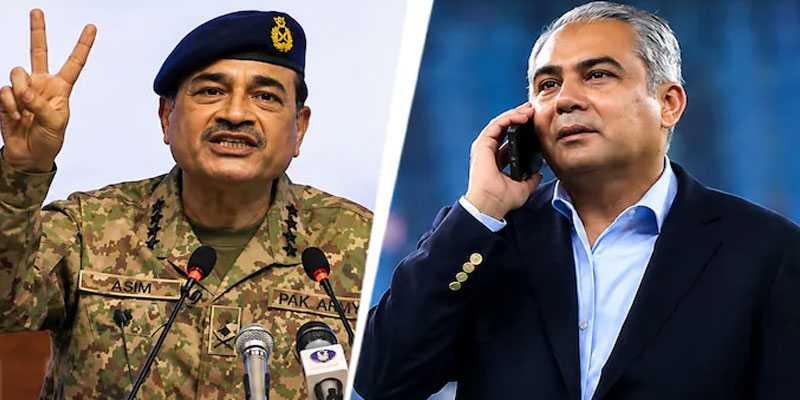
Mohsin Naqvi made the remarks while addressing the Pakistan Economic Summit 2026 in Islamabad. During his speech, he argued that Pakistan has spent decades debating the same economic and administrative issues without implementing meaningful structural reforms.
According to Naqvi, unless the country fundamentally overhauls its governance model, Pakistan will continue to face identical crises even ten years from now. He proposed a national political dialogue involving all major parties to consider creating additional provinces and administrative units, arguing that the existing provincial framework is struggling to provide efficient governance, employment opportunities and quality public services for an expanding population.
The proposal immediately attracted attention because Naqvi is regarded as one of Pakistan's most influential political figures, with perceived close ties to the military establishment. Besides serving as Interior Minister, he also heads the Pakistan Cricket Board, further enhancing his national profile.
Why the Remarks Have Triggered Political Buzz
In Pakistan's political landscape, a senior cabinet minister publicly declaring that the governance system has failed carries significant political implications. Analysts view the statement as more than policy criticism, particularly at a time when the ruling coalition of the Pakistan Muslim League-Nawaz (PML-N) and the Pakistan Peoples Party (PPP) faces increasing internal strains.
Recent reports indicate that PPP leaders have cautioned the PML-N about difficulties in managing the Senate without continued coalition support. Former President Asif Ali Zardari has reportedly urged Naqvi to help bridge differences between the coalition partners, and the Interior Minister is expected to hold discussions with Prime Minister Shehbaz Sharif to ease political tensions.
These developments have fueled speculation that Naqvi could either emerge as a key mediator within the ruling alliance or play a larger role in any future cabinet reshuffle. However, such possibilities remain speculative, with no official confirmation from the government or military establishment.
Latest Developments and Possible Outcomes
Despite mounting political chatter, there is no verified evidence that Prime Minister Shehbaz Sharif's government is facing an imminent collapse or that Pakistan's military has initiated any plan for a political transition. Nor has the government publicly treated Naqvi's remarks as a direct challenge to the Prime Minister's leadership.
The immediate focus remains on coalition management. If Naqvi succeeds in reducing friction between the PML-N and PPP, his political influence could grow substantially. Conversely, if his comments deepen mistrust within the alliance, the Prime Minister may be compelled to reconsider ministerial responsibilities or undertake a cabinet reshuffle.
Beyond politics, Naqvi's proposals also touch upon Pakistan's broader structural challenges, including fiscal stress, mounting debt, unemployment, weak governance and persistent security concerns. While creating additional provinces could improve administrative efficiency and regional representation, it could also trigger fresh disputes over political authority, resource allocation and provincial boundaries.
A Debate That Could Shape Pakistan's Political Future
Mohsin Naqvi's intervention reflects growing frustration with Pakistan's governance model rather than conclusive evidence of an imminent change in government. Nevertheless, his remarks have exposed underlying tensions within the ruling coalition and reignited debate over institutional reform and power-sharing. Whether this episode leads to meaningful structural changes or merely remains another chapter in Pakistan's turbulent political history will depend on how the government manages coalition dynamics, economic challenges and the competing influence of civilian and institutional power centres in the months ahead.
(With agency inputs)