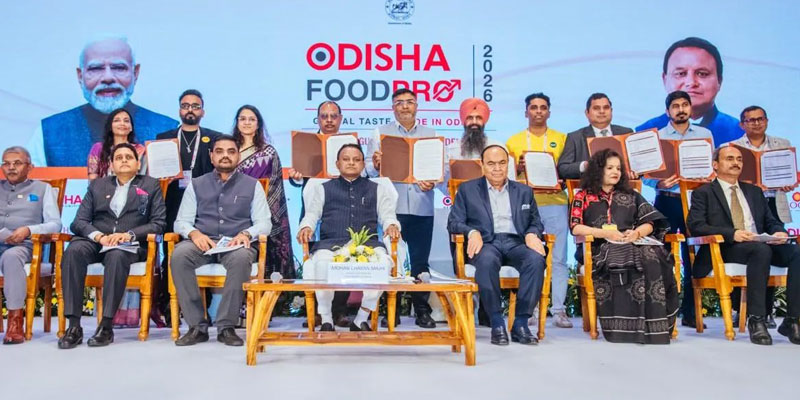
₹43,437 Crore Proposals Mark Major Food Investment Push
Odisha Food Pro 2026, the state’s first sector-focused investment roadshow outside Odisha, secured ₹43,437 crore in investment proposals and 27 MoUs on its opening day in New Delhi on August 7. Led by Chief Minister Mohan Charan Majhi, the initiative seeks to transform Odisha’s agricultural, fisheries and food-processing strengths into engines of jobs, value addition and inclusive growth.
From Raw Produce to Value-Added Industry
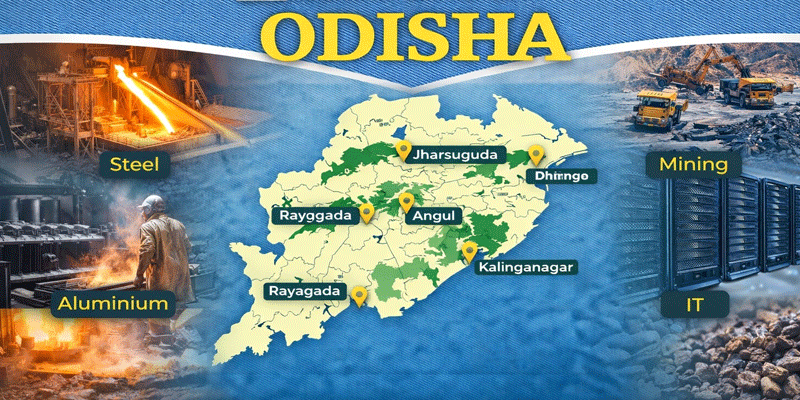
Odisha has traditionally built its industrial identity around minerals, metals and heavy manufacturing. The food-processing push represents an effort to diversify the economy by capitalising on the state’s coastline, agricultural resources, horticulture, millets and growing logistics network.
The New Delhi roadshow also signals a more targeted approach to attracting investment by directly engaging national companies, food majors, logistics players and financial institutions.
Big Commitments and Thousands of Jobs
· The 27 MoUs signed with companies across agro-processing, marine products, beverages, millets, horticulture, packaged foods and cold-chain logistics represent proposed investments of ₹41,748 crore, with an estimated 35,252 jobs.
· In addition, Odisha received 12 Investment Intent Forms worth ₹1,689 crore, potentially generating another 8,064 jobs.
· Together, the commitments amount to ₹43,437 crore and about 43,316 employment opportunities—an impressive opening-day proposition.
Building Odisha as Eastern India’s Food Hub
The state wants food processing to become an anchor industry for its larger ambition of becoming a leading manufacturing and food-processing gateway in eastern India.
The strategy rests on three broad priorities.
· First is the Eastern Hub Vision, using food processing to attract ancillary manufacturing, warehousing and logistics around ports and industrial corridors.
· Second is Inclusive Growth, with Farmer Producer Organisations, MSMEs and women-led self-help groups being connected to organised supply chains.
· Third is Ecosystem Upgrades, including specialised food parks, modern cold chains, testing laboratories and certification facilities capable of supporting domestic and export markets.
Why Marine, Millets and Cold Chain Matter
The sectoral composition is particularly significant. Marine processing can leverage Odisha’s long coastline and fisheries, while millets and horticulture can connect tribal and smallholder farmers with organised markets.
Cold-chain and logistics investments could address one of agriculture’s persistent challenges—post-harvest losses—while improving farmers’ price realisation and making Odisha’s products more competitive nationally and internationally.
Investment Intent Must Become Ground Reality
The headline figures are encouraging, but MoUs and investment intents are not the same as actual investment. Their success will depend on financial closure, land availability, approvals, infrastructure and timely project execution.
For Odisha, the real test will be whether these investments create durable value chains that include farmers, FPOs, MSMEs and SHGs rather than concentrating benefits among large industrial players.
From Investment Proposals to Odisha’s Food Future
Odisha Food Pro 2026 marks a potentially important shift in the state’s economic strategy. If the proposed investments translate into functioning plants, modern logistics and stronger rural supply chains, food processing could emerge as a second major growth engine alongside Odisha’s traditional metals and minerals sectors.
The larger opportunity is clear: turning Odisha from a supplier of raw agricultural and marine commodities into a high-value food-processing hub for eastern India and global markets.
(With agency inputs)