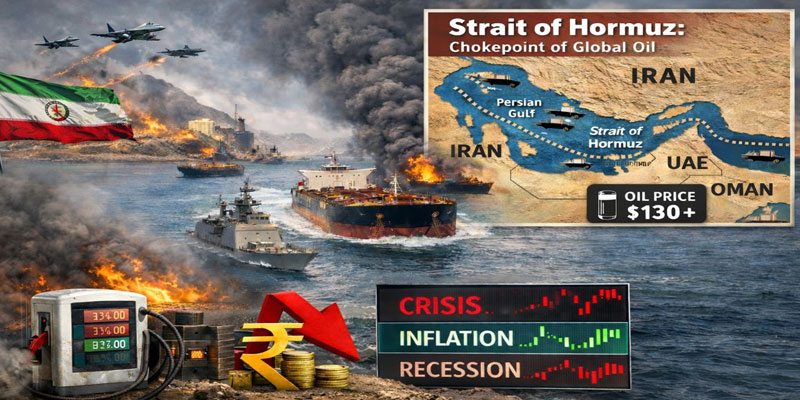
Hormuz Uncertainty Lifts Global Oil Prices
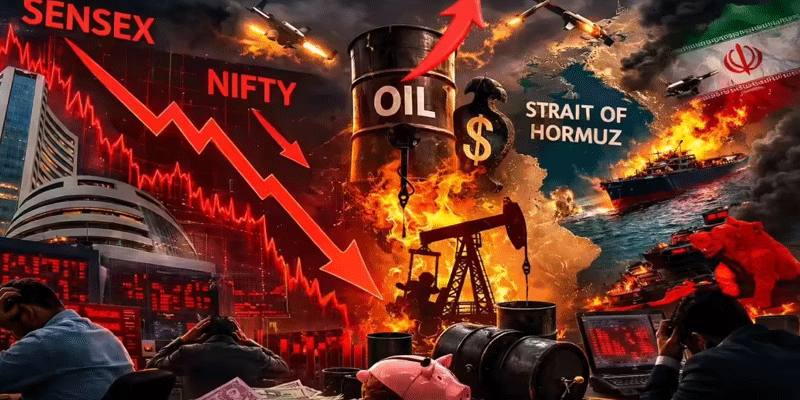
Oil prices climbed on Monday as Iran tied the full reopening of the Strait of Hormuz to broader concessions from the United States, raising fresh concerns about the future of commercial shipping through one of the world’s most critical energy chokepoints. Brent crude for October delivery rose 1.09% to around $84.46 a barrel, while West Texas Intermediate gained 0.78% to approximately $78.79.
The immediate trigger was Iranian Foreign Minister Abbas Araghchi’s statement that Tehran and Oman were close to finalising arrangements for shipping through the strait, but that unrestricted reopening would depend on additional US concessions. The distinction is crucial: a technical agreement on shipping routes may not automatically restore normal global traffic.
Iran Links Shipping to a Wider Political Deal
Tehran’s conditions go well beyond maritime navigation. Iranian demands reportedly include an end to US military threats and operations, lifting sanctions, removing the US naval blockade, releasing frozen Iranian assets, compensation for war damage and guarantees against further attacks.
This effectively transforms Hormuz from a shipping issue into a bargaining instrument in the wider US-Iran confrontation. Iran’s position also creates uncertainty over whether any Oman-mediated arrangement would provide unrestricted passage or simply establish controlled transit routes. The absence of a shared interpretation means traders cannot assume that a diplomatic announcement will immediately translate into normal shipping.
Why Markets Fear a Prolonged Disruption
The Strait of Hormuz connects the Persian Gulf with the Gulf of Oman and Arabian Sea and carries an enormous share of global energy trade. Around 20 million barrels of oil and petroleum products passed through the waterway daily in 2024, equivalent to roughly one-fifth of global petroleum-liquids consumption. About one-fifth of global LNG shipments also use the route.
Alternative pipelines operated by Gulf producers can absorb only part of these flows. Consequently, markets respond not merely to actual supply shortages but to the risk of tanker delays, rerouting, higher insurance costs and possible attacks on commercial vessels.
Regional Tensions Add Another Risk Layer
The uncertainty comes amid continuing military tensions across the region. The Iran-aligned Houthis have also claimed an attack on Saudi Aramco’s Jazan refinery, although the claim remains disputed. Even unverified attacks can raise the market’s risk premium when regional energy infrastructure is already under pressure.
For major Asian importers such as India, China, Japan and South Korea, prolonged disruption could mean higher crude bills, transport costs, currency pressure and renewed inflation. European markets could likewise face higher LNG prices if Qatari shipments are affected.
The Next Move Could Decide Prices
The most likely immediate scenario is continued volatility rather than an unlimited price surge. If Oman-mediated arrangements produce credible guarantees for unrestricted shipping, crude prices could retreat quickly. But if Tehran maintains its broader political demands, negotiations could stall and the risk premium could rise further.
Hormuz Has Become a Geopolitical Lever
The central question is whether Washington and Tehran can separate freedom of navigation from their larger political confrontation. Until that distinction is secured, every diplomatic setback can become an energy-market shock, making the Strait of Hormuz not merely a shipping route, but one of the most powerful bargaining levers in the global economy.
(With agency inputs)