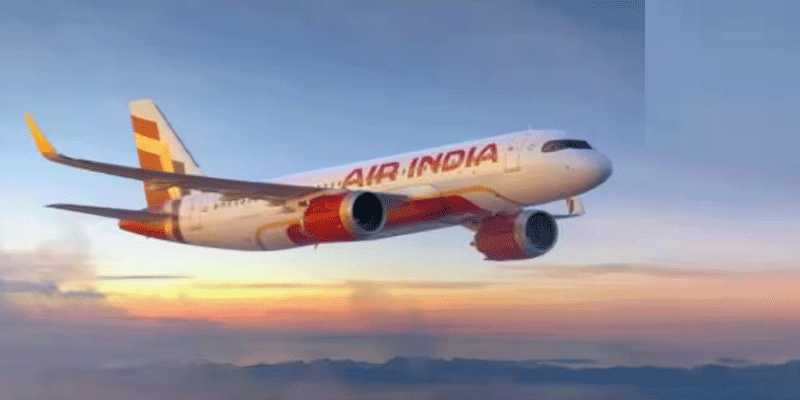
Air India is facing regulatory scrutiny after three Italian nationals reportedly travelled from Delhi to Munich without undergoing mandatory departure immigration clearance. The incident, which occurred on September 4, has raised questions over passenger-handling procedures, coordination between airline ground staff and immigration authorities, and the safeguards governing domestic-to-international connections at Delhi airport.
What Happened at Delhi Airport?
The three passengers had travelled from Amritsar to Delhi on Air India flight AI-1115, which arrived at around 12:50 am on September 4. They were booked on Lufthansa flight LH-763 to Munich, scheduled to depart at 1:45 am.
Instead of leaving the domestic arrival area and completing immigration before proceeding to the international departure section, the passengers were reportedly directed towards the international transfer area. They subsequently reached the departure gate and boarded their Lufthansa flight without completing the required immigration process.
In effect, they departed India without the immigration clearance normally required for an international journey.
How Did the Passengers Bypass Immigration?
The apparent lapse has been linked to confusion surrounding Air India’s “Easy Connect” hub-and-spoke arrangement. Under this system, eligible passengers travelling internationally through Delhi from certain domestic airports can complete immigration at their originating airport and transfer directly to the international departure area.
However, the Amritsar-Delhi-Lufthansa connection involved in this case was reportedly not covered by the arrangement. The passengers therefore needed to exit the domestic terminal flow at Delhi and undergo immigration before boarding their Munich-bound flight.
According to reports, they had received boarding passes for both sectors at Amritsar. On arrival in Delhi, they were allegedly routed into the international transfer area alongside passengers who were eligible for seamless international connections. The incident points to a possible failure by ground personnel to properly distinguish between the two categories.
Why Is Air India Facing Regulatory Action?
The Ministry of Civil Aviation has issued a show-cause notice to Air India CEO Campbell Wilson, seeking an explanation within seven days. The ministry has described the episode as a serious security and immigration-related lapse and is examining whether administrative or regulatory action should follow.
The incident reportedly involved potential violations of standard operating procedures, including passenger segregation, boarding-pass issuance and coordination with immigration authorities.
For an airline operating major international connections, these procedures are not merely administrative formalities. Immigration clearance represents a critical layer of border control, making any failure particularly sensitive.
Government Examines Wider Security Gaps
The episode has also prompted scrutiny beyond Air India. The Ministry of Home Affairs has reportedly convened discussions involving senior officials from the home and civil aviation ministries to examine how connecting international passengers are handled at major airports.
The focus is likely to extend beyond assigning responsibility to individual employees. Authorities will need to determine whether existing systems, passenger-routing protocols and airline-airport coordination are sufficiently robust to prevent similar incidents.
A Procedural Lapse with Wider Security Implications
The three Italian passengers reaching an international departure gate without immigration clearance may ultimately prove to be an operational oversight rather than deliberate wrongdoing. Yet the incident exposes how confusion within a complex transfer system can create a significant border-security vulnerability.
For Air India, the immediate priority is to establish accountability, strengthen staff training and eliminate ambiguity around eligibility for seamless international transfers. For regulators, the larger lesson is equally important: at India’s busiest aviation hubs, convenience-driven connectivity must never come at the expense of immigration control and national security.
(With agency inputs)