Pakistan Sends Troops, Fighter Jets to Saudi Arabia
Pakistan has reportedly deployed nearly 8,000 troops along with multiple fighter-jet squadrons to Saudi Arabia under a recently activated mutual-defence arrangement, as tensions linked to the Iran war continue escalating across the Gulf. The deployment, confirmed by Pakistani security officials and government sources, is being described as a substantial combat-capable force positioned to support Saudi military infrastructure if the kingdom faces further attacks.
The move represents one of the most visible military expansions of Pakistan-Saudi defence cooperation in recent years. It comes at a particularly sensitive moment when missile and drone attacks linked to the wider Iran conflict have increased fears of a broader regional confrontation targeting Gulf oil facilities and strategic military installations.
The 2025 Mutual-Defence Pact
The deployment stems from a formal defence agreement signed in September 2025 during former Pakistani Prime Minister Shehbaz Sharif’s visit to Riyadh. Under the pact, threats to one country’s security are treated as threats to both, creating a structured framework for military support and joint defensive action.
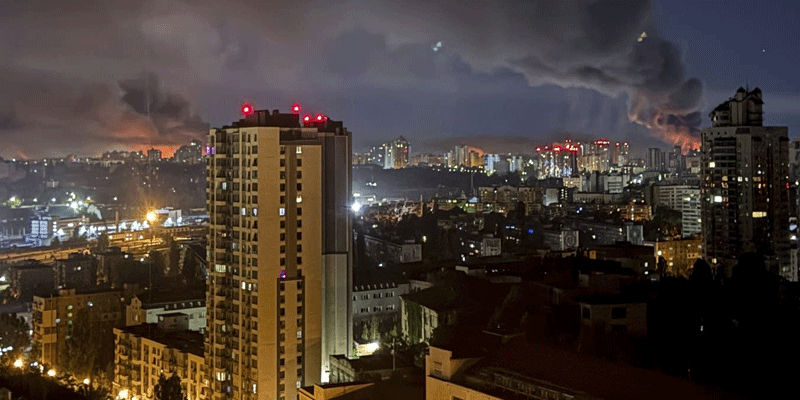
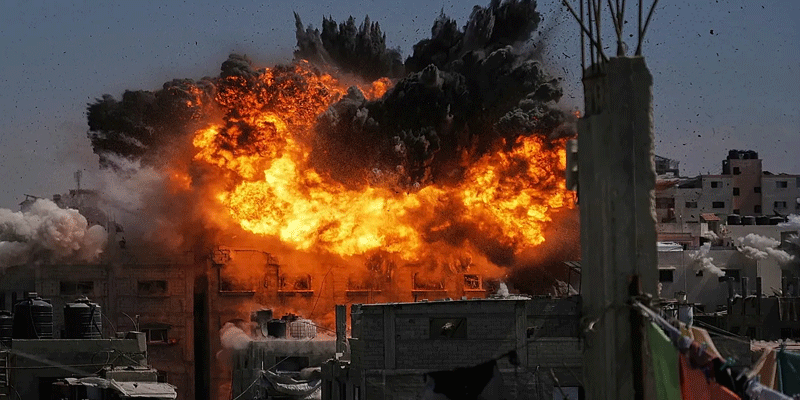
The regional context has become increasingly volatile because of the ongoing US-Iran-Israel confrontation. Iranian-linked missile and drone attacks on Gulf infrastructure, including energy facilities and security compounds, exposed vulnerabilities in Saudi Arabia’s defence network despite extensive American military support.
Nature And Objectives of The Deployment
Reports suggest Pakistani troops and fighter aircraft have already been stationed at key Saudi military hubs, including strategic air bases and defence installations. The deployment reportedly includes air-support units, logistical personnel and combat-ready ground forces.
Officials from both countries insist the mission is defensive rather than offensive. Its stated purpose is to strengthen air-defence coordination, improve military interoperability and help deter future attacks involving drones, ballistic missiles or coordinated aerial operations.
However, even if described as precautionary, the visible deployment of Pakistani fighter jets and troops significantly alters the regional security environment. It sends a strong signal that any escalation against Saudi Arabia could potentially involve not only Saudi and US forces but also Pakistani military assets.
Strategic And Regional Implications
For Pakistan, the deployment reflects a delicate geopolitical balancing act. Islamabad continues to maintain close strategic and economic ties with Saudi Arabia while simultaneously attempting to facilitate diplomatic engagement between Iran and the United States.
The move could also bring economic benefits, including promised Saudi investments and expanded security cooperation. Yet it raises concerns about overstretching Pakistan’s military commitments, especially given security challenges on both its western frontier and eastern border with India.
For the Gulf region, the deployment signals a broader shift in security architecture. Saudi Arabia appears increasingly interested in diversifying its defence partnerships beyond sole dependence on Washington by integrating regional military allies into its deterrence framework.
A New Layer in Gulf Power Politics
Pakistan’s deployment to Saudi Arabia marks more than a routine military arrangement; it reflects the rapidly evolving security landscape created by the Iran conflict. As regional tensions intensify, Gulf states are strengthening defensive alliances and building multi-layered deterrence systems to protect energy infrastructure and strategic assets.
Whether this deployment stabilises the region or further sharpens geopolitical divisions will depend largely on how the Iran crisis unfolds. For now, Pakistan’s visible military presence has added a significant new dimension to the Gulf’s already fragile balance of power.
(With agency inputs)