Global Companies Face Mounting Losses from Iran Conflict
The economic fallout from the Iran war is rapidly spreading far beyond the Middle East, with global corporations already absorbing more than $25 billion in conflict-related losses. A review of company disclosures across the United States, Europe and Asia paints a stark picture of how soaring oil prices, disrupted shipping routes and fractured supply chains are reshaping the global business environment.
The crisis intensified after Iran’s strategic pressure on the Strait of Hormuz disrupted one of the world’s most critical energy corridors. As oil shipments slowed and insurance premiums surged, Brent crude prices spiked sharply, pushing transportation, manufacturing and logistics costs higher across industries. What began as a geopolitical confrontation has now evolved into a worldwide corporate earnings shock.
How The $25-Billion Corporate Bill Is Rising
According to corporate disclosures, at least 279 companies have warned investors that the Iran conflict is affecting profitability. The estimated $25-billion burden includes higher fuel costs, rerouted shipping expenses, production slowdowns and inflation-linked operating pressures.
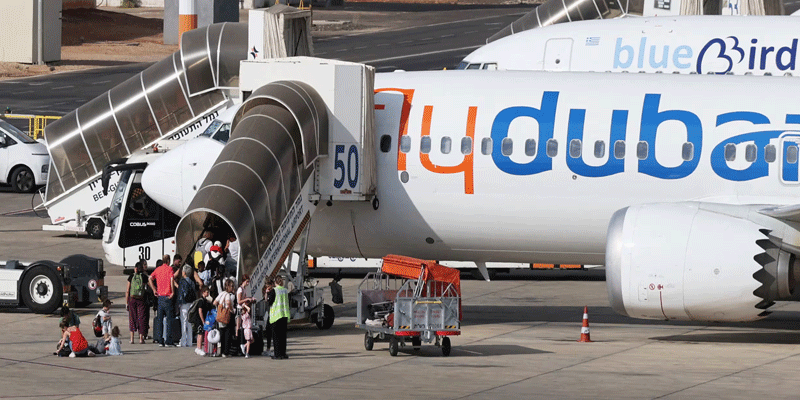
The airline industry has emerged as the worst-hit sector. Global carriers estimate nearly $15 billion in additional fuel and rerouting expenses as airlines avoid conflict-prone Gulf airspace and longer alternative routes increase operating costs. Ticket prices have consequently risen across international travel markets.
Major multinational corporations have also issued sharp warnings. Toyota has projected a potential $4.3-billion hit to profits, while Procter & Gamble estimates roughly $1 billion in post-tax earnings losses due to rising logistics and raw-material costs.
Consumer-facing businesses are also under pressure. McDonald's has warned of long-term inflationary stress caused by disrupted trade routes and transportation expenses, reflecting how deeply the energy crisis is now affecting everyday retail economics.
Oil Prices and Supply Chains Under Strain
The sharp rise in crude prices has particularly affected energy-intensive sectors such as chemicals, manufacturing, industrial materials and transportation. Companies dependent on petrochemical products are witnessing rapid increases in production costs because many industrial inputs are directly linked to oil derivatives.
European firms have been especially vulnerable. German tyre manufacturer Continental AG expects losses exceeding 100 million euros beginning from the second quarter due to rising crude-linked raw material prices.
At the same time, shipping bottlenecks and freight delays are disrupting supply chains globally. The effective instability around the Strait of Hormuz has increased insurance costs for cargo movement and slowed delivery schedules for goods ranging from electronics to food products.
Retailers and consumer-goods manufacturers now face a difficult balancing act — either absorb rising costs and reduce profits or pass them on to consumers already struggling with inflationary pressures.
Why The Full Economic Impact Is Still Emerging
Despite mounting corporate warnings, global stock markets have remained relatively resilient so far because many firms were initially protected by fuel hedging contracts and earlier inventory planning. However, analysts believe the worst effects may only begin appearing in second-quarter earnings.
Financial institutions and market strategists have already lowered profit-growth expectations for industrial, consumer and manufacturing sectors in the United States, Europe and Japan. As existing hedges expire and elevated energy prices persist, companies may face deeper profitability erosion later in 2026.
The broader concern is that sustained geopolitical instability could transform temporary disruptions into a prolonged inflationary cycle affecting investment, employment and global growth.
A Regional Conflict with Global Economic Consequences
The Iran war has demonstrated how deeply interconnected the global economy has become. A conflict centred in the Gulf is now directly influencing airline fares, supermarket prices, industrial production and investor confidence across continents.
The current $25-billion corporate loss estimate is unlikely to represent the final cost. If energy markets remain unstable and shipping disruptions continue, businesses worldwide may confront a far more prolonged earnings and inflation crisis in the months ahead.
(With agency inputs)