Russia Kills 17 in Major Strike on Kyiv Region
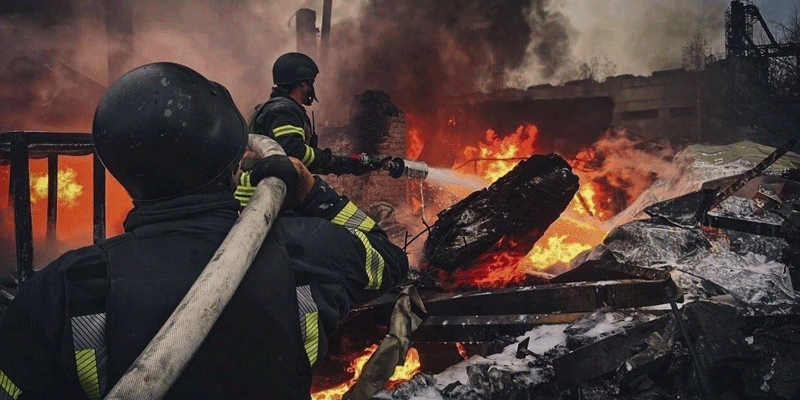
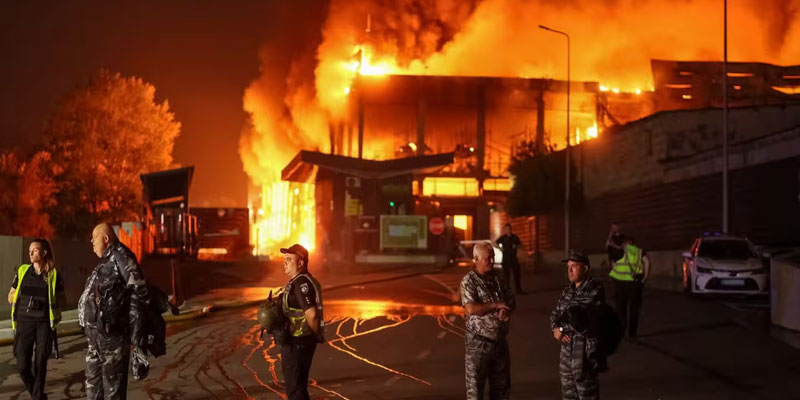
Russia launched one of its deadliest missile and drone attacks on Ukraine this year, killing at least 17 people and injuring dozens in an overnight barrage that struck Kyiv and surrounding districts. According to Ukrainian authorities, the attack damaged warehouses, logistics facilities, transport infrastructure and a railway station, disrupting critical civilian supply networks. Russia's Defence Ministry, however, maintained that the strikes targeted logistics hubs allegedly supporting Ukraine's military operations. The latest assault underscores how the conflict has evolved beyond the battlefield into a sustained campaign against infrastructure, supply chains and air defence capabilities.
A War That Has Shifted Beyond the Frontlines
Since Russia launched its full-scale invasion of Ukraine in February 2022, the conflict has steadily transformed from conventional territorial battles into a prolonged war of attrition. Alongside fighting on the frontlines, both sides have increasingly targeted strategic infrastructure, including energy facilities, transportation networks and logistics hubs that sustain military operations and civilian life.
For Ukraine, maintaining railways, warehouses and distribution centres has become essential to ensuring the uninterrupted movement of humanitarian aid, military supplies and essential goods. Consequently, these facilities have emerged as high-value targets in Russia's broader military strategy.
The latest barrage reflects Moscow's continued reliance on ballistic missiles and long-range drones to overwhelm Ukraine's air defence systems while inflicting economic and psychological pressure far from active combat zones.
Conflicting Narratives Over the Targets
President Volodymyr Zelenskyy said the principal targets were warehouses belonging to civilian enterprises, transport infrastructure and railway facilities, emphasising that several of the damaged sites had no military connection. He argued that the strikes were aimed at undermining civilian resilience and disrupting everyday economic activity.
Russia's Defence Ministry presented a sharply different account, claiming its forces had successfully struck seven logistics hubs allegedly used for military purposes. According to Moscow, the targets included transport and distribution centres, drone-related components and other dual-use materials supporting Ukraine's defence effort.
These competing narratives have become a defining feature of the war. While Ukraine portrays such attacks as deliberate strikes on civilian infrastructure, Russia maintains that the facilities serve military logistics. The truth often remains difficult to verify independently amid ongoing hostilities.
Air Defence Challenges Grow More Severe
The latest attack has once again highlighted Ukraine's growing struggle to defend against ballistic missile assaults. President Zelenskyy has repeatedly appealed to Western allies for additional Patriot air defence systems and interceptor missiles, warning that dwindling stocks are limiting Ukraine's ability to protect its cities.
Recent attacks have demonstrated the scale of the challenge. In one earlier assault, Ukrainian officials reported intercepting only one out of 27 incoming ballistic missiles, illustrating the immense strain on existing air defence resources. The latest barrage, which resulted in at least 17 deaths and extensive damage, reinforces concerns that continued shortages could expose more civilian infrastructure to devastating attacks.
Logistics Have Become the New Battlefield
The latest Russian strike illustrates how the war's strategic focus has increasingly shifted toward disrupting logistics rather than simply capturing territory. Warehouses, railway stations, transport corridors and distribution networks now play a role as vital as military positions because they sustain both Ukraine's armed forces and civilian population.
As the conflict enters another prolonged phase, the effectiveness of Ukraine's air defence systems will remain central to its resilience. Unless international partners accelerate deliveries of advanced interceptors and missile defence equipment, Russia is likely to continue exploiting this vulnerability through sustained long-range strikes. The latest attack is a stark reminder that in modern warfare, controlling supply chains and protecting critical infrastructure can be as decisive as victories on the battlefield.
(With agency inputs)