Chief Justice Sounds Alarm on WhatsApp’s Data Practices
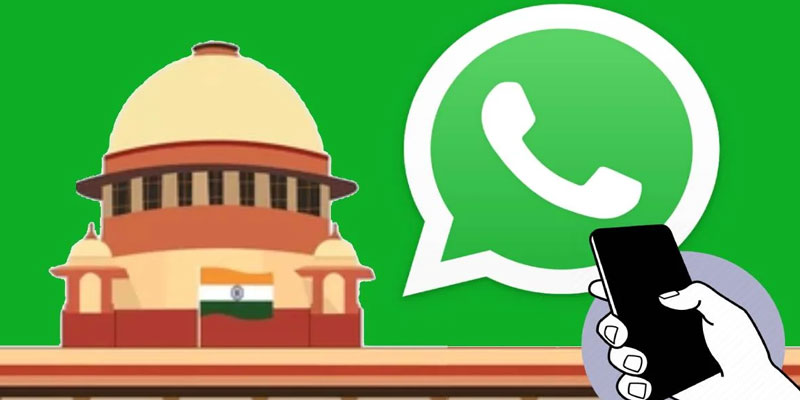
India’s Chief Justice has delivered a pointed warning to Meta Platforms, questioning whether WhatsApp’s controversial privacy policy aligns with constitutional protections and the realities of India’s vast, diverse user base. During a February 3, 2026 hearing, the Supreme Court made it clear that global technology companies cannot impose policies that undermine privacy or exploit asymmetries of power in the Indian market.
A Dispute Revived After Five Years
The Competition Commission of India (CCI) fined Meta ₹213 crore in 2024 for abusing its dominant position, a decision largely upheld by the National Company Law Appellate Tribunal (NCLAT) in 2025. Meta appealed to the Supreme Court in early 2026, arguing that the policy does not violate privacy since personal messages remain protected by end-to-end encryption. Petitioners, however, cite the Supreme Court’s Puttaswamy judgment, asserting that forced data monetisation erodes the fundamental right to privacy under Article 21.
The Court’s Concerns: Consent, Equity, and Constitutionality
Chief Justice Surya Kant’s remarks during the hearing were unusually direct. He questioned whether millions of Indians—many poor, digitally inexperienced, or illiterate—could meaningfully understand dense, legalistic privacy policies. The court also challenged WhatsApp’s “take-it-or-leave-it” consent structure, suggesting it may fall short of informed consent standards.
Solicitor General Tushar Mehta reinforced this view, calling the policy exploitative and arguing that users were effectively coerced into sharing commercial data without alternatives. The bench indicated that compliance with India’s constitutional framework and emerging data protection regime is non-negotiable for foreign platforms operating at scale.
Regulatory Backdrop: Where Competition and Privacy Intersect
The CCI found Meta in violation of competition law, holding that WhatsApp’s dominance left users with no real choice but to accept expanded data sharing. While NCLAT relaxed some restrictions—allowing limited data use after a defined period—it upheld the penalty and mandatory disclosures.
The Supreme Court is now examining how competition law principles intersect with privacy rights, especially in light of the Digital Personal Data Protection Act (DPDPA), 2023, which emphasises free, informed, and granular consent.
What This Could Mean for WhatsApp Features in India
A ruling favouring users and regulators could materially reshape WhatsApp’s product roadmap in India.
· Tighter Data-Sharing Limits
If the court upholds existing directives, WhatsApp may be barred from sharing certain user and business data with Meta platforms for advertising purposes until at least 2029. This would weaken ad personalisation across Facebook and Instagram in India, a critical revenue market for Meta.
· Real Opt-Outs and Policy Redesign
The court may mandate genuine opt-out options without service restrictions, ending all-or-nothing consent. This would require WhatsApp to redesign interfaces and simplify policy language, improving transparency but limiting data availability.
· Feature Constraints or Delays
Meta has warned that restrictions could force it to scale back or delay features dependent on cross-platform data, including advanced business tools, AI-driven services, and monetised Channels. Core messaging and encryption are unlikely to change, as private chats are not directly implicated.
A Defining Test for Big Tech in India
The Supreme Court’s scrutiny signals a broader shift in India’s digital governance—one that prioritises user rights, equity, and constitutional values over unchecked platform expansion. While a final ruling is still pending, the outcome could set a powerful precedent for how global technology firms design products for India.
For WhatsApp, the message is clear: market scale does not override constitutional accountability. How Meta adapts may determine not just the future of its features in India, but the rules of engagement for Big Tech in the world’s largest democracy.
(With agency inputs)