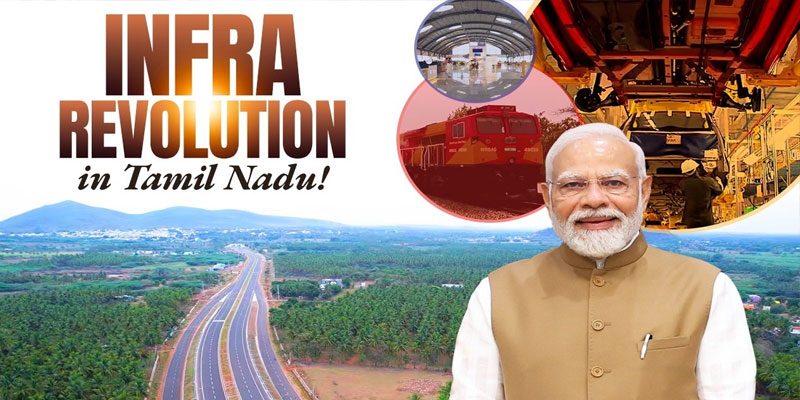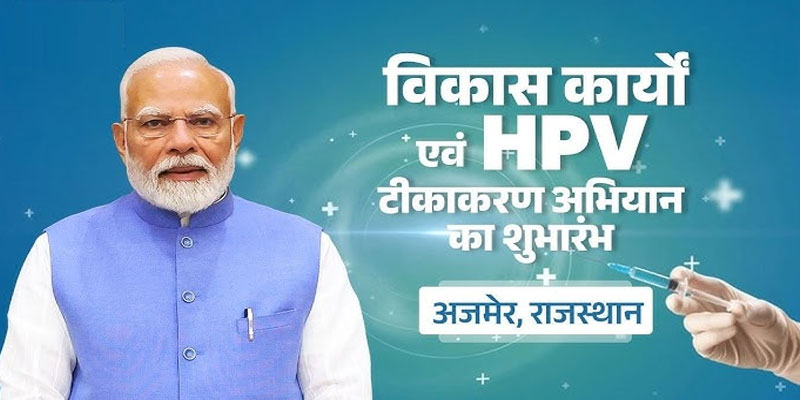
Prime Minister Narendra Modi will visit Rajasthan on February 28 to launch a nationwide HPV vaccination drive and unveil development projects worth ₹16,680 crore. The visit blends public health reform, rural infrastructure expansion and employment generation—signalling a broad-based governance push with both social and economic implications.
A Landmark Public Health Intervention: HPV Vaccination Drive
A centrepiece of the visit is the launch of a nationwide Human Papillomavirus (HPV) vaccination campaign targeting 14-year-old girls. Cervical cancer remains the second-most common cancer among Indian women, claiming an estimated 75,000 lives annually. Nearly 99% of cases are linked to HPV strains, yet vaccination coverage in India remains under 5%, with stark urban-rural disparities.
The campaign will deploy Cervavac, an indigenously developed vaccine by the Serum Institute of India. Priced between ₹200 and ₹400 per dose and designed as a single-shot regimen, the vaccine promises over 90% efficacy. The government aims to vaccinate more than 20 million girls over the next three to five years, primarily through schools and anganwadi networks under the Ayushman Bharat framework.
Beyond disease prevention, the initiative addresses healthcare equity. Urban vaccination rates hover around 15%, while rural coverage remains negligible. If implemented effectively, the drive could prevent over 100,000 cervical cancer deaths per decade while strengthening India’s vaccine self-reliance.
Strengthening Rural Water Infrastructure
Modi will also lay foundation stones for nine water supply packages under the Nonera and Parwan Akawad Major Drinking Water Projects. These initiatives aim to deliver potable water to over one million rural households in Jhalawar and Baran districts.
Costing more than ₹2,500 crore, the projects involve mechanised treatment plants and nearly 500 kilometres of pipeline networks drawing from the Narmada and Parwan rivers. Rajasthan faces chronic water stress, with nearly 40% of villages grappling with fluoride contamination. By expanding piped water access under the Jal Jeevan Mission, the projects align with Sustainable Development Goal 6 on clean water and sanitation.
The construction phase alone is expected to generate around 5,000 jobs, providing short-term economic stimulus alongside long-term public health benefits.
Employment Drive and Youth Outreach
In a further boost to local employment, the Prime Minister will distribute over 21,800 appointment letters across state departments including education, health, police and revenue. This move forms part of the Centre’s broader pledge to facilitate over 10 lakh government job appointments in 2026.
For Rajasthan—where youth unemployment remains a pressing political issue—the initiative reinforces the government’s emphasis on merit-based recruitment through Rozgar Melas. Linking employment with emerging sectors such as green hydrogen and semiconductor manufacturing also signals a forward-looking strategy for workforce absorption.
Development as Political and Policy Statement
The Rajasthan visit encapsulates a governance model that combines welfare expansion with infrastructure build-out and employment generation. While successful implementation—particularly in vaccine distribution and water project execution—will determine long-term impact, the scale and scope of these initiatives underscore an integrated development approach.
If effectively delivered, the HPV campaign could redefine preventive healthcare benchmarks, while water and employment projects strengthen grassroots resilience. Together, they position Rajasthan as a testing ground for a development narrative that blends public health, infrastructure and opportunity into a cohesive policy agenda.
(With agency inputs)