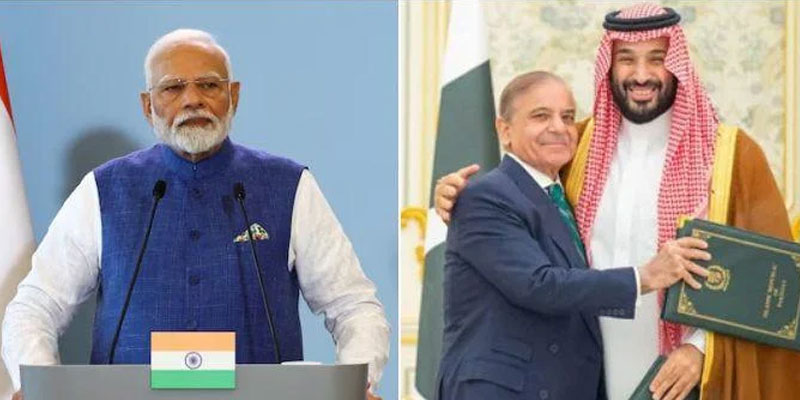
A New Security Compact Emerges
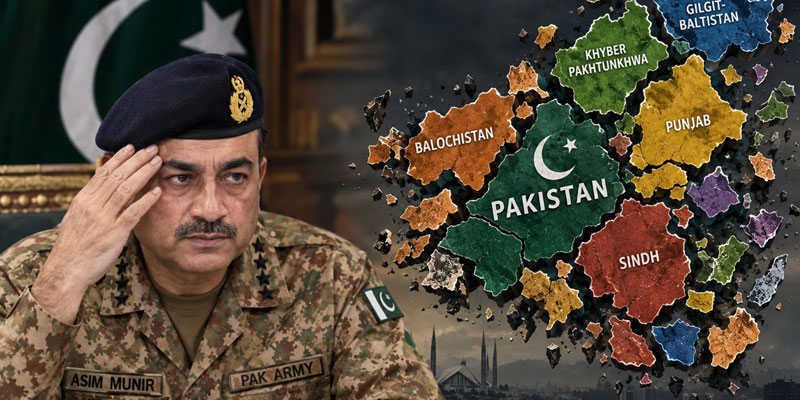
This week, Pakistan and Saudi Arabia unveiled a Strategic Mutual Defense Agreement that could reshape regional security dynamics. Signed during Prime Minister Shehbaz Sharif’s visit to Riyadh, the pact commits both countries to defend one another in case of external aggression. While officials emphasized that the arrangement is “defensive” in nature, its provisions—particularly the suggestion that Pakistan’s nuclear capabilities may extend to Saudi protection—have already sparked geopolitical debate. For India, which remains Pakistan’s primary military adversary, the deal introduces new complications in the evolving balance of power.
Core of the Agreement: A NATO-Style Pledge
Pakistani Defence Minister Khawaja Asif likened the pact to NATO’s Article 5, declaring that “an attack on one is an attack on both.” He confirmed that if India were to initiate hostilities, Saudi Arabia would back Pakistan militarily. Conversely, Islamabad pledged to defend Riyadh if it came under threat.
Importantly, Asif stressed that the pact is not an offensive arrangement but a collective defense mechanism. “We have no intention of using this for aggression,” he clarified, noting that the agreement would only activate in the event of a genuine threat. Nevertheless, the assurance that Pakistan’s nuclear capabilities would be “available” under the pact raised eyebrows, as Islamabad has historically framed its arsenal as India-specific.
Saudi Arabia’s Perspective: Seeking a Shield
From Riyadh’s standpoint, the pact addresses growing anxieties in West Asia. Arab nations, especially Saudi Arabia, perceive mounting risks from Israel’s military dominance and Iran’s ambitions. With Israel remaining the only nuclear-armed state in the region, access to Pakistan’s deterrent—even indirectly—gives Saudi policymakers a stronger security cushion.
A senior Saudi official, when asked whether the deal implies access to a nuclear umbrella, stated, “This is a comprehensive defensive agreement that encompasses all military means.” For Riyadh, therefore, the pact offers not only a military backstop but also the possibility of rallying broader Arab solidarity against common threats.
Pakistan’s Gains: Economic and Strategic Leverage
For Islamabad, the agreement brings tangible benefits. Pakistan has long grappled with an Indian defense budget that is seven times larger, leaving its military under constant financial strain. Tapping into Saudi Arabia’s vast resources provides Islamabad with a chance to partially bridge that gap.
Analysts argue that the pact effectively marries Riyadh’s wealth with Pakistan’s military strength, a symbiosis that serves both nations’ interests. Saudi Arabia, already a longstanding financial lifeline for Pakistan with recent loans such as a $3 billion support package, now emerges as a more formal partner. In return, Pakistan gains stature as a potential security guarantor for the Gulf, expanding its influence beyond South Asia.
Wider Geopolitical Ripples: Israel, Iran, and the Arab World
The agreement is unlikely to remain a bilateral matter. Israel, which has prided itself on its regional nuclear superiority, will watch closely as Pakistan’s capabilities edge into Middle Eastern calculations. Iran, too, will view the deal with suspicion, given its tense relationship with both Riyadh and Islamabad.
Hints of a broader Arab defense coalition were left deliberately vague by Asif, who remarked that “the doors are not closed” to a wider security bloc. This opens the door to speculation about whether other Gulf states may eventually align with the Saudi–Pakistani axis, potentially reshaping the security landscape of West Asia.
Implications for India: New Pressures, Familiar Patterns
For New Delhi, the deal underscores the persistence of Pakistan’s search for external backers to offset India’s economic and military advantage. Although Indian officials downplayed the development, describing it as a formalization of a long-standing understanding, the pact nonetheless creates new pressure points.
First, the prospect—however remote—of Pakistan’s nuclear arsenal extending beyond its traditional India-centric doctrine complicates strategic calculations. Second, the infusion of Saudi funds into Pakistan’s defense system could narrow the budgetary gap, at least at the margins. Finally, the symbolism of an Arab–Pakistan alignment may embolden Islamabad’s diplomatic posture against India, even if practical military cooperation remains limited.
A Complex Equation for India’s Strategy
The Pakistan–Saudi defense pact is a watershed moment in South–West Asian security relations. For Pakistan, it brings both financial stability and expanded geopolitical clout. For Saudi Arabia, it offers reassurance at a time of heightened regional uncertainty. But for India, it represents a new layer of complexity in an already fraught relationship with its western neighbor.
While the pact is explicitly defensive, its implications—especially regarding nuclear availability—cannot be ignored. India may respond by deepening its own partnerships with Gulf states, accelerating defense modernization, and reinforcing strategic ties with the US and Israel. Ultimately, the agreement may not drastically alter the military balance in South Asia, but it signals that Pakistan is once again seeking to balance India through external alliances. For New Delhi, vigilance and strategic flexibility will be crucial in navigating the shifting landscape.
(With agency inputs)