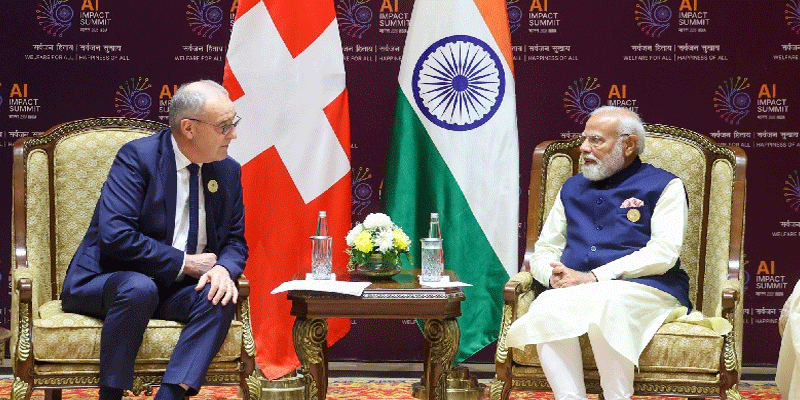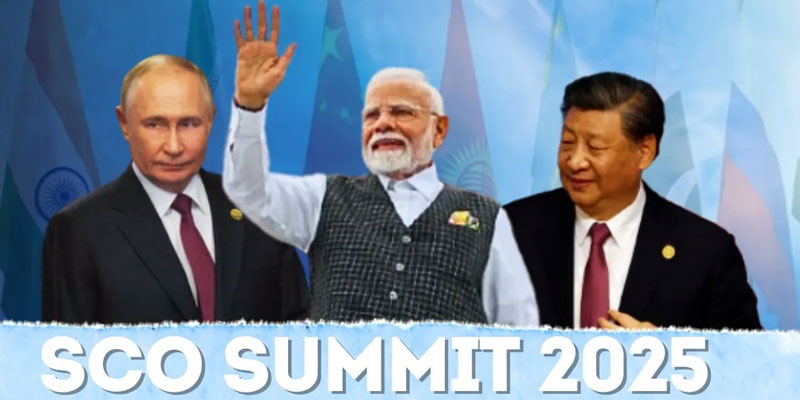
The Shanghai Cooperation Organisation (SCO), founded in 2001, began as a platform for regional security, economic cooperation, and cultural exchange among China, Russia, and Central Asian nations. Over the years, it has expanded in scope and influence, bringing India and Pakistan into its fold in 2017. Now representing almost half of the world’s population, the SCO has become a pivotal arena where global powers converge to debate security challenges, regional connectivity, and economic integration. The 25th edition of the summit held this week was not merely another diplomatic gathering—it was a stage where pressing concerns of terrorism, trade, and geopolitics intertwined against the backdrop of shifting global alliances.
Modi’s Strong Words on Terrorism
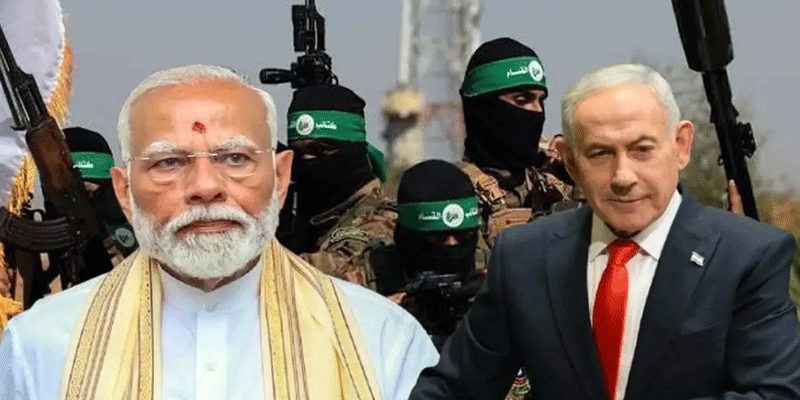
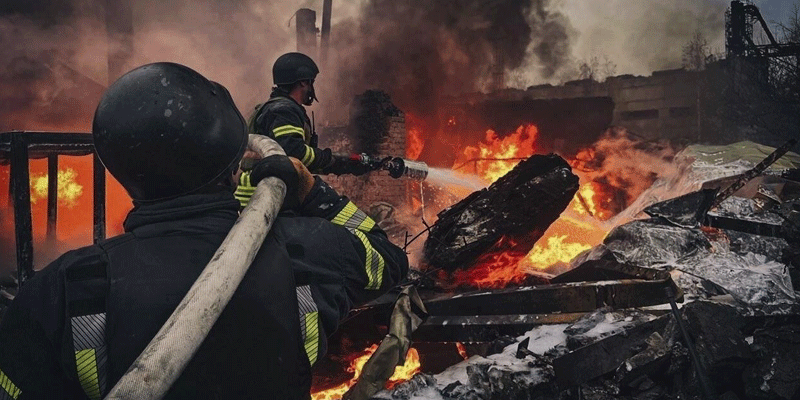
Prime Minister Narendra Modi used his plenary address to deliver a pointed critique of nations that openly shelter and finance terrorism. While not naming Pakistan and China directly, his references were unmistakable. With Pakistani Prime Minister Shehbaz Sharif and Chinese President Xi Jinping in attendance, Modi recalled the recent Pahalgam attack, where militants killed 26 people, and questioned how open sponsorship of terror could ever be justified.
India has long endured the scars of extremism, with four decades of violence leaving countless families broken. Modi’s remarks reflected not only India’s domestic anguish but also a wider call for global accountability. By highlighting terrorism as a “shared challenge for humanity,” he urged SCO members to transcend narrow interests and adopt a united front. His emphasis on eliminating “double standards” resonated at a time when selective condemnation of terrorism has eroded international trust.
Security and SCO’s Relevance
The SCO’s Regional Anti-Terrorist Structure (RATS) has historically worked to counter extremism across borders. Modi stressed India’s leadership in joint information operations targeting groups like Al-Qaeda and its affiliates, alongside initiatives to combat radicalisation and terror financing. His intervention underscored the importance of using multilateral platforms to strengthen cooperation against threats that no single nation can defeat alone.
In doing so, Modi sought to elevate the SCO beyond rhetoric, pressing for action-oriented collaboration. By calling terrorism not just a political problem but a moral affront to humanity, he cast the issue as a litmus test for the credibility of multilateral forums like the SCO.
Connectivity: Trade, Trust, and Sovereignty
Beyond security, Modi placed significant weight on connectivity as a driver of prosperity. He highlighted India’s efforts to expand trade corridors through the Chabahar Port and the International North-South Transport Corridor, both of which link India to Central Asia and beyond. These projects, he argued, are designed not only to enhance commerce but also to build trust among nations.
Crucially, Modi stressed that connectivity must respect sovereignty and territorial integrity—a veiled reference to China’s Belt and Road Initiative (BRI), which India has consistently opposed due to its passage through disputed territory in Pakistan-occupied Kashmir. By underscoring this principle, Modi reaffirmed India’s stance that development projects cannot bypass legitimate borders or compromise the sovereignty of member states.
Opportunity: People-Centric Cooperation
Shifting the conversation toward people-to-people ties, Modi spoke of India’s contributions during its SCO presidency in 2023. New areas such as start-ups, digital inclusion, traditional medicine, youth empowerment, and cultural heritage were introduced into the SCO’s agenda. These initiatives, he explained, were aimed at making the organisation more relevant to ordinary citizens rather than limiting it to high-level diplomatic exchanges.
Modi also proposed a Civilizational Dialogue Forum under the SCO, which would allow countries to share their rich histories, arts, and traditions. Such an initiative could humanise the bloc and reinforce cultural bonds in a region often dominated by strategic rivalries.
India, the US, and the Global Context
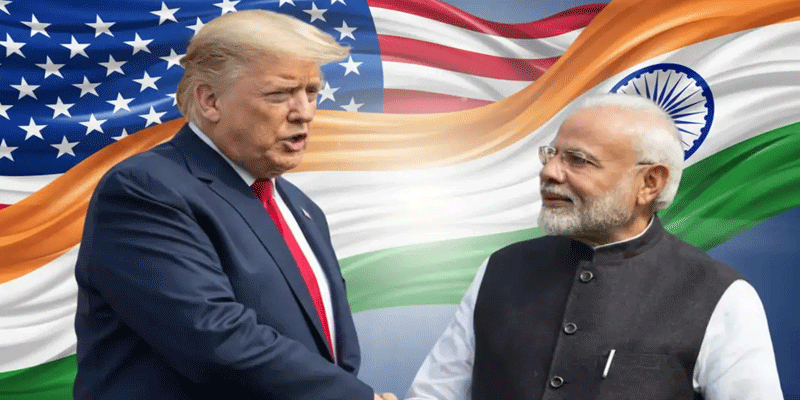
The timing of Modi’s speech is crucial. India currently faces tariff-related tensions with the United States, its strategic partner in the Indo-Pacific. At a moment when Washington’s trade measures have tested India’s economic resilience, the SCO Summit offered New Delhi an alternative stage to showcase leadership and reinforce partnerships across Eurasia. By projecting India as a constructive yet firm voice, Modi sought to diversify India’s diplomatic options while resisting over-dependence on any single bloc.
This balancing act is essential for India’s foreign policy. The SCO, dominated by China and Russia, offers India opportunities to influence continental geopolitics while maintaining its strategic autonomy. Modi’s remarks made it clear that India will neither compromise on sovereignty nor soften its stance on terrorism, even when engaging with powerful neighbours.
A Call for Reform and Multilateralism
The Prime Minister also pushed for broader reform in global institutions, particularly the United Nations, on its 80th anniversary. He argued that outdated structures cannot accommodate the aspirations of the Global South or the vibrant energy of younger generations. Here, Modi positioned the SCO as a potential driver of a more inclusive multilateral order—one that amplifies the voices of emerging economies rather than perpetuating old hierarchies.
A Defining Moment for the SCO
The 25th SCO Summit was more than ceremonial diplomacy. Modi’s speech spotlighted terrorism, connectivity, and opportunity as the three pillars guiding India’s engagement with the bloc. By challenging double standards, advocating sovereignty in connectivity projects, and proposing people-centric initiatives, he sought to redefine the SCO’s relevance in a turbulent world.
For India, this summit carried heightened importance amid trade strains with the US and the persistent challenge of terrorism at home. For the SCO, it was a reminder that its credibility depends on whether it can move from abstract declarations to coordinated action. If the organisation can heed Modi’s call for unity, it could evolve into a meaningful force for peace, stability, and inclusive growth across Eurasia.
(With agency inputs)