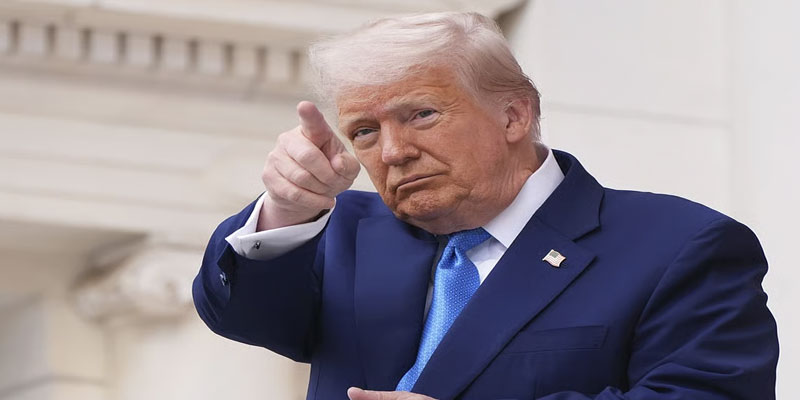
US President Donald Trump is reportedly weighing a new “C5” platform that would bring together the United States, Russia, China, India and Japan—an elite grouping envisioned as a hard-power decision-making forum, especially on Middle Eastern security. The proposal signals a major shift toward great-power concert politics, potentially side-lining existing Western-led institutions.
Reimagining Global Leadership Beyond the G7
According to early drafts of Trump’s National Security Strategy, the C5 would function as a small, top-tier body of major states with the economic mass, military capability and geopolitical leverage to shape high-stakes outcomes. Unlike the G7’s democracy-based membership, this new club would prioritise power over political values.
The initiative would stand above existing groupings—G7, G20, BRICS or the Quad—offering a compact venue for bargaining among giants. Europe’s exclusion is deliberate, reinforcing the idea of a streamlined, leader-driven forum for geopolitical deals.
A key agenda item for the inaugural C5 discussions would reportedly be Middle East stability, including Israel–Saudi normalisation—a domain where Washington, Beijing, Moscow, Delhi and Tokyo each possess distinct influence.
What Are the Potential Challenges for India in Joining the C5?
A Threat to Strategic Autonomy
The C5 concept contradicts India’s long-standing approach of multi-alignment and issue-based coalitions. Joining a US-initiated great-power core that includes China and Russia could constrain India’s flexibility, exposing New Delhi to pressure on sanctions, technology choices or energy dependencies—areas where India prefers maintaining manoeuvrability.
Complications of the India–China Rivalry
India would sit across the table from China within a tightly structured group. unresolved border tensions, Beijing’s alignment with Islamabad, and wider Indo-Pacific contestation mean that India enters the C5 with deep mistrust.
There is also the asymmetry problem: China’s economic and military heft far exceeds India’s, and its partnership with Russia could leave New Delhi and Tokyo structurally disadvantaged in any three-way negotiations.
Tensions with Existing Partnerships
Participation in the C5 may unsettle India’s Western partners, especially within the Quad framework, where India is valued as a counterweight to Chinese influence. Conversely, Russia and China may view India as a US-leaning actor inside the C5, eroding trust within BRICS or the SCO.
This triangulation risk could leave India sandwiched between competing expectations, carrying the burden of mediation without commensurate influence.
Regional and Domestic Repercussions
Regionally, India’s elevation to an exclusive great-power concert could reinforce perceptions in South Asia that New Delhi is aligning with external hegemonic designs. Domestically, India’s participation in a leaders’ forum that includes China could attract political resistance, given the border crisis legacy and economic competition.
How Could the C5 Reshape Existing International Power Structures?
Erosion of Western-Led Multilateralism
A functioning C5 would overshadow the G7 by shifting the locus of strategic decision-making from rich democracies to a mixed group defined by capability. This dilutes the normative emphasis on democratic values and opens space for transactional, interest-driven diplomacy.
Marginalisation of Europe
Europe’s exclusion signals a steep decline in its agenda-setting influence. Key decisions on sanctions, tech standards or Middle East security could be made by the C5 and later imposed on wider partners.
This would weaken transatlantic coherence and encourage Europe to accelerate strategic autonomy plans.
Return of Concert-of-Powers Politics
The C5 resembles a 19th-century-style concert, where a small set of powers negotiate spheres of influence. Bargains over Ukraine, Taiwan, the Middle East or energy routes could emerge, with middle and smaller states adjusting to decisions shaped without them.
Such a framework prioritises power over rules, legitimising Russia and China as equal stewards of the global order despite ongoing revisionism.
Hierarchies within the Global South
By placing India as the sole Global South voice in a top-tier club, the C5 could intensify India–China competition for leadership of non-Western coalitions and challenge India’s positioning as an independent pole.
Opportunity or Strategic Minefield?
The proposed C5 offers India elevation into a rarefied circle of global powers, granting visibility on critical issues like Middle Eastern security. Yet the risks are substantial. Strategic autonomy could narrow, China rivalry could sharpen inside a small-room format, and relations with both the West and Global South could become more complicated.
For the global order, C5 marks a shift from broad, rules-based coalitions to power-centric diplomacy. Whether India should join such an experiment depends on whether the benefits of being at the big table outweigh the dangers of constriction, asymmetry and entanglement in great-power bargains.
(With agency inputs)