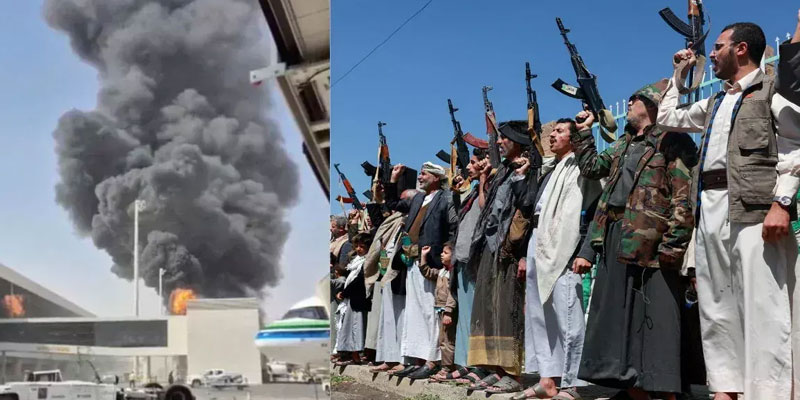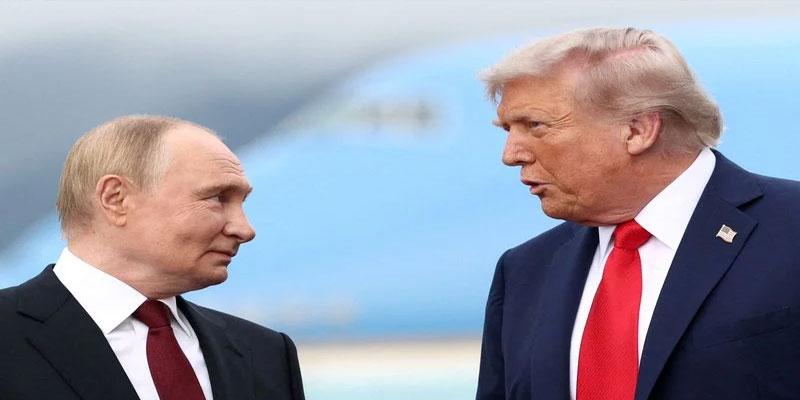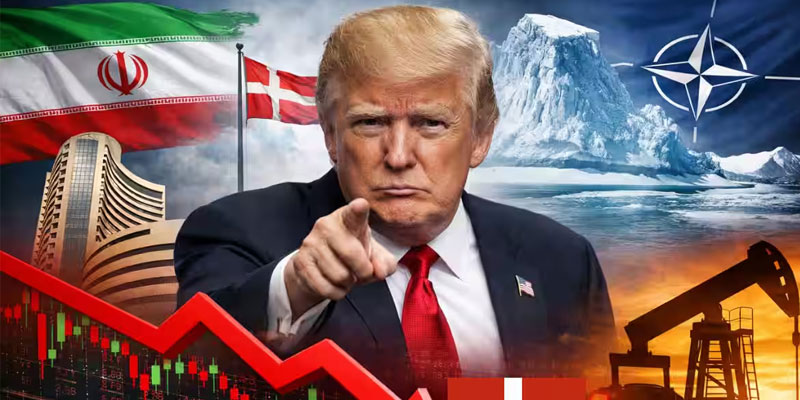
The MOU is dead. Iran is run by sick people.” With these sharply worded remarks, US President Donald Trump signalled what appears to be a decisive shift away from any temporary understanding with Tehran following the recent attack on a commercial vessel in the Strait of Hormuz. His comments, coupled with warnings that the United States could either negotiate or “finish the job,” have heightened fears of a prolonged confrontation between Washington and Iran. Beyond diplomatic rhetoric, the statements have immediate implications for global financial markets, energy prices and countries such as India that remain heavily dependent on imported crude oil.
Diplomatic Breakdown Amid Rising Tensions
Relations between the United States and Iran have deteriorated steadily following a series of military exchanges, attacks on commercial shipping and growing instability across West Asia. Trump has consistently accused Tehran of acting in bad faith, alleging that Iranian actions have endangered international maritime trade, including vessels linked to Indian interests.
His latest assertion that any understanding with Iran is effectively over marks more than a disagreement over recent incidents. By declaring that he no longer wishes to negotiate with what he described as a regime run by “sick people,” Trump has indicated that diplomatic engagement has given way to a strategy centred on deterrence and confrontation.
The timing is particularly significant because the Strait of Hormuz, through which nearly a fifth of the world's oil supply passes, remains one of the most strategically important maritime routes. Any disruption there has the potential to influence global energy markets almost immediately.
Markets React to Escalation Risks
Financial markets responded cautiously to the renewed geopolitical uncertainty. Indian benchmark indices opened lower, with the Sensex falling by more than 400 points and the Nifty declining by over 130 points as investors shifted towards safer assets.
Such reactions are typical during periods of geopolitical stress. Investors tend to reduce exposure to equities amid fears of supply disruptions, rising commodity prices and broader global uncertainty. The immediate concern is not only the military confrontation itself but also its potential impact on oil supplies, shipping routes and international trade.
Why India Is Particularly Vulnerable
India imports the majority of its crude oil requirements, making its economy especially sensitive to sustained increases in global oil prices. Higher crude costs directly affect fuel prices, transportation expenses and manufacturing input costs, placing upward pressure on inflation.
Sectors such as aviation, logistics, paints, chemicals and oil marketing companies often experience margin pressures when energy costs rise sharply. Simultaneously, elevated oil prices can weaken the rupee, increase India's import bill and reduce expectations of interest rate cuts, affecting overall investor sentiment.
Although relatively defensive sectors such as information technology and fast-moving consumer goods may offer some resilience, widespread geopolitical uncertainty typically limits gains across the broader market.
Key Indicators Investors Will Watch
Market participants are now closely monitoring developments beyond political statements. The trajectory of crude oil prices, the extent of disruptions to shipping through the Strait of Hormuz and the possibility of further military action will determine whether volatility remains temporary or develops into a sustained market correction.
Foreign institutional investment flows and currency movements will also remain crucial indicators of investor confidence over the coming weeks.
Geopolitics Shapes Economic Confidence
Trump's remarks underscore how rapidly geopolitical developments can influence financial markets far beyond the immediate conflict zone. For India, the greatest risks stem not from direct involvement in the confrontation but from its economic exposure to higher oil prices, inflationary pressures and volatile capital flows. As events unfold, market stability will depend less on political rhetoric alone and more on whether diplomatic channels can prevent further escalation in one of the world's most strategically significant energy corridors.
(With agency inputs)