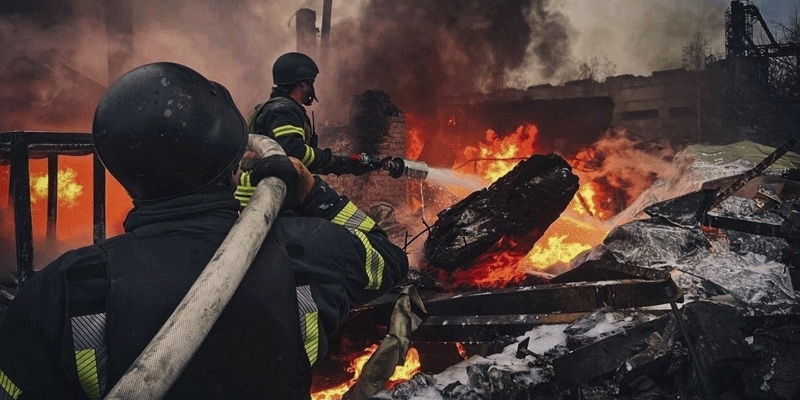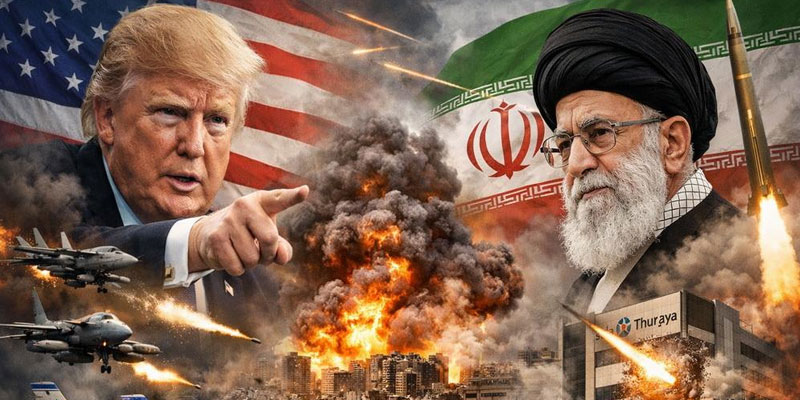
New US airstrikes on Iranian military targets have marked a dramatic escalation in the ongoing conflict, with American forces attacking more than 80 targets—roughly four to five times larger than the previous round of retaliatory strikes. The latest operation focused on Iranian air-defence systems, missile installations, coastal surveillance networks, port infrastructure and suspected drone-launch sites, underscoring Washington's intent to significantly weaken Tehran's military capabilities. The strikes coincided with the revocation of a temporary sanctions waiver that had permitted limited Iranian oil transactions, signalling a coordinated strategy of military and economic pressure.
Escalation Against a Volatile Backdrop
The latest military action follows months of intensifying hostilities involving the United States, Israel and Iran. Since the outbreak of wider conflict in February 2026, the region has witnessed repeated exchanges of missile strikes, drone attacks and assaults on commercial shipping in the Gulf and the Strait of Hormuz. In late June, the United States launched limited retaliatory strikes targeting Iranian radar and air-defence systems after attacks on merchant vessels and the downing of a US helicopter. Those operations were presented as a warning; the latest strikes represent a far broader military campaign.
Broader Military Objectives Take Shape
According to US Central Command, the latest offensive targeted air-defence batteries, command-and-control centres, coastal radar facilities, anti-ship missile capabilities and more than 60 Islamic Revolutionary Guard Corps boats operating near the Strait of Hormuz. The objective appears to be reducing Iran's ability to threaten international shipping lanes and limiting its capacity to launch missile and drone attacks against military and commercial vessels. By focusing on maritime infrastructure and surveillance assets, Washington is seeking to establish greater freedom of navigation through one of the world's most strategically important energy corridors.
Economic Pressure Complements Military Action
Alongside the air campaign, Washington revoked a Treasury licence that had temporarily allowed certain Iranian oil transactions. US officials justified the decision by citing recent attacks on commercial tankers transiting the Strait of Hormuz. The move increases financial pressure on Tehran while simultaneously restricting a key source of government revenue. Together, military strikes and renewed sanctions reflect a dual-track strategy designed to weaken both Iran's operational capabilities and its economic resilience. Oil prices reacted immediately, with markets pricing in higher geopolitical risks and potential disruptions to global energy supplies.
Regional Risks Continue to Mount
Iran has strongly condemned the strikes, describing them as an act of aggression and warning of reciprocal military action should further attacks continue. Such warnings heighten concerns that Tehran could respond through missile strikes, drone operations or proxy groups across the region. Any prolonged confrontation risks disrupting shipping through the Strait of Hormuz, a critical route for global oil exports, while raising insurance costs, freight charges and broader economic uncertainty.
A Dangerous New Phase
The scale of the latest US operation signals a shift from limited retaliation to sustained strategic pressure. While Washington seeks to deter further attacks on commercial shipping and degrade Iran's military capabilities, the combination of expanded airstrikes and tighter sanctions also raises the likelihood of wider regional escalation. As diplomacy struggles to keep pace with military developments, the stability of the Gulf, the security of global energy supplies and the future of any negotiated settlement now hang in an increasingly delicate balance.
(With agency inputs)