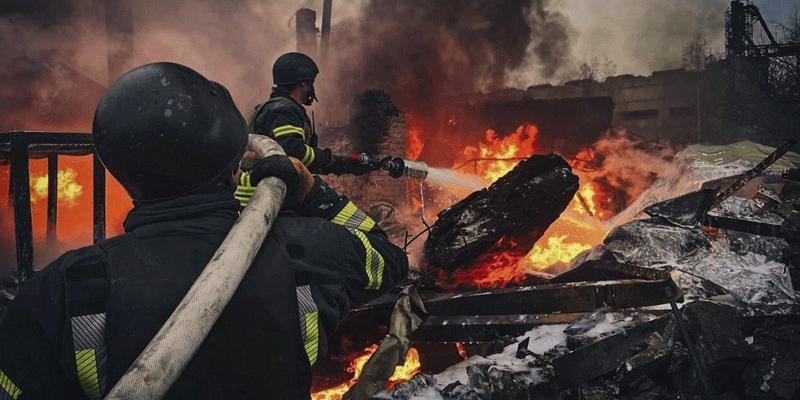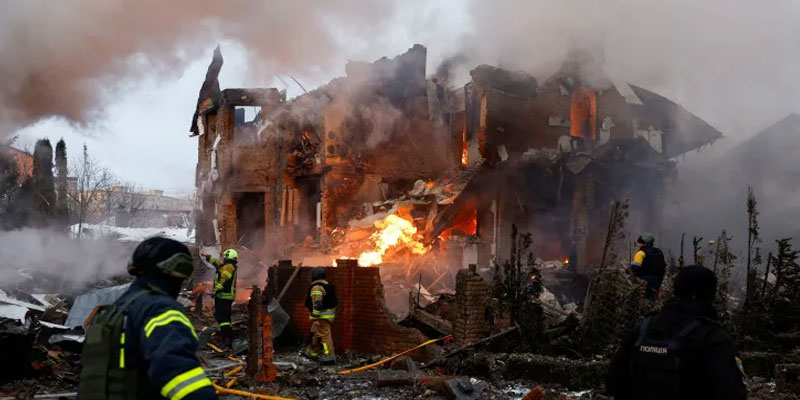
Ukraine’s expanding campaign of mid-range strikes is increasingly delivering a double blow to Russia’s war effort, disrupting both battlefield operations and the logistical networks sustaining Moscow’s offensive. Ukrainian forces are now targeting military infrastructure located roughly 30 to 180 kilometres behind the front lines, using domestically produced drones and longer-range strike systems to weaken Russia’s ability to move troops, store ammunition, and maintain secure rear zones. The strategy is reshaping the battlefield by slowing Russian advances and forcing Moscow to rethink how it protects and sustains its military operations.
Understanding Ukraine’s Mid-Range Strike Strategy
The campaign has emerged as a critical component of Ukraine’s evolving war doctrine. Ukrainian forces are reportedly carrying out more than 160 medium-range strikes every month, with many attacks reaching targets located 120 to 150 kilometres behind Russian-controlled territory or near Russia’s border regions.
The targets are carefully selected for maximum operational impact. Ukrainian strikes have increasingly focused on logistics hubs, fuel depots, ammunition warehouses, repair facilities, drone-control stations, command centres, and air-defence systems protecting Russian rear positions. These attacks occupy an important tactical space between short-range first-person-view drones used near the front and deep-strike systems capable of targeting infrastructure deep inside Russia.
Military analysts describe this as Ukraine’s emerging “middle-strike” doctrine — a strategy designed to systematically dismantle the infrastructure that enables Russia’s offensive operations without relying solely on expensive long-range Western weapons.
How the Strikes Deliver a “Double Blow”
The first major effect of the campaign is tactical disruption. By destroying supply depots, fuel reserves, and troop assembly areas, Ukraine is weakening Russia’s ability to maintain sustained assaults along the front line. Russian brigades facing shortages in ammunition, logistics, or reinforcements are finding it harder to maintain offensive momentum.
The second effect is broader and more strategic. Repeated strikes against Russian radar systems and air-defence platforms are gradually weakening Moscow’s layered defensive shield behind the front. This erosion creates vulnerabilities across command networks, staging zones, and transport corridors that were previously considered relatively secure.
As these “safe zones” shrink, Russia is being forced to relocate infrastructure farther from the battlefield, increasing transport times and logistical strain. The cumulative effect slows operational tempo and compels Moscow to disperse military assets across a much larger area, stretching already pressured resources.
Why Ukraine Is Emphasizing the Campaign
Ukrainian commanders have openly highlighted the importance of the mid-range strike strategy, describing it as a bridge toward deeper and more damaging attacks. By degrading rear-area air defences and command systems, Ukraine aims to create pathways for future long-range strikes against military-industrial facilities, energy infrastructure, and strategic supply chains.
Officials also emphasize that the strikes are psychological as well as military. Persistent attacks deep behind the front line undermine morale among Russian personnel and force commanders to constantly adjust deployments, creating uncertainty and operational fatigue.
Impact on Russia’s Offensive and the Wider War
The growing pressure from Ukrainian strikes appears to be affecting Russia’s battlefield progress. Military assessments indicate that the pace of Russian territorial gains has slowed significantly in 2026 compared with earlier stages of the war. Analysts increasingly link this slowdown to Ukraine’s expanding drone warfare capabilities and its systematic targeting of rear logistics.
The strategy also reflects Ukraine’s broader effort to reduce dependence on fluctuating Western military aid by building indigenous strike capabilities capable of sustaining long-term pressure on Russia.
A Strategic Shift in Modern Warfare
Ukraine’s mid-range strike campaign highlights how modern warfare is increasingly shaped by precision drones, flexible strike systems, and attacks on logistics rather than sheer territorial assaults alone. By targeting the infrastructure that sustains Russia’s offensive machine, Kyiv is not only slowing battlefield advances but also redefining the operational dynamics of the war itself.
(With agency inputs)