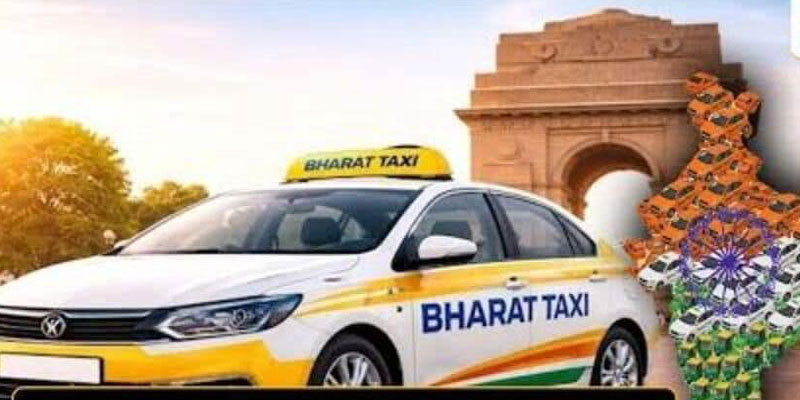
Government-backed ride-hailing platform Bharat Taxi is witnessing rapid adoption, adding nearly 45,000 new users every day, signalling growing momentum for indigenous mobility platforms in India’s evolving digital transport ecosystem.
The surge reflects a combination of policy support, expanding geographic coverage, and rising consumer preference for trusted, locally rooted alternatives. Unlike app-only aggregators, Bharat Taxi operates on a hybrid model that integrates licensed taxi operators across Tier I, II, and III cities, offering intercity, outstation, airport transfers, and local travel services. This model has resonated strongly in regions underserved by traditional ride-hailing giants.
From a policy perspective, Bharat Taxi aligns closely with the government’s broader push for Digital India, Atmanirbhar Bharat, and platform-led inclusion of small transport operators. By onboarding thousands of local drivers and fleet owners, the platform is helping formalise the fragmented taxi sector while improving income visibility and demand predictability for operators.
The daily addition of 45,000 users also highlights a shift in consumer behaviour. Reliability, transparent pricing, customer support, and safety—especially for long-distance and intercity travel—are becoming key differentiators. Bharat Taxi’s focus on pre-booked rides and verified operators reduces uncertainty, an advantage over purely on-demand urban mobility models.
From an industry standpoint, the growth underscores increasing competition in India’s mobility space, where scale alone is no longer sufficient. Platforms that combine technology with regulatory alignment and regional depth are gaining traction. Data-driven route optimisation, digital payments, and customer experience improvements are further strengthening Bharat Taxi’s value proposition.
If sustained, this growth trajectory positions Bharat Taxi as a significant national mobility player—one that could reshape how government-backed digital platforms compete with private incumbents while expanding access to organised transport across India.