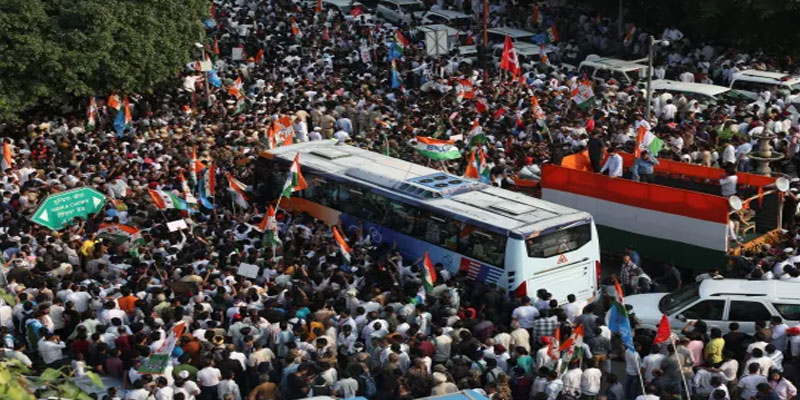
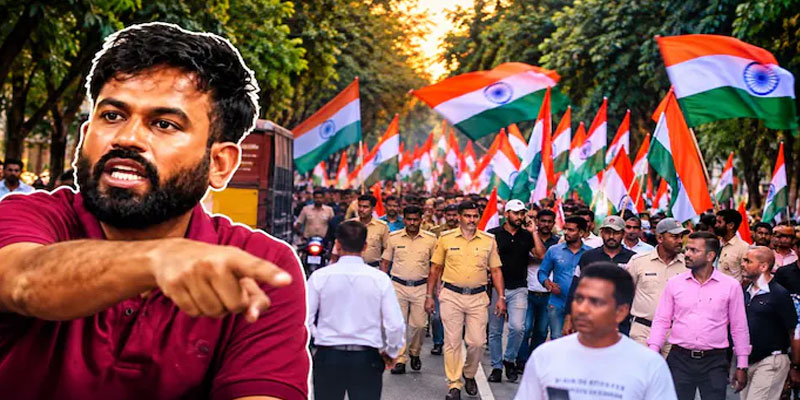
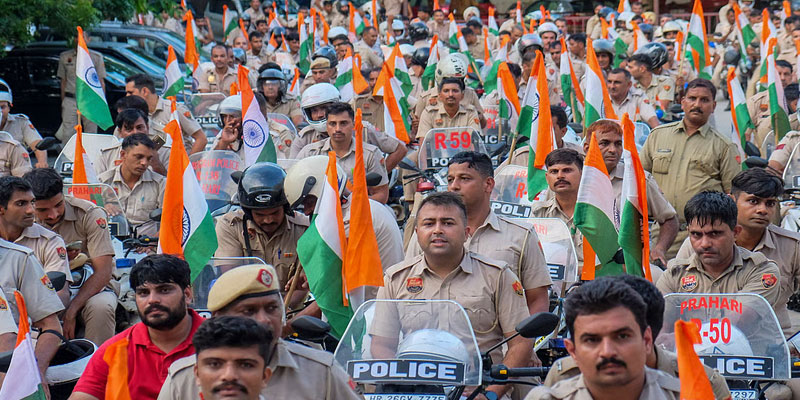
West Bengal entered a new political era as Suvendu Adhikari took oath as the state’s first BJP Chief Minister at Kolkata’s Brigade Parade Ground. Governor RN Ravi administered the oath in the presence of top national leaders, marking the end of Mamata Banerjee’s 15-year tenure that began in 2011. Adhikari became the ninth Chief Minister of West Bengal after the BJP’s emphatic victory in the 2026 Assembly elections, a result many are describing as one of the most consequential political shifts in the state’s modern history.
BJP’s Landslide Victory Reshapes Bengal Politics
The BJP secured a commanding 207 seats in the 294-member Assembly, dramatically improving from its tally of 77 seats in 2021. The election outcome reflected a powerful anti-incumbency wave against the Trinamool Congress, driven by allegations surrounding governance failures, political violence, corruption and infiltration issues.
Suvendu Adhikari emerged as the central face of the BJP’s Bengal campaign, defeating Mamata Banerjee in politically symbolic constituencies including Nandigram and Bhabanipur. The party framed the election as a battle for “Poriborton” — change — and successfully converted years of groundwork into a decisive mandate.
The Trinamool Congress questioned the election process and alleged irregularities, but the Election Commission rejected those claims, clearing the way for rapid government formation.
Grand Oath Ceremony Signals National Importance
The swearing-in ceremony on May 9, coinciding with the birth anniversary of Rabindranath Tagore, was designed as both a constitutional event and a political statement. Prime Minister Narendra Modi, Home Minister Amit Shah and BJP president JP Nadda attended alongside chief ministers from multiple BJP-ruled states, underlining the national significance of Bengal’s transition.
Adhikari also unveiled a compact ministerial team that balanced experience, regional representation and ideological commitment. Senior BJP leader Dilip Ghosh, actor-turned-politician Agnimitra Paul, Nishit Pramanik, Kshudiram Tudu and Ashok Kirtania were inducted as ministers.
The cabinet composition signalled the BJP’s intention to focus on border security, tribal outreach, infrastructure and law-and-order reforms while maintaining organisational discipline.
Modi’s Gesture and BJP’s Ideological Messaging
One of the most discussed moments before the ceremony was Prime Minister Narendra Modi touching the feet of 97-year-old Makhanlal Sarkar, a veteran associated with Shyama Prasad Mookerjee and the Bharatiya Jana Sangh tradition.
The gesture carried deep symbolic value. Sarkar, known for his nationalist activism during the pre-Independence and post-Independence periods, represented the ideological roots of the BJP in Bengal. By publicly seeking his blessings, Modi reinforced the BJP’s long-standing emphasis on respecting ideological veterans and organisational workers, regardless of age or political prominence.
For the BJP, such symbolism is central to its political identity. The party consistently projects itself as an organisation rooted in discipline, ideological continuity and reverence for grassroots contributors rather than personality-driven politics alone. Modi’s gesture was therefore not merely personal courtesy but a carefully resonant political message to party workers and supporters.
Bengal Enters a New Political Chapter
Suvendu Adhikari’s rise from a former Trinamool leader to Bengal’s first BJP Chief Minister marks a transformative moment in Indian politics. The BJP’s sweeping mandate has fundamentally altered the state’s political landscape and expanded the party’s footprint in eastern India. Yet governance will now become the true test. Expectations around development, employment, law and order and political stability are immense. If the BJP succeeds in translating its electoral victory into administrative delivery, Bengal could witness not just a change in government, but a long-term redefinition of its political identity and governance model.
(With agency inputs)