US Ends Offensive on Iran, But Tensions Shift to a Fragile New Phase
The United States has declared the end of “Operation Epic Fury,” its high-intensity military campaign against Iran, signalling a pause in direct confrontation. Yet, far from marking peace, the announcement points to a strategic shift. As Secretary of State Marco Rubio clarified, the conflict is transitioning into a defensive and diplomatic phase, with the volatile Strait of Hormuz now at the centre of global concern.
What Was Operation Epic Fury?
Launched on 28 February under President Donald Trump, Operation Epic Fury was a coordinated US–Israeli offensive aimed at crippling Iran’s military and strategic capabilities. The campaign targeted nuclear facilities, missile infrastructure, and command networks, with the stated goal of neutralising Tehran’s ability to threaten regional stability.
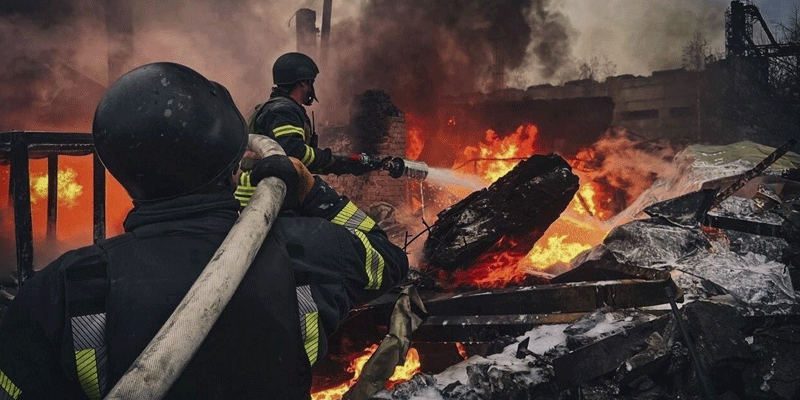
The conflict escalated dramatically following the killing of Ali Khamenei in early strikes—an event that triggered massive retaliation. Iran responded with waves of drones and missiles directed at US bases and allied territories across West Asia, pushing the region into one of its most dangerous crises in recent years.
From Offence to Defence: The Hormuz Flashpoint
Despite the formal conclusion of the offensive, US military engagement in the region continues—albeit under a defensive framework. The Strait of Hormuz, through which a significant portion of global oil and liquefied natural gas flows, has emerged as the new focal point.
Iran has asserted increased control over the strait, using missile deployments, naval patrols, and enforced shipping routes. These actions have disrupted global trade and heightened fears of supply chain instability. In response, the US has begun limited escort operations for its vessels, though only a handful have successfully transited under protection so far.
Rubio emphasised that while the US seeks de-escalation, it will respond decisively to any threats against its assets or international shipping.
A War Declared Over, But Not Resolved
The declaration ending Operation Epic Fury appears as much political as strategic. Domestically, the US administration faced mounting pressure from Congress over the risks of an open-ended conflict. Declaring success allows Washington to recalibrate without appearing to retreat.
However, the reality on the ground tells a different story. Missile launches, drone activity, and heightened military readiness persist on both sides. Neither Washington nor Tehran is treating this moment as a genuine peace settlement.
Instead, the US is signalling a pivot toward diplomacy—seeking a broader agreement that could address nuclear restrictions, missile limitations, and maritime security, potentially in exchange for economic concessions to Iran.
Strategic Implications and Risks Ahead
Analytically, the end of Epic Fury marks a transition rather than a resolution. The conflict has moved from overt warfare to a hybrid phase combining deterrence, sanctions, and negotiation. The Strait of Hormuz now functions as both a pressure point and a potential trigger.
This phase is inherently unstable. A single miscalculation—such as an attack on a tanker or a military misfire—could rapidly escalate into renewed conflict. The narrow geography of the strait and the high concentration of military assets only amplify this risk.
An Uneasy Pause in a Continuing Crisis
The end of Operation Epic Fury offers a momentary easing of direct hostilities, but it does not signify peace. Instead, it underscores the evolving nature of modern conflict—where military campaigns bleed into prolonged standoffs shaped by economic leverage and geopolitical signalling.
For now, the world watches the Strait of Hormuz, where the balance between deterrence and escalation remains precarious. Whether this phase leads to meaningful diplomacy or another round of confrontation will depend not just on strategy, but on restraint—something that has so far remained in short supply.
(With agency inputs)