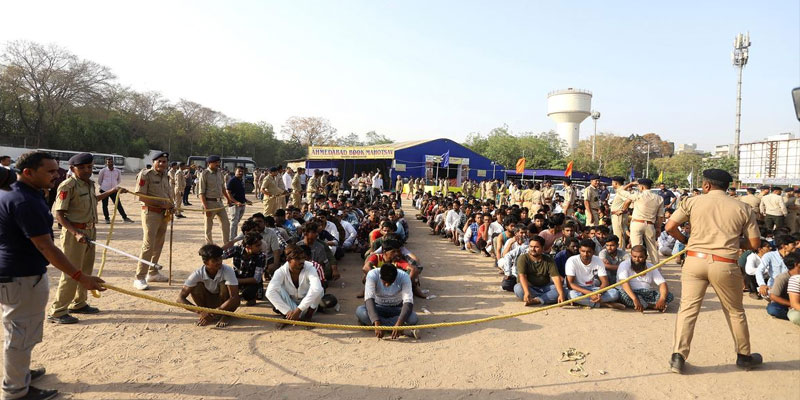
Police Detain 13 Suspected Bangladeshi Nationals in Gurugram
The detention of 13 suspected illegal Bangladeshi nationals by Gurugram Police has once again brought the issue of undocumented migration into sharp focus. The individuals, who were allegedly residing and working in the district without valid legal documents, have been transferred to Malda in West Bengal as part of the deportation process. While the police have maintained that the action follows established legal procedures and security protocols, the incident also highlights the continuing challenge of balancing immigration enforcement with safeguards for due process and individual rights.
Rising Focus on Illegal Migration
Illegal cross-border migration has remained a significant policy and security concern in India, particularly in states and urban centres that attract large numbers of migrant workers. The National Capital Region (NCR), with its expanding construction, industrial and service sectors, has witnessed periodic verification drives aimed at identifying undocumented foreign nationals employed in low-wage occupations.
In recent years, law enforcement agencies have intensified document-verification exercises to detect individuals residing illegally, while governments have simultaneously emphasised stronger border management and internal security. These operations increasingly combine intelligence gathering, identity verification and coordination with border authorities to facilitate legal action against those found to be staying unlawfully.
Verification Drive Leads to Detentions
According to Gurugram Police, the Crime Branch (Sector-39) carried out the latest operation following intelligence received nearly a month earlier regarding suspected illegal Bangladeshi nationals working as labourers in the district. Teams conducted extensive verification across slum settlements, rented accommodations and construction sites before identifying 13 individuals who allegedly failed to produce valid documents establishing lawful residence in India. After examining recovered identity documents and verifying their immigration status, the police concluded that the individuals were residing illegally and initiated deportation proceedings.
The detainees were subsequently escorted from New Delhi Railway Station to Malda Town in West Bengal by a police team comprising an inspector and 23 personnel. From there, they are expected to be handed over to border security agencies for further processing before formal deportation to Bangladesh.
Police Emphasise Legal Compliance
Assistant Commissioner of Police (Crime) Naveen Sharma has stated that the entire exercise is being conducted strictly in accordance with applicable laws, prescribed procedures and established security protocols.
Officials have clarified that legal action is initiated only after verification establishes unlawful entry or residence. Individuals unable to produce valid proof of citizenship or lawful stay, or found carrying suspicious identity documents, are liable to face proceedings under relevant legal provisions before deportation is undertaken through the designated administrative process.
Part of a Larger Verification Campaign
The latest detentions form part of a wider verification drives currently underway across Gurugram. Police teams have been conducting identity checks in slum clusters, industrial areas, rented accommodations, hotels and commercial establishments.
According to officials, nearly 900 individuals were verified during earlier phases of the campaign, with the latest detainees identified after failing document verification. Authorities have also appealed to residents, employers, landlords and hotel operators to ensure proper verification of tenants, domestic workers, employees and staff, making public cooperation an integral part of the ongoing exercise.
Balancing National Security with Due Process
The Gurugram operation reflects the government's broader emphasis on strengthening internal security and addressing undocumented cross-border migration. From an enforcement perspective, such verification drives are intended to uphold immigration laws, improve identity verification and safeguard national security.
However, they also raise important legal and humanitarian questions. Legal experts and civil society organisations have consistently argued that deportation should follow a transparent process involving formal orders, opportunities for legal representation and adjudication by competent authorities wherever applicable. Concerns have also been raised about documentation errors, disputed identities and the status of long-term residents whose citizenship or immigration records may be complex.
Ultimately, the Gurugram case illustrates the delicate balance that democratic societies must maintain. Effective immigration enforcement remains essential for national security and the rule of law, but its credibility depends equally on ensuring fairness, legal safeguards and procedural transparency. Achieving both objectives simultaneously will remain central to India's evolving approach towards managing undocumented migration in an increasingly interconnected region.
(With agency input)