Drone Attacks Kill Workers, Ignite Fire Near Moscow
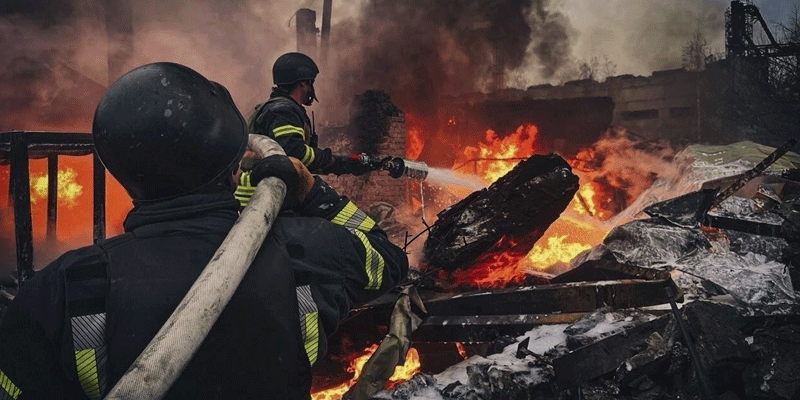
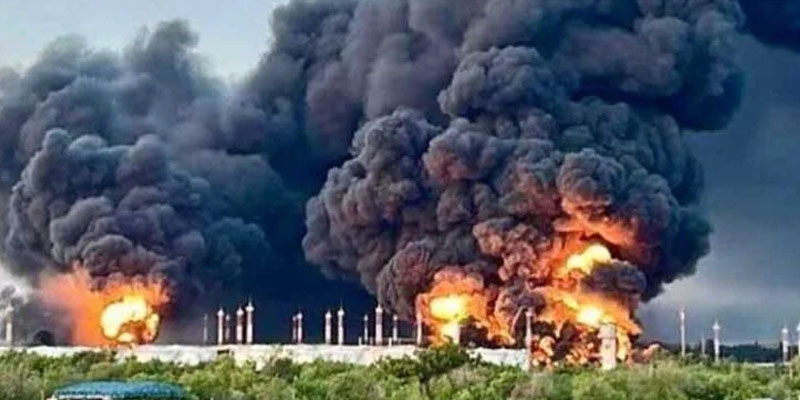
Ukrainian drone attacks have reportedly killed seven warehouse workers in Russia and sparked a fire at an oil depot in the Moscow region, marking another escalation in Kyiv's long-range strike campaign. According to Russian regional authorities, the attacks targeted logistics and energy infrastructure, including facilities owned by Russia's largest online retailer, Wildberries. While Ukraine has described the targets as part of Russia's military supply chain, the incidents have renewed concerns over civilian casualties and the expanding geographical reach of the conflict.
Ukraine's Expanding Deep-Strike Strategy
Since 2023, Ukraine has increasingly relied on domestically developed long-range drones to strike military and strategic infrastructure deep inside Russian territory. The campaign has focused on oil refineries, fuel depots, airbases and logistics hubs that support Russia's military operations.
The Moscow region has witnessed repeated drone incursions over the past year, including large-scale attacks on energy infrastructure. These operations aim to disrupt Russia's war logistics, increase economic costs and demonstrate that critical facilities far from the battlefield remain vulnerable.
Warehouse and Oil Depot Targeted
According to Russian officials, one of the latest attacks struck a Wildberries warehouse in Kotovsk, Tambov region, about 475 kilometres southeast of Moscow. Tambov Governor Evgeniy Pervyshov said seven night-shift workers were killed and 25 others injured. He also claimed that Russian air defences intercepted 28 drones before they reached their intended targets, preventing even greater damage.
In a separate incident, another Wildberries warehouse in Elektrostal, east of Moscow, was reportedly hit, leaving 24 people injured. Moscow Region Governor Andrei Vorobyov also confirmed that falling drone debris ignited a fire at an oil depot in Noginsk. Two people were injured, while a nearby maternity hospital was evacuated as a precaution. Authorities have not yet released a detailed assessment of damage to the oil facility.
Ukraine's Justification
Ukrainian President Volodymyr Zelenskyy said the strikes targeted logistics centres supplying components used in Russian drone production, navigation equipment and fuel infrastructure. Kyiv has maintained that these facilities serve military purposes and are therefore legitimate targets under its broader strategy of disrupting Russia's war-making capability.
By focusing on logistics hubs and oil installations, Ukraine seeks to weaken Russia's supply chains, reduce fuel availability and hamper the production and deployment of drones and missiles. However, the deaths of warehouse workers have intensified debate over the civilian consequences of attacks on dual-use infrastructure.
Latest Developments and Wider Implications
As of July 18, Russian authorities continue to report seven deaths, dozens of injuries and multiple drone interceptions. While officials have highlighted the effectiveness of air-defence systems, they have yet to provide a complete assessment of the operational impact on the affected warehouses or the Noginsk oil depot.
The attacks also add psychological pressure by demonstrating Ukraine's ability to reach economically significant regions near Moscow. For Russia, the repeated strikes underscore the growing challenge of protecting industrial and energy infrastructure far from the front lines.
A Conflict Reaching Deeper into the Heartland
The latest drone attacks illustrate how the Russia-Ukraine war is increasingly extending beyond conventional battlefields into critical economic and logistical centres. Ukraine's strategy aims to disrupt Russia's military support network, while Moscow views the strikes as attacks endangering civilian lives and essential infrastructure. As both sides continue to expand the scope of long-range operations, the distinction between military and civilian targets is becoming increasingly blurred, raising difficult questions about escalation, proportionality and the humanitarian costs of a conflict that now reaches deep into Russia's interior.
(With agency inputs)