Hopes Fade for a 2025 Agreement
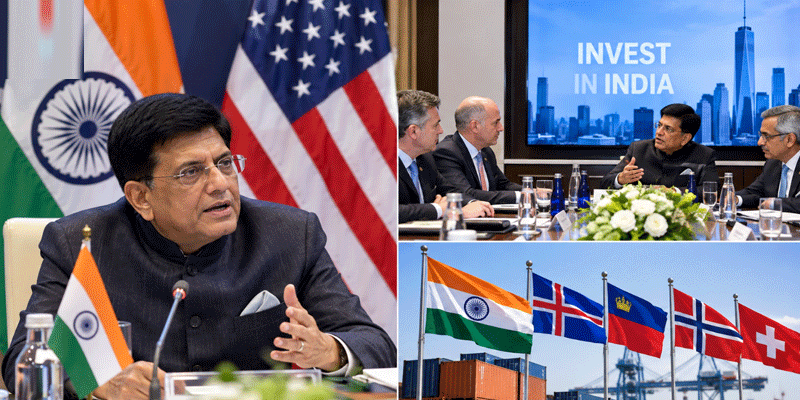
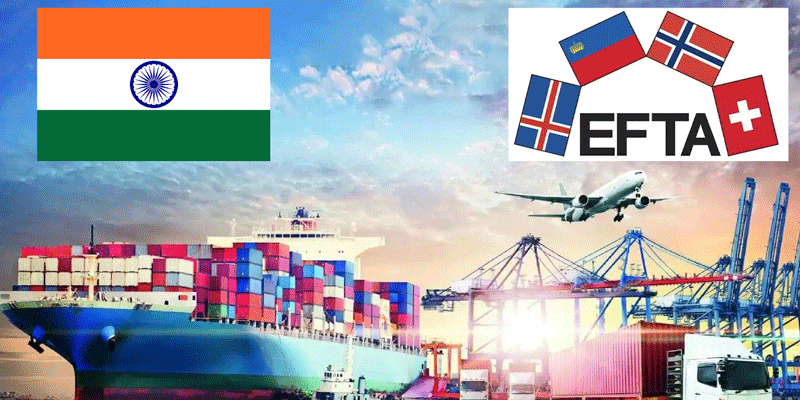
Optimism surrounding a landmark EU-India free trade agreement (FTA) has dimmed, with negotiators now signaling that finalization by December 2025 is unlikely. Bloomberg reported on December 12 that talks have hit roadblocks over steel tariffs, automobile quotas, and carbon taxes. Earlier in 2025, high-level meetings—including Commerce Minister Piyush Goyal’s engagement with EU Trade Commissioner Maros Sefcovic—had raised hopes for a “win-win” deal, but sources now suggest that the earliest announcement may be deferred to January, coinciding with European Commission President Ursula von der Leyen’s planned visit to Delhi.
The Long Road of EU-India Trade Talks
Negotiations for an FTA date back to 2007 under the Broad-based Trade and Investment Agreement (BTIA) framework but were stalled for years amid technical and political differences. Talks resumed in June 2022 against the backdrop of shifting global supply chains, and early optimism centered on mutual market access, investment facilitation, and regulatory harmonization. Bilateral trade reached $120 billion in 2024, with the EU enjoying surpluses in machinery and pharmaceuticals. A successful FTA could potentially raise trade volumes to $213 billion by 2028, according to the Confederation of Indian Industry (CII).
India’s Concessions on Steel and Carbon Rules
Steel and carbon regulations have emerged as particularly sensitive areas. India seeks lower EU duties on its steel exports, which totalled 3.71 million tonnes in 2024 and comprise nearly 45% of total exports in certain engineering categories. The EU’s plan to reduce duty-free quotas by 47% to 18.3 million tonnes annually from June 2026, alongside doubling out-of-quota tariffs to 50%, has fueled Indian demands for relief.
On carbon, New Delhi is negotiating exemptions from the EU’s Carbon Border Adjustment Mechanism (CBAM), which imposes 20–35% levies on carbon-intensive imports such as steel, aluminum, cement, fertilizers, and hydrogen starting 2026. India is advocating for a three-year grace period for micro, small, and medium enterprises (MSMEs) and textual safeguards in the FTA to protect $27.5 billion in engineering exports, highlighting the tension between EU green ambitions and India’s industrial growth objectives.
Main Sticking Points in Negotiations
Automobiles remain another contentious area. The EU wants India to expand its ~80,000-unit annual import quota for cars and reduce tariffs, aiming to boost exports from European brands such as Volkswagen and Mercedes. India resists, citing the need to protect its emerging auto sector under “Make in India” initiatives.
Additional hurdles include agriculture and dairy protections, with India maintaining high tariffs (average 39%) to shield small farmers, and EU proposals on deforestation rules and intellectual property rights. Services, mobility, and visa relaxations for professionals are also under discussion, reflecting the broader clash between EU market-access goals and India’s labor and industrial policies.
Negotiations at a Crossroads
The EU-India FTA negotiations illustrate the complexity of balancing green, industrial, and political priorities. While both sides remain committed to engagement, resolving the impasse will require careful trade-offs: India’s need for steel and carbon relief versus the EU’s green and automotive market ambitions. With the December 2025 deadline now unlikely, attention is shifting to early 2026 for progress, underscoring that a comprehensive, balanced agreement will demand patience, technical finesse, and sustained political will from both partners.
(With agency inputs)