A Region on Edge
Ladakh, often celebrated for its serenity and stark beauty, is today grappling with turbulence both political and social. For months, the Union Territory has witnessed protests demanding statehood and Sixth Schedule protections, as locals fear marginalisation of their land, culture, and resources. Against this backdrop of mounting anger, a fresh controversy has erupted—India’s premier investigating agency, the Central Bureau of Investigation (CBI), has launched an inquiry into the Himalayan Institute of Alternatives Ladakh (HIAL), founded by noted innovator and activist Sonam Wangchuk. The timing of this probe has only deepened suspicions and intensified the disquiet already gripping the region.
The CBI Inquiry: Alleged Foreign Funding Irregularities
According to officials, the CBI is scrutinising possible violations of the Foreign Contribution (Regulation) Act (FCRA) linked to HIAL and the Students’ Educational and Cultural Movement of Ladakh (SECMOL). Though no First Information Report (FIR) has been filed yet, Wangchuk confirmed that a team arrived with an order about ten days ago, seeking records of funds between 2022 and 2024.
Wangchuk insists that the matter stems from a misunderstanding. His institute, he explained, generates income through knowledge export agreements—collaborations with organisations like the United Nations, a Swiss university, and an Italian body—rather than through traditional foreign donations. “It was a dignified exchange of knowledge and services,” he said, noting that investigators nevertheless expanded their demand to earlier years and unrelated institutions. Both HIAL and SECMOL, he stressed, primarily provide free education to underprivileged youth, with stipends for project-based learning.
A Series of Setbacks for the Activist
The CBI inquiry is not Wangchuk’s only battle. He pointed to a pattern of escalating actions: first, a sedition case by local police, followed by the government’s attempt to reclaim land allotted to HIAL, citing unpaid lease fees. According to him, this was despite authorities previously acknowledging gaps in lease policies and encouraging construction to continue.
Adding to his woes, old allegations resurfaced regarding unpaid wages for labourers, even though he claims the issue had been settled years ago. “It is guns blazing from all sides on us,” Wangchuk remarked, suggesting that the government was targeting him for his outspoken activism.
Protests Boil Over into Violence
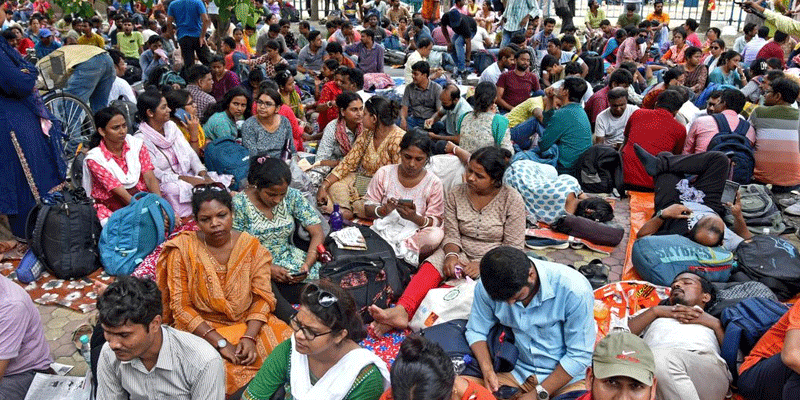
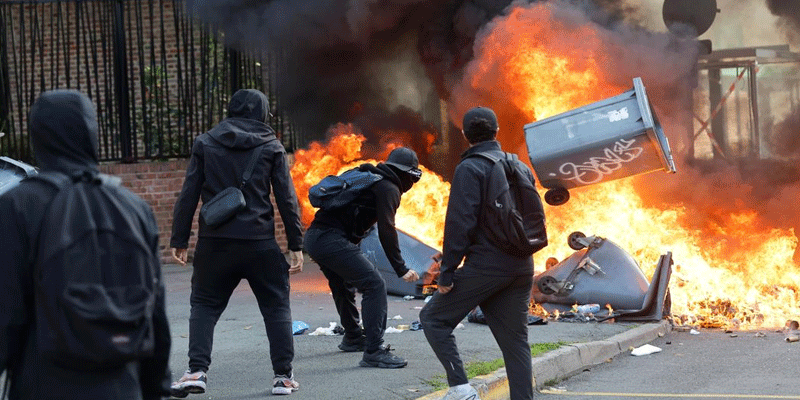
The probe coincides with one of Ladakh’s most turbulent weeks in decades. Since September 10, Wangchuk has been on a hunger strike, demanding Sixth Schedule status and full statehood for Ladakh. On September 24, simmering frustrations exploded into violence. Demonstrators—largely angry youth—set ablaze the BJP headquarters and the Hill Council office in Leh, torched vehicles, and vandalised property. Police and paramilitary forces responded with teargas, but not before four people lost their lives and around 70 were injured.
The Union Home Ministry placed responsibility squarely on Wangchuk, accusing him of provocative speeches that invoked movements like the Arab Spring and referenced Gen-Z protests in Nepal. Officials claimed his words incited mobs to leave peaceful demonstrations and attack political offices. They further criticised him for abandoning his fast and returning to his village “without calming the situation.”
Wangchuk’s Response: “My Peaceful Path Failed”
The activist, however, has rejected the charge of instigation. While condemning the violence, he admitted disappointment that his message of non-violence had not been upheld. “On the 15th day of our strike, I am pained to say that incidents of arson and vandalism took place. This is not what we stood for,” he said. Wangchuk attributed the outburst to years of youth unemployment and political vacuum, calling it “a kind of Gen-Z revolution.”
The Man Behind the Movement
Born in 1966, Sonam Wangchuk is not new to the national spotlight. The engineer, reformist, and climate activist was the inspiration behind the popular character played by Aamir Khan in 3 Idiots. He founded SECMOL to make education in Ladakh more relevant to its unique environment and culture. His innovations—from ice stupas that store glacial water to sustainable mud houses—have drawn global attention.
In recent years, Wangchuk has used his influence to press for safeguards for Ladakh’s fragile ecology and tribal communities. He argues that Sixth Schedule status would empower locals to manage natural resources and shield the Himalayas from unchecked development. His activism has often put him at odds with authorities, especially as he spearheads campaigns for autonomy and constitutional protections.
A Fragile Future
The CBI’s probe into Wangchuk’s institutions, coming amidst the largest protests Ladakh has seen in decades, underscores the volatility of the current moment. For many locals, it reinforces fears of suppression rather than dialogue. For the government, it is an assertion of law and order in a sensitive border region.
What remains clear is that Ladakh stands at a crossroads. Without meaningful engagement and credible assurances, unrest could harden into long-term alienation. Wangchuk, despite controversies, continues to embody the frustrations and aspirations of a generation seeking dignity, opportunity, and autonomy. His story—and the protests that surround it—reflect a deeper reality: that peace in Ladakh cannot be sustained through probes and policing alone, but through trust, dialogue, and empowerment of its people.
(With agency inputs)