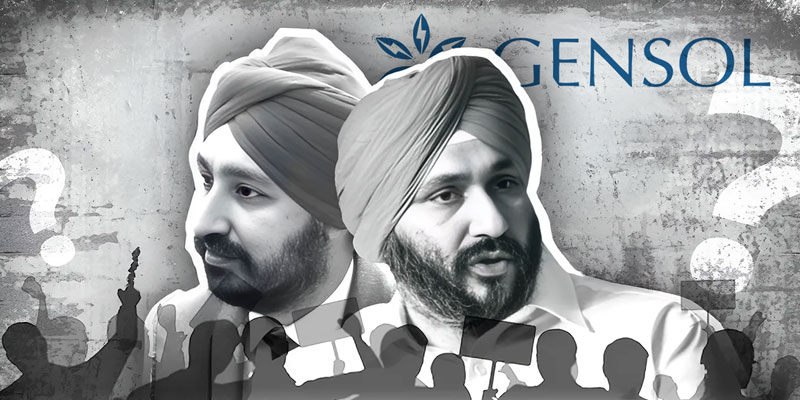
Gensol Admitted into Insolvency by NCLT Ahmedabad on IREDA Plea
The Ahmedabad bench of the National Company Law Tribunal (NCLT) has officially admitted Gensol Engineering Ltd. into the Corporate Insolvency Resolution Process (CIRP) following a petition by the Indian Renewable Energy Development Agency (IREDA). The action comes amid allegations of fund misappropriation, regulatory violations, and the company's financial collapse.
IREDA, one of Gensol’s key lenders, moved the tribunal citing the absence of leadership and growing defaults. The NCLT’s admission marks a dramatic turn for the once-promising clean energy firm, as a court-appointed interim resolution professional (IRP) will now step in to oversee its restructuring or potential liquidation.
Gensol and BluSmart: A Rapid Rise Meets a Sudden Fall
Gensol Engineering, once a rising star in renewable energy and electric mobility, had partnered with BluSmart Mobility, an electric vehicle (EV) ride-hailing startup. Gensol played a major role in sourcing and financing BluSmart’s EV fleet, backed by significant loans from public and private financial institutions.
However, the company’s rapid growth came under scrutiny when SEBI (Securities and Exchange Board of India) initiated an investigation in April 2025. SEBI barred promoters Anmol Singh Jaggi and Puneet Singh Jaggi from accessing the capital markets and holding any executive roles, citing evidence of fund diversion in a loan-backed EV procurement scheme.
What Went Wrong: Fund Diversion and Fabricated Documents
SEBI’s probe found Gensol had raised ₹975 crore in loans to acquire 6,400 EVs. Shockingly, only 4,704 vehicles were actually purchased for ₹567.73 crore—leaving over ₹200 crore unaccounted for. The regulators also uncovered fabricated debt servicing conduct letters submitted to credit rating agencies, falsely assuring financial health.
In reality, Gensol began defaulting as early as December 2024. Credit rating agencies ICRA and CARE Ratings responded by downgrading ₹2,050 crore in debt to “default” status, including ₹1,640 crore in long-term and ₹400 crore in short-term obligations.
Ripple Effects: Uncertainty for Stakeholders and Employees
The collapse has sent shockwaves across the EV and renewable energy sector, with major implications for:
· Investors: Gensol’s stock performance has tanked amid regulatory actions and insolvency admission.
· Employees: Hundreds of employees face job uncertainty as operations stall and leadership exits.
· BluSmart Mobility: As a close partner, BluSmart’s growth and fleet expansion plans may be significantly delayed.
· Vendors and Suppliers: Pending dues and broken contracts will likely result in cascading financial losses.
With forensic auditors now combing through Gensol's accounts and those of related parties, the company's future remains unclear. The stock split announced earlier has also been halted by SEBI, further eroding market confidence.
Gensol’s Fall is a Wake-Up Call for India’s Clean-Tech Ecosystem
Gensol’s downfall isn’t just a company’s crisis—it’s a cautionary tale for India’s booming clean-tech and EV sectors. The scandal underscores the urgent need for financial transparency, stronger regulatory enforcement, and ethical leadership in high-growth sectors that attract large public investments.
As India aims to become a global leader in renewable energy and electric mobility, cases like Gensol risk damaging investor trust and stalling momentum. The insolvency process might offer a chance at revival, but the scars of mismanagement and deception will linger.
(With agency inputs)