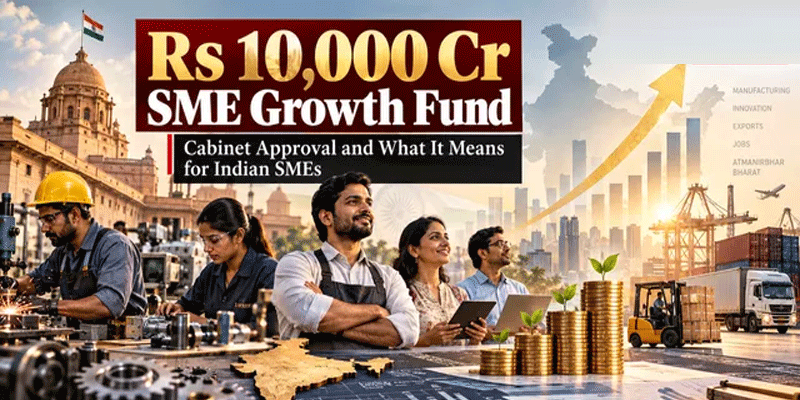
The Union Cabinet, chaired by Prime Minister Narendra Modi, has approved a one-time ₹10,000-crore budgetary support package to shield Indian airlines from soaring aviation turbine fuel (ATF) costs caused by the ongoing Iran war and escalating tensions in West Asia. The move comes as airlines grapple with rising operating expenses, disrupted flight routes and mounting uncertainty in global energy markets.
The decision is aimed at ensuring stability in the aviation sector, protecting jobs and preventing a sharp increase in airfares at a time when geopolitical developments are exerting significant pressure on the industry.
Why the Government Stepped In
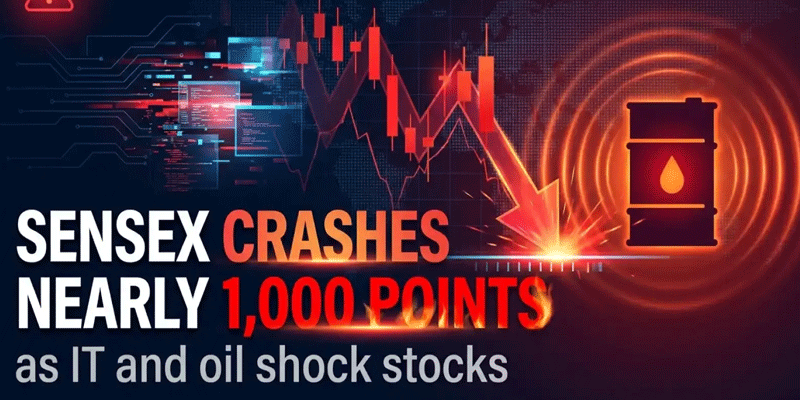
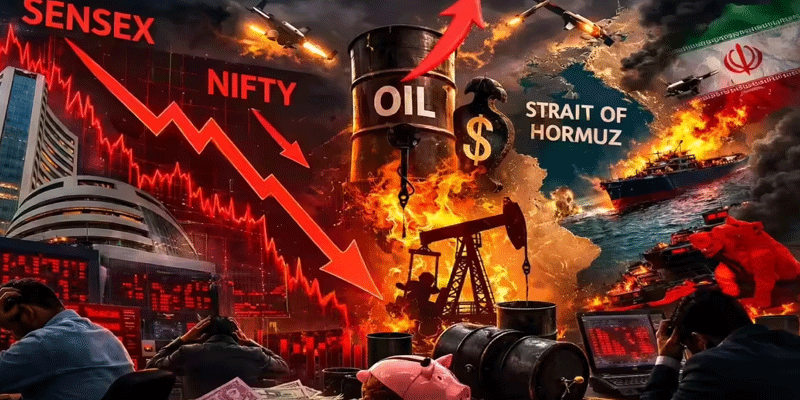
The aviation industry has been among the sectors most affected by the conflict in West Asia. The US-Iran confrontation has disrupted regional airspace, increased fuel transportation risks and pushed global oil prices higher.
For airlines, fuel constitutes one of the largest components of operating costs. Recent months have witnessed consecutive increases in ATF prices, significantly affecting airline profitability. Several carriers warned that continued fuel price escalation could force reductions in services and increase financial stress across the sector.
Air India, for instance, reportedly cut nearly 100 flights as rising fuel costs and airspace restrictions affected operations. Industry stakeholders also urged the government to intervene through measures such as fuel-price caps and tax relief.
How the Aviation Fuel Stabilisation Plan Will Work
The newly approved scheme functions as an interest-free advance to Oil Marketing Companies (OMCs), which supply aviation fuel to airlines.
Under the arrangement, the government will provide a corpus of ₹10,000 crore through allocations under the Petroleum Ministry. This support will allow OMCs to absorb the additional costs arising from elevated international fuel prices while continuing to sell ATF to airlines at a benchmark rate determined under the scheme.
Importantly, the package is not structured as a permanent subsidy. Once global fuel prices ease, the differential amount will be recovered from the OMCs and returned to the Consolidated Fund of India. The mechanism will remain in place until the entire support amount is recovered and settled.
The scheme covers both domestic and international operations of scheduled Indian airlines.
Wider Economic Impact
Beyond supporting airlines, the government views the package as a broader economic stabilisation measure.
Aviation is closely linked to tourism, hospitality, cargo movement, logistics, travel services and airport operations. A sharp increase in airfares or a reduction in flight services could have ripple effects across multiple sectors of the economy.
By cushioning airlines from extreme fuel-price volatility, the government hopes to preserve connectivity, protect employment and prevent disruptions to passenger and cargo transportation. The measure is also expected to help moderate fare increases and provide greater financial predictability for airline operators.
A Strategic Buffer During Global Uncertainty
The ₹10,000-crore aviation fuel support package reflects the government's effort to insulate a critical sector from the economic fallout of geopolitical conflict. While it is a temporary intervention, it provides airlines with much-needed breathing space during a period of unprecedented volatility. As long as tensions in West Asia continue to influence global energy markets, measures such as this will play an important role in maintaining connectivity, supporting economic activity and ensuring that the burden of rising fuel costs does not fall entirely on airlines and passengers.
(With agency inputs)