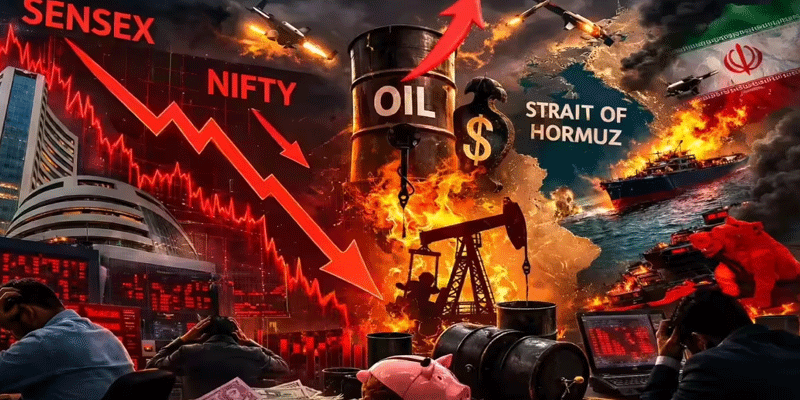
Global oil markets were jolted on Monday after US President Donald Trump rejected Iran’s response to a US-backed peace proposal, triggering fresh fears of escalation in the ongoing US-Iran conflict. Brent crude surged more than 4 percent to cross $105 per barrel, while WTI crude climbed near $101, reflecting growing concerns that disruptions around the Strait of Hormuz could continue for months.
The sharp rally came after Trump posted on Truth Social that Iran’s reply was “totally unacceptable,” effectively crushing hopes of an immediate diplomatic breakthrough in the conflict that has destabilized global energy markets since February 2026.
Trump Rejects Iran’s Conditions
Trump’s outright rejection signaled that Washington is unwilling to soften its pressure campaign against Tehran. The development has intensified fears that the fragile ceasefire in the region may collapse entirely, further threatening one of the world’s most critical oil transit corridors.
The timing is especially significant because Trump is scheduled to visit China from May 13 to 15 for high-level talks with Chinese President Xi Jinping. Iran is expected to dominate those discussions, alongside trade tensions and Taiwan-related disputes.
Washington hopes Beijing will use its economic influence over Tehran to push for stability, given that China remains Iran’s largest oil buyer. However, the issue also risks worsening US-China tensions if secondary sanctions are imposed on Chinese firms dealing with Iranian oil.
Aramco Warns of Long-Term Market Damage
The energy shock deepened after Saudi Aramco CEO Amin Nasser warned that the loss of nearly one billion barrels of oil over two months due to Hormuz disruptions could significantly delay recovery in global energy markets.
Nasser stressed that even if geopolitical tensions ease, the process of rerouting shipments, rebuilding inventories, and restoring normal supply chains would take considerable time. More than 20 percent of global oil trade passes through the Strait of Hormuz, making any prolonged disruption a serious threat to worldwide energy security.
Despite reporting strong quarterly profits, Aramco acknowledged that the market remains under immense strain, with dozens of tankers still trapped or delayed in the Gulf region.
“Dark Fleet” Tankers Raise Security Concerns
Adding to market anxiety, three more tankers carrying Iranian crude reportedly exited the Strait of Hormuz with their AIS tracking systems switched off. Such “dark fleet” operations are increasingly being used to evade surveillance and sanctions enforcement.
The situation has heightened fears of accidental clashes, maritime accidents, and insurance complications in one of the busiest shipping routes in the world. Analysts warn that over 100 tankers remain partially stranded or delayed, creating ripple effects across LNG shipments, fertilizer exports, and broader global supply chains.
Economic Shockwaves Spread Worldwide
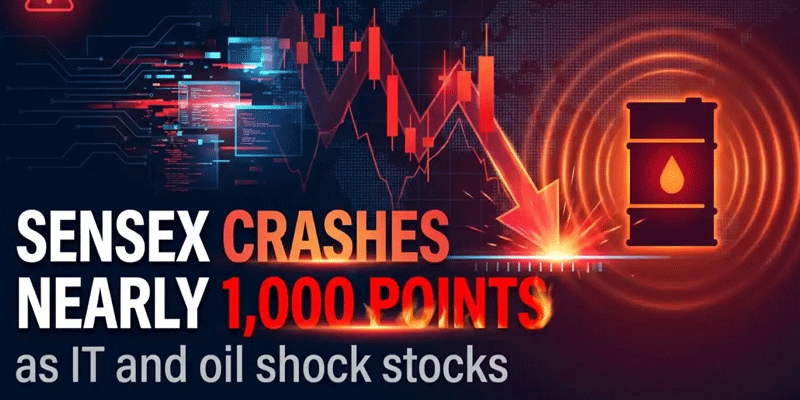
The oil rally is already creating significant economic consequences globally. Import-dependent economies like India are facing rising inflation risks, weakening currencies, and stock market volatility. Indian markets plunged sharply amid fears of a widening Current Account Deficit and prolonged energy inflation.
Meanwhile, OPEC+ may consider further production adjustments, though markets remain skeptical that additional supply can fully offset Hormuz-related disruptions.
Ultimately, the coming Trump-Xi summit may determine whether diplomacy can still prevent a deeper global energy crisis. But with Washington hardening its stance, Tehran refusing to retreat, and oil markets already under pressure, the world appears headed toward a prolonged phase of economic and geopolitical uncertainty.
(With agency inputs)