A Temple Becomes a Symbol of Deeper Partnership
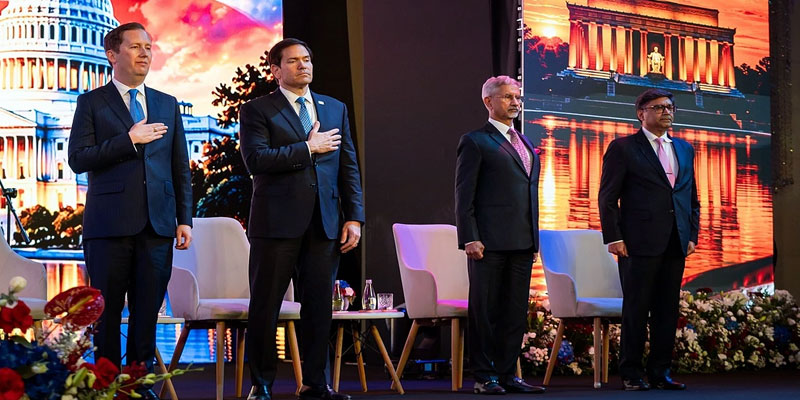
India-France ties have reached a new phase, with Prime Minister Narendra Modi describing the relationship as having attained “new heights” as cooperation expands across artificial intelligence, defence, space, climate action and advanced technology. Speaking virtually at the inauguration of the BAPS Swaminarayan Hindu Mandir in Paris on September 6, Modi presented the temple not merely as a religious landmark, but as a symbol of the enduring cultural and people-to-people bonds supporting the two countries’ strategic partnership.
From Strategic Trust to a Global Partnership
India and France have built their relationship over decades around democratic values, strategic autonomy, defence cooperation, civil nuclear energy and space collaboration. The partnership was elevated significantly in February 2026, when Modi and French President Emmanuel Macron agreed to establish a “Special Global Strategic Partnership”, guided by the Horizon 2047 roadmap. The two sides also launched the 2026 India-France Year of Innovation, signalling an ambition to move beyond conventional cooperation towards co-development and joint innovation.
The expanded framework covers artificial intelligence, critical and emerging technologies, defence, space, research, digital and cyber cooperation, education, culture, trade and resilient supply chains. France and India have also agreed to deepen joint research, co-design, co-development and co-production of advanced defence platforms.
Paris Temple Strengthens the Cultural Connect
The inauguration of the BAPS Swaminarayan Hindu Mandir added an important cultural dimension to this increasingly multidimensional relationship. Modi called the temple a “new milestone” in India-France cultural relations and said it would enrich France’s diversity while energising bilateral cultural ties. He also underlined the historical connections between the two societies and the contribution of Indian traditions to France’s multicultural landscape.
The temple therefore represents an unusual but significant form of soft power. Built through Indian craftsmanship within the French regulatory environment, it embodies a people-centric dimension of diplomacy that complements government-to-government agreements.
Innovation, AI and Strategic Technologies Take Centre Stage
The cultural symbolism comes alongside a rapidly expanding technology agenda. The India-France Year of Innovation is intended to strengthen research, innovation and industrial partnerships, while both countries are promoting cooperation in AI, including discussions around safe, responsible and trustworthy technology.
The relationship has also gained momentum in defence and space. Earlier this year, the two sides agreed to establish a Joint Advanced Technology Development Group and deepen defence technology cooperation. France and India are also pursuing broader collaboration in space, advanced research and emerging technologies.
From Cultural Symbolism to Strategic Outcomes
The Paris temple demonstrates that the India-France relationship is no longer confined to diplomacy, defence or commerce. Its deeper strength lies in combining strategic trust with cultural familiarity and technological ambition.
The challenge now is to translate this goodwill into measurable outcomes—joint R&D, stronger industrial partnerships, greater mobility for students and researchers, and sustained cooperation in AI, defence, space and climate action. If that happens, the temple in Paris will stand not only as a monument to India’s cultural presence, but also as a symbol of a partnership designed to shape the future together.
(With agency inputs)