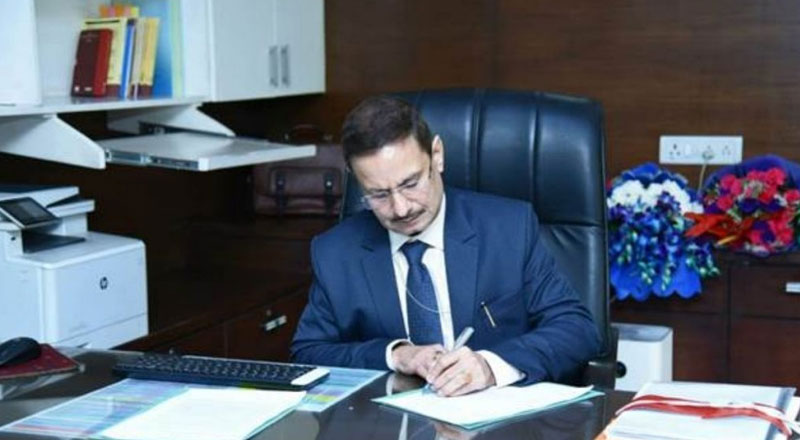
Tokenisation could reduce MSME credit origination costs by 40–50 per cent, according to Suresh Sethi, Managing Director and CEO of Protean eGov Technologies Ltd., as India transitions toward the next phase of its digital public infrastructure.
Speaking at a session on India Stack 2.0, Sethi said the country is moving beyond a digital economy anchored in identity and payments to a programmable, interoperable framework where financial and real-world assets can be exchanged as seamlessly as sending an email. He described this evolution as the foundation of a new “finternet”—a financial internet that enables frictionless transfer of asset ownership while embedding compliance and trust at the protocol level.
Sethi noted that India Stack 1.0 established the core building blocks of identity, authentication, and payments. The next phase will extend this by creating population-scale registries across sectors such as agriculture, education, skilling, land, and financial assets. These registries will enable event-based, programmable outcomes, allowing systems to respond automatically to verified data changes.
Highlighting agriculture as a use case, Sethi explained that digitally programmable data around farmers, crops, soil health, and assets can transform engagement models. “Once assets and activities are digitally programmable, interactions become event-based rather than manual,” he said—mirroring how UPI functions as a programmable ledger for payments.
A critical enabler of this shift is the creation of dynamic, interoperable registries that support verifiable and shareable credentials across industries. These registries, Sethi said, will underpin large-scale asset exchange and unlock new efficiencies across the economy.
In financial services, Sethi pointed to early success in data-driven credit, with digital lending flows of ₹71.6 lakh crore enabled through alternate data and the Open Credit Enablement Network (OCEN). Tokenisation will significantly amplify this impact by lowering friction, reducing settlement times, strengthening fraud prevention, and sharply cutting MSME credit origination costs.
However, Sethi cautioned that BFSI leaders must redesign their data architecture to prepare for this future. Trust, he emphasized, must be foundational. Governance, verifiability, discoverability, and interoperability need to be designed into systems from the outset—not retrofitted later—as India Stack 2.0 reshapes how assets, data, and value move across the economy.