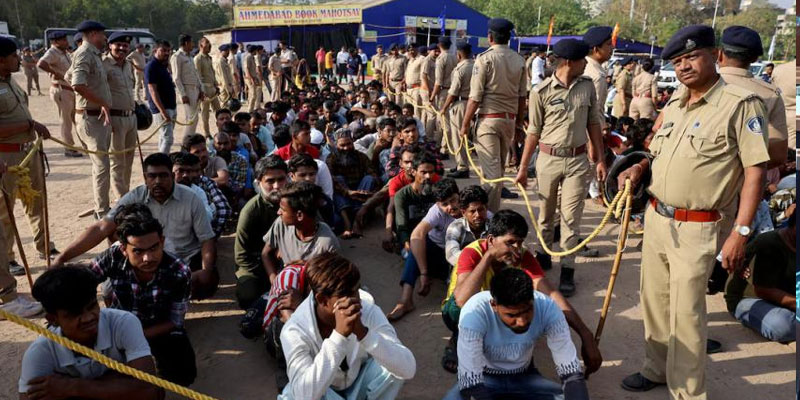
Bangladesh’s Bangladesh Jamaat-e-Islami and its 11-party Islamist alliance have announced plans to march towards border points along India on June 12, escalating tensions over allegations of “push-ins” involving undocumented migrants. The mobilisation comes at a sensitive moment, with anti-Hasina political groups also calling on citizens to form a “human shield” near border areas even as senior officials from India and Bangladesh continue diplomatic discussions in New Delhi. The developments have pushed a long-standing border issue into the centre of public and political confrontation.
Islamist Alliance Announces Border Protests
The protests are scheduled to take place across key border districts in Bangladesh, followed by a larger rally and procession in Dhaka on June 15. Jamaat-e-Islami leaders have accused India of attempting to force people across the border into Bangladeshi territory and alleged that Bangladeshi nationals had been killed in firing by India’s Border Security Force.
At the same time, the National Citizens Party, an anti-Hasina student-backed formation, has intensified the rhetoric. Its chief coordinator, Nasiruddin Patwari, urged residents living near the zero line to create a “human shield” to prevent the entry of what he described as criminals or smugglers. He also called for stronger deployment of the Border Guard Bangladesh along frontier regions.
Background To The “Push-In” Controversy
The current tensions stem from allegations by Dhaka that Indian authorities are forcibly sending undocumented individuals across the border without proper coordination. Bangladesh refers to these actions as “push-ins,” a term that has become increasingly contentious in bilateral discussions.
The issue featured prominently during the 57th Director General-level talks between India’s Border Security Force and the Border Guard Bangladesh held in New Delhi between June 8 and 11. The talks were aimed at addressing border security concerns, migration management, and verification procedures for suspected undocumented migrants.
The matter has gained additional political sensitivity because Jamaat-e-Islami has emerged as a major opposition force in Bangladesh following the 2026 elections, significantly strengthening its influence on national political discourse.
What India Has Said on Bangladesh’s Claims
India has consistently rejected allegations that it is conducting unlawful “push-ins.” The Ministry of External Affairs has maintained that only illegal foreign nationals staying in India are being repatriated after due verification and through existing bilateral mechanisms.
MEA spokesperson Randhir Jaiswal stated that India follows established procedures while seeking nationality verification from Bangladesh. According to Indian officials, nearly 2,862 cases remain pending because Bangladeshi authorities have not completed verification processes, some of which have reportedly been unresolved for more than five years.
India has argued that quicker verification by Bangladesh would help ensure smoother and more lawful repatriation procedures while reducing border tensions.
Border Politics and Diplomatic Challenges
The planned demonstrations indicate how border management issues are increasingly becoming political flashpoints in South Asia. What began as an administrative and diplomatic matter has now evolved into a public mobilisation campaign capable of affecting bilateral relations between the two neighbours.
As political rhetoric intensifies, both India and Bangladesh face the challenge of preventing domestic political pressures from undermining diplomatic engagement. Managing migration concerns, border security, and humanitarian sensitivities through sustained cooperation rather than confrontation will remain essential to preserving stability along one of the region’s most sensitive frontiers.
(With agency inputs)