Meloni’s School Plan Reopens Italy’s Identity Debate
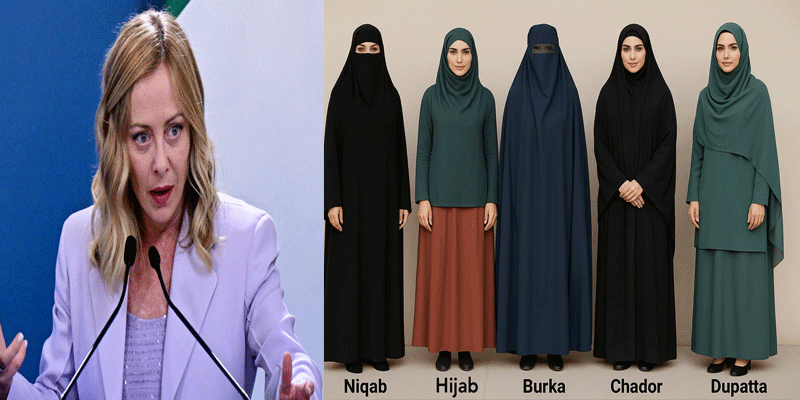
Italy’s Prime Minister Giorgia Meloni has announced plans to introduce a nationwide ban on burqas and niqabs in schools, alongside limits on foreign students in classrooms and Italian-language requirements for some migrant parents. The proposals place schools at the centre of Italy’s wider debate over immigration, integration, religious expression and national identity. They are still proposals and must go through the legislative process before becoming law.
From Religious Dress to School Integration
Italy has previously debated restrictions on face coverings through security and public-order rules, but it has not had a specific nationwide school ban on burqas and niqabs. Meloni’s latest proposal therefore represents a move towards a clearer national framework.
The issue also fits into a broader European debate. Several European countries have introduced restrictions on face-covering garments in public spaces, although the scope and legal basis differ from country to country. Italy’s proposed measure specifically focuses on schools and would target garments that conceal the face.
What Meloni’s New Package Proposes
Speaking at the youth event of her Brothers of Italy party on September 20, Meloni said legislation would soon be brought before the Cabinet. The package would include:
· A ban on burqas and niqabs in schools.
· A legal ceiling on the number of foreign students in individual classrooms.
· Italian-language lessons for parents of foreign pupils experiencing serious difficulties integrating into the school system.
Meloni has argued that students should attend school with their faces visible and that learning Italian, understanding Italian culture and respecting national rules are essential elements of integration. Reuters reported that around 11.6% of students in Italy are currently non-citizens.
The exact foreign-student ceiling and enforcement arrangements have not yet been specified, meaning important details remain unresolved.
Why The Foreign-Student Cap Matters
Italy already has rules intended to prevent excessive concentrations of non-Italian students in classrooms, but their application can vary according to local circumstances. The proposed legislation would give the government a stronger statutory framework.
The language requirement similarly shifts part of the integration responsibility beyond students themselves, placing greater emphasis on parents’ ability to communicate with schools and participate in their children’s education.
Politics, Migration and The Right
The announcement comes as immigration and national identity remain major political issues in Italy. Meloni is also facing pressure from forces further to her right, including Roberto Vannacci’s Futuro Nazionale movement. Italian news agency ANSA described the announcement as part of an increasingly competitive political debate over security and identity.
Analysts and political opponents may interpret the timing differently, but the government presents the measures primarily as tools for integration, equality and effective schooling.
The Real Test Will Be Implementation
The proposals have limited immediate practical effect because they are not yet law. Their significance will depend on the final legislation, how exemptions are handled and how schools implement the rules.
Ultimately, Italy’s debate is no longer simply about religious clothing. It is increasingly about how a European state balances individual religious expression with integration, language requirements and a shared civic framework. The coming legislative process will determine whether Meloni’s announcement becomes a narrowly focused school policy or a broader marker of Italy’s evolving approach to immigration and identity.
(With agency inputs)