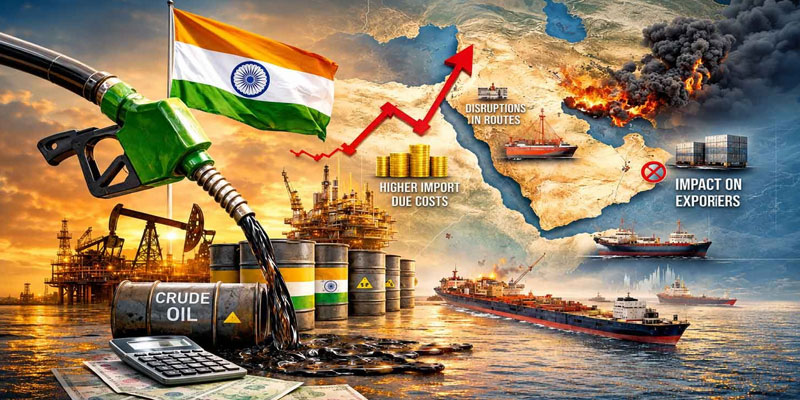
Escalating hostilities between Israel and Iran have sent shockwaves through global financial markets, causing gold prices to surge to unprecedented levels, crude oil to spike, and the Indian Rupee to tumble. Investors are increasingly jittery as the geopolitical landscape in the Middle East grows more volatile.
Overnight Israeli attacks targeting Iran's nuclear facilities initially sent crude oil prices soaring over 14%, marking their highest point since January. While prices cooled later in the day, they still remained up over 7%, on track for their biggest daily rise since March 2022. The fresh wave of Israeli attacks continued despite US President Donald Trump urging Iran to agree to a nuclear deal and warning of more brutal actions from Israel.
The fallout was evident in India's equity markets, which extended their losing streak for a second consecutive session on Friday. The Sensex plunged 573.38 points (0.70%) to close at 81,118.60, while the Nifty 50 dropped 169.60 points (0.68%) to 24,718.60. Both indices recorded weekly losses of 1.1-1.3%.
As investors flocked to safe-haven assets, gold prices surged. In the domestic spot market, gold rallied by ₹1,603 per 10 grams (2%) on Friday, reaching a new high of ₹99,058. On the Multi Commodity Exchange (MCX), gold for August delivery even breached the ₹1 lakh per 10 gram mark, touching a fresh high of ₹1,00,403 before closing the session at ₹98,392 for August futures. Globally, gold is now trading within striking distance of its April record of $3,500.10 an ounce.
Ajit Mishra, Senior Vice-President Research at Religare Broking, noted, "The initial reaction was largely driven by a sharp rise in crude oil prices due to geopolitical tensions in the Middle East. However, a moderation in CPI inflation helped limit the downside."
The Indian Rupee experienced its biggest single-day fall in over a month, closing below the 86 to the Dollar mark. This sharp depreciation was a direct consequence of spiking crude oil prices following Israel's attacks on Iran's nuclear and military facilities. While central bank intervention helped pull the Rupee up from an intraday low of 86.20 per Dollar, the underlying pressure remains. India's significant crude oil import dependency, at around 90%, means rising oil prices will directly impact import costs, leading to further depreciating effects on the Rupee.
Concerns about the inflationary impact of soaring global crude oil prices also led the yield on the new 10-year benchmark Government Security to rise by 2 basis points, closing at 6.30% from its previous close of 6.28%.
On Wall Street, the Dow fell more than 495 points in early trades, and the S&P declined around 1%.
The escalating conflict saw Israel attack nuclear sites, missile factories, and kill several commanders in its efforts to prevent Tehran from developing atomic weapons. Iran has vehemently declared Israel's strikes on its facilities as a "declaration of war." Meanwhile, Israeli Prime Minister Benjamin Netanyahu stated that the US was aware of the attacks.
Reuters reported that Iran informed the United Nations Security Council in a letter that it would respond "decisively and proportionally" to Israel’s "unlawful" and "cowardly" acts. The UNSC is scheduled to meet later on Friday to address the escalating crisis. Iran's Nournews also reported that 78 people were killed and 329 injured in Israeli attacks on residential areas in Tehran.
The situation remains highly fluid, and global markets are likely to remain sensitive to further developments in the Middle East.