Anti-Islamabad Anger Grows Despite Bloody Security Action
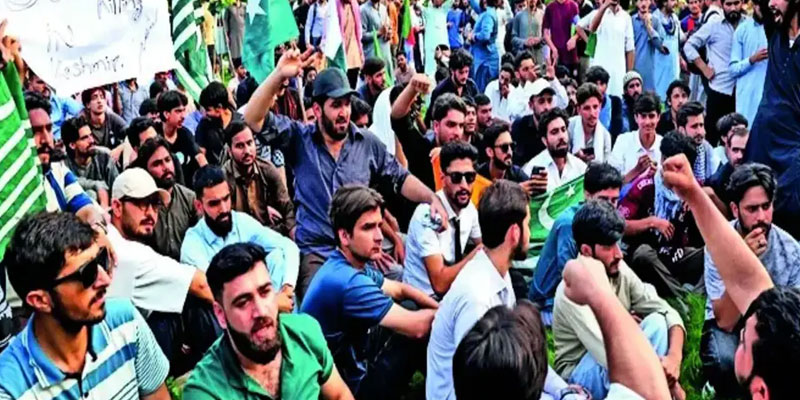
Despite the bloody crackdown by Pakistani security forces, people in Pakistan-occupied Kashmir (PoK) continue to brave taking to the streets to protest against Islamabad's alleged atrocities in the region. What began as demonstrations over soaring prices, shortages of essential commodities and governance failures has now evolved into a wider movement challenging Pakistan's political control over the territory. Reports of civilian casualties, injuries and the use of force against protesters have further intensified public anger, making the unrest one of the most serious crises witnessed in the region in recent years.
From Economic Grievances to Political Resistance
The protests were initially spearheaded by the Jammu and Kashmir Joint Awami Action Committee (JAAC), which demanded affordable electricity, subsidised flour, an end to privileges enjoyed by the political elite and greater administrative accountability.
However, the movement has gradually expanded beyond economic concerns. Protesters and activists allege that Pakistan has long treated Pakistan-occupied Kashmir as a strategically controlled territory rather than a genuinely representative political entity. Rights groups have also raised concerns over restrictions on political freedoms, alleged human rights violations and the credibility of electoral processes in the region.
The protests have increasingly acquired symbolic significance. Videos circulating on social media show women, youth and children participating in demonstrations, while protesters have been heard chanting "Sarfaroshi Ki Tamannah," the iconic patriotic verse associated with India's freedom movement. The slogan has come to represent resistance against perceived political repression and the demand for dignity and democratic rights.
Crackdown Deepens the Crisis
According to recent reports, Pakistani security forces have killed more than 37 civilians during three days of intensified crackdowns, while over 200 people have reportedly been injured. Some reports suggest higher casualty figures depending on the source and the period covered, although independent verification remains difficult because of restricted access to the region.
The violence has reportedly been concentrated in areas such as Rawalakot and Muzaffarabad, where demonstrations and election-related protests have been met with heavy security deployment. Protesters and local organisations have alleged the use of live ammunition and sniper fire during the operations.
The JAAC claims that the crackdown has continued since early June, with repeated attempts to suppress demonstrations through arrests and force. The latest violence has further strengthened public resolve, with protests continuing despite growing risks.
Why the Situation Matters
The ongoing unrest carries implications beyond immediate law-and-order concerns.
· The protests have shifted from economic demands to a broader challenge against Islamabad's authority.
· Allegations of excessive force have intensified international attention on the region.
· The unrest raises questions about governance, political representation and civil liberties in PoK.
· Continued instability could undermine Pakistan's narrative of normalcy in the territory.
· India has reiterated its longstanding position on Pakistan-occupied Kashmir, arguing that political processes there cannot override concerns regarding sovereignty and alleged rights violations.
· Restricted access to the region makes independent verification of casualty figures and events difficult, contributing to competing narratives.
A Crisis That Demands More Than Force
The evolving situation in Pakistan-occupied Kashmir reflects a deeper crisis than a series of isolated protests. The demonstrations now represent growing frustration over economic hardship, governance concerns and allegations of political exclusion. While casualty figures and specific claims remain difficult to verify independently, the persistence of protests despite an intensified security response indicates that underlying grievances remain unresolved. A durable solution is unlikely to emerge through force alone. Addressing public concerns through dialogue, transparency and accountable governance will be essential if lasting stability is to be restored. As tensions continue, developments in PoK are likely to remain under close regional and international scrutiny.
(With agency inputs)