Beijing Becomes Power Epicentre
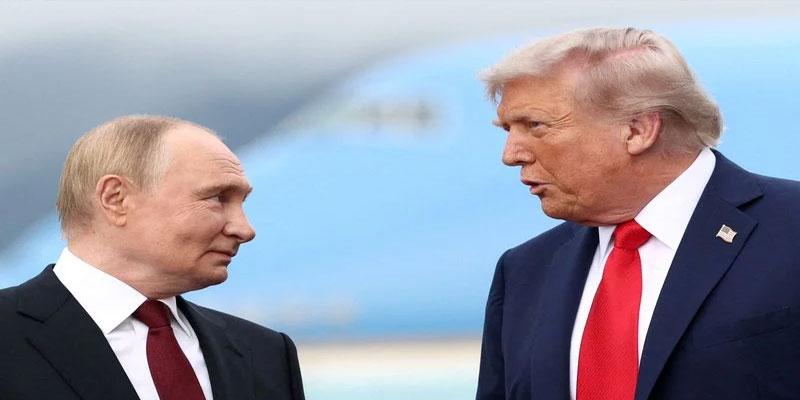
Russian President Vladimir Putin arrived in China just days after U.S. President Donald Trump concluded his high-profile visit to Beijing, turning the Chinese capital into the center of an intense geopolitical balancing act. The back-to-back diplomatic engagements underscore China’s increasingly pivotal role in the evolving relationship between the world’s three most influential powers. For Moscow, the timing offers an opportunity to publicly reaffirm that its strategic partnership with Beijing remains strong, even as Washington attempts to stabilize its own strained ties with China.
Why the Timing of the Visit Matters
Although Russian and Chinese officials maintain that Putin’s trip had been planned months in advance to commemorate the 25th anniversary of the 2001 Sino-Russian Treaty of Good-Neighborliness and Friendly Cooperation, the symbolism of the timing is impossible to ignore. Putin’s arrival immediately after Trump’s departure has fueled perceptions that Moscow and Beijing are carefully coordinating diplomatic messaging at a moment of heightened global uncertainty.
The sequence also allows China to project itself as a rare power capable of engaging both Washington and Moscow within days, highlighting Beijing’s growing diplomatic leverage in an increasingly fractured international system. In strategic terms, the optics reinforce the idea that China is not merely reacting to global power competition but actively shaping it.
Deepening Russia-China Strategic Coordination
Putin and Chinese President Xi Jinping are expected to focus heavily on expanding cooperation in energy, trade, technology, and geopolitical coordination. Over the past several years, economic ties between the two countries have deepened significantly, driven in large part by Western sanctions on Russia following the war in Ukraine.
China has emerged as one of Russia’s most important economic lifelines, purchasing large quantities of Russian oil and gas while also increasing cooperation in infrastructure and financial systems designed to reduce dependence on Western institutions. Discussions during the visit are expected to include new energy projects, technology partnerships, and mechanisms to bypass sanctions-related financial restrictions.
Beyond economics, the language surrounding the partnership has grown increasingly strategic. Putin has repeatedly described relations with China as reaching an “unprecedented level” of trust. Both countries have emphasized cooperation on matters linked to sovereignty, territorial integrity, and national security — language widely interpreted as mutual diplomatic backing for China on Taiwan and for Russia regarding Ukraine and its regional sphere of influence.
Implications for Global Geopolitics
The rapid succession of Trump’s Beijing visit and Putin’s follow-up summit sharpens concerns in Western capitals about the emergence of a more cohesive Russia-China alignment. For the United States and Europe, the optics of close coordination between Xi and Putin may reinforce fears that Beijing is quietly supporting Moscow despite publicly presenting itself as neutral on Ukraine.
The visit will likely intensify scrutiny over China’s role in providing Russia with technology, dual-use exports, and diplomatic cover in international forums. If Beijing and Moscow move toward more formalized economic and security coordination, it could accelerate the fragmentation of the global order into competing geopolitical blocs.
Beijing at the Center of Great-Power Rivalry
Putin’s visit to China reflects more than ceremonial diplomacy; it highlights the accelerating strategic convergence between Moscow and Beijing at a time of growing global polarization. By hosting both Trump and Putin within days, China has reinforced its position as a central actor in the evolving balance of power. Whether Beijing can continue balancing engagement with Washington while deepening ties with Moscow may shape the future of international diplomacy, global trade, and the broader geopolitical order in the years ahead.
(With agency inputs)