Ravan was more than a Ramayana villain. Explore his birthplace, parents, wives, sons, powers, 10 heads, boons, death, and where he is still worshipped.
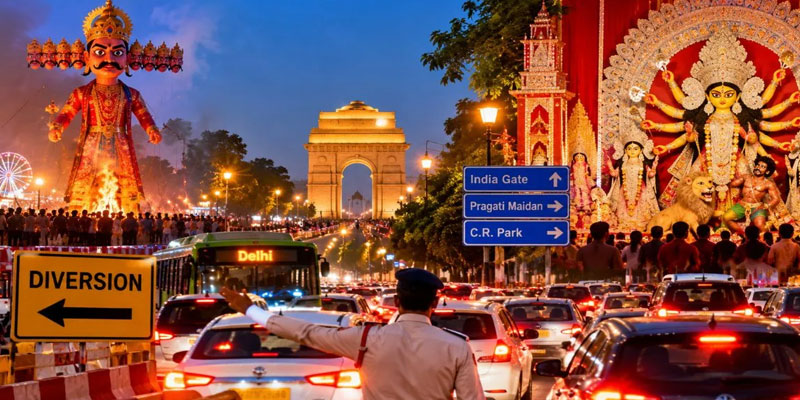
Each year, Dussehra celebrates the destruction by fire of Ravana — Lanka's ten-headed king — in the ritual of Ravan Dahan. In 2025, the festival will fall on October 2, when giant effigies of Ravana will burn throughout India. But there is more to the effigy than meets the eye. The complex figure behind the effigy was not only a Ramayana villain, but also an illustrious scholar, warrior, and Lord Shiva bhakt.
From his birth and upbringing to parents, wives, sons, powers, and even where he is still worshipped, here's what you need to know about Ravana.
Ravan was the powerful king of Lanka, ten-headed and twenty-armed at birth. Son of sage Vishrava and demoness Kaikesi, Ravan was a great scholar, master of the Vedas, and devoted follower of Lord Shiva. Everyone admired his intelligence and power but criticised him for his pride and wrongdoings — mainly for kidnapping Goddess Sita — which ultimately resulted in his death at the hands of Lord Rama.
Where was Ravan born?
According to some traditions, Ravan was born in Bisrakh village in Greater Noida, Uttar Pradesh, which is still linked to his memory. Other texts suggest that he was born in Lanka.
Who were Ravan’s parents?
His father was Rishi Vishrava, a learned sage, and his mother was Kaikesi, a demoness. Thus, Ravan was born of a Brahmin father and a Rakshasa mother.
Who was Ravan’s wife?
Ravan had two principal wives: Mandodari, his chief queen, and Dhanyamalini. Some texts also mention a third wife, though stories vary.
Why did Ravan have 10 heads?
Ravan earned his ten heads as a boon from Lord Shiva after performing intense penance. Symbolically, the 10 heads represent the 10 negative traits in humans: lust, anger, greed, attachment, corruption, fear, cruelty, ego, envy, and deceit.
Why did Ravan abduct Sita?
Ravan abducted Sita partly out of revenge for the insult to his sister Shurpanakha, and partly because he was mesmerised by her beauty. Disguised as a sage, he tricked her into crossing the Lakshman Rekha and carried her away to Lanka.
How did Ravan die?
Ravan’s death came at the hands of Lord Rama, who destroyed the nectar-filled pot hidden in his navel with the help of knowledge given by Ravan’s brother Vibhishana. Without this source of immortality, Ravan could finally be killed.
Who were Ravan’s brothers?
Real brothers: Kumbhakarna and Vibhishana
Stepbrothers: Khara, Dushan, Ahiravana, and Kubera (the god of wealth)
Who were Ravan’s children?
From Mandodari, his sons included Akshaykumar, Meghnad (Indrajit), Mahodara, Prahasta, and Virupaksha. With Dhanyamalini, he had Atikaya and Trishira. Other texts mention more sons from a third wife.
What was Ravan’s full name?
Ravan’s full name was Dashagriva or Dashanana, meaning “the one with ten heads.” The name “Ravan” itself was said to be given by Lord Shiva.
Who were Ravan’s sisters?
Ravan’s sisters included Shurpanakha, whose insult by Lakshman set off the chain of events leading to the Ramayana war, and Kumbhini, who was married to the Rakshasa king Madhu.
When did Ravan die?
Ravan was killed by Lord Rama on the tenth day of Shukla Paksha in Ashwin month (Vijayadashami) during the Treta Yuga — a day we now celebrate as Dussehra.
What was Ravan’s gotra?
Ravan belonged to the Pulastya gotra, being the grandson of sage Pulastya.
Was Ravan an avatar?
Yes. Ravan and his brother Kumbhakarna were incarnations of Jaya and Vijaya, the gatekeepers of Lord Vishnu, cursed to be born three times as demons.
What boons did Ravan receive?
Ravan’s most important boon was that no god, demon, yaksha, or serpent could kill him. But he overlooked humans, which is why Lord Vishnu incarnated as Rama to defeat him. He also had mastery over weapons, magical powers, and control over the Navagrahas.
Who performed Ravan’s last rites?
It was Ravan’s brother Vibhishana, at Lord Rama’s command, who performed his funeral rites.
Where is Ravan worshipped?
Though he is vilified in much of India, Ravan is worshipped in some regions:
Bisrakh (Greater Noida, UP) – believed to be his birthplace
Ravan villages in Mandsaur and Vidisha (Madhya Pradesh) – where he is seen as a revered ancestor
Kanpur (UP) – home to the Dashanan temple
Kakinada (Andhra Pradesh) – where Ravan is worshipped as a ruler
What were Ravan’s 10 names?
Ravan
Dashanan
Lankapati
Rakshasraj
Lankesh
Mahabali
Sarpanan
Shoursen
Vishravasi
Durjaya
Life was a paradox for Ravan, an outstanding scholar, a powerful king, and a great worshipper, but his ego and pride led him astray. His tale continues to intrigue us, not just as a cautionary story of ego and lust, but also as an indication of the complexity of human nature.
On Dussehra 2025, as Ravan effigies are burnt all over India, they will once again represent the victory of good over evil — and the universal appeal of his legend.
MANISH