Washington Offers Reward for Iran’s Top Leadership
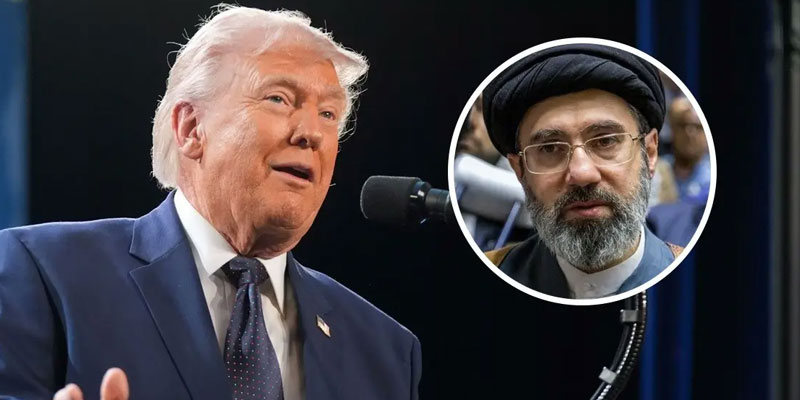
The United States has intensified pressure on Iran by announcing a reward of up to $10 million for information leading to key figures in Tehran’s leadership. The bounty, unveiled on March 13, 2026, focuses on Iran’s Supreme Leader Mojtaba Khamenei and several senior officials linked to the powerful Islamic Revolutionary Guard Corps (IRGC).
The announcement comes amid an escalating war involving Iran, the United States, and Israel. Washington’s move signals a sharp expansion of its strategy to target individuals it accuses of directing militant operations and destabilizing activities across the Middle East.
The Rewards for Justice Program
The bounty has been issued under the US government’s Rewards for Justice Program, a long-running initiative managed by the Diplomatic Security Service of the US Department of State.
Launched after the September 11 attacks in 2001, the program offers financial rewards for information that helps disrupt terrorism targeting US interests. Over the years, it has focused on extremist groups such as Al-Qaeda and ISIS, as well as individuals linked to militant networks across the world.
The program allows informants to provide tips through encrypted platforms such as Tor and Signal or via dedicated email channels. Successful tipsters can receive monetary rewards and, in some cases, relocation assistance.
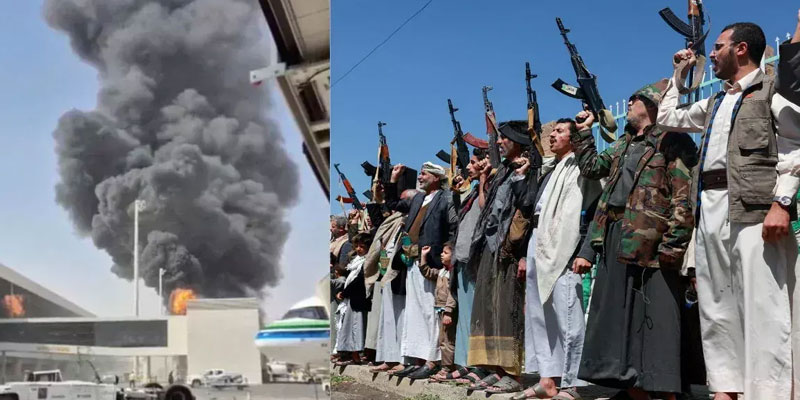
By placing Iran’s senior leadership on this list, Washington is signaling that it views the country’s security apparatus as directly responsible for operations carried out by proxy groups in regions including Yemen and Lebanon.
Mojtaba Khamenei’s Rise to Power
At the center of the US announcement is Mojtaba Khamenei, who assumed Iran’s highest religious and political office after the death of his father, Ali Khamenei, in February 2026.
Before ascending to the supreme leadership, Mojtaba had already wielded considerable influence within Iran’s political and security establishment. Analysts often described him as a behind-the-scenes power broker who maintained close ties with the IRGC and the Basij militia.
His rise was controversial within Iran’s clerical establishment because he lacked the traditional religious authority—known as “marja’” status—usually expected of a supreme leader. Nevertheless, amid wartime pressure and internal power struggles, the Assembly of Experts endorsed his leadership, consolidating the hardline faction’s control over the state.
Other Key Figures on the US List
Alongside Mojtaba Khamenei, the US bounty also includes several influential figures within Iran’s political and security circles. Among them is Ali Larijani, a former parliament speaker and senior advisor to the supreme leader who previously served as a nuclear negotiator.
Another key figure is Ali Asghar Hejazi, the chief of staff to the supreme leader and a long-time administrator within the leadership’s powerful office. Military strategist Yahya Rahim Safavi, a former IRGC commander known for shaping Iran’s asymmetric warfare doctrine, is also included.
Additionally, Intelligence Minister Esmail Khatib has been listed for alleged involvement in overseas operations targeting dissidents and critics of the Iranian government.
Strategic and Global Implications
The reward announcement reflects a broader US strategy aimed at weakening Iran’s leadership structure during an already volatile conflict. By offering incentives for information, Washington hopes to encourage internal defections or intelligence leaks that could expose operational networks.
However, the move also carries risks. Tehran has dismissed the bounty as “psychological warfare,” while allies such as Russia and China have signaled continued diplomatic and economic backing for Iran.
Analysts warn that such actions could provoke retaliatory measures from Iran’s regional allies, including groups such as Hezbollah and Houthi movement.
Escalation in a High-Stakes Confrontation
The US decision to place a bounty on Iran’s top leadership marks a dramatic escalation in an already tense geopolitical standoff. By targeting the individuals who shape Iran’s military and political strategy, Washington is signaling its determination to pressure the regime at the highest levels.
Whether the move leads to actionable intelligence or simply deepens hostility remains uncertain. What is clear, however, is that the conflict between Iran and its adversaries has entered a phase where political, military, and psychological strategies are increasingly intertwined—raising the stakes for regional stability and global security.
(With agency inputs)