Chief Minister Before the Court
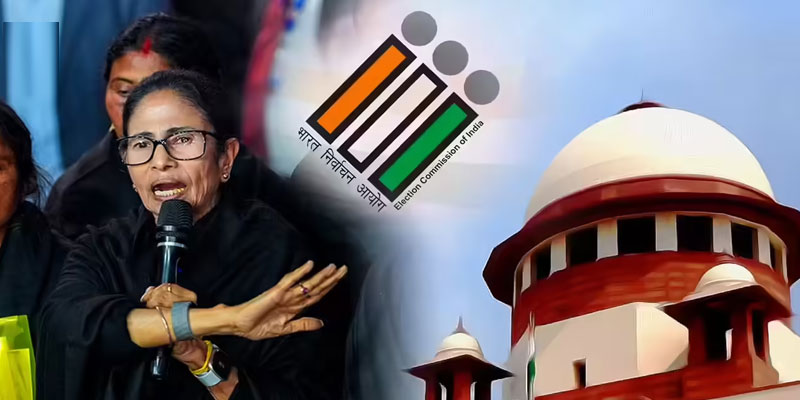
West Bengal Chief Minister Mamata Banerjee made an unusual and forceful appearance before the Supreme Court on February 4, 2026, personally arguing that the Election Commission of India’s (ECI) Special Intensive Revision (SIR) of electoral rolls was being misused to strike off legitimate voters and weaken democratic participation ahead of the 2026 Assembly elections. Addressing a bench led by the Chief Justice, Banerjee warned that the exercise was creating fear, stress, and large-scale disenfranchisement, alleging that democracy itself was being undermined behind procedural formalities.
What Is the SIR and Why It Matters
The SIR was initiated by the ECI in December 2025, the first such comprehensive revision in West Bengal since 2003. The stated objective was to clean up electoral rolls by identifying duplicate, shifted, or ineligible voters. Booth Level Officers (BLOs) were tasked with door-to-door verification, supported by digital checks to flag inconsistencies in names, ages, or addresses. The exercise was scheduled to conclude by the end of January, later extended into early February following concerns over workload and public anxiety.
At the heart of the controversy is scale. According to ECI data, around 58 lakh entries were flagged in the draft list as having “logical discrepancies.” These names were not automatically deleted but marked for verification through statutory forms and hearings. Additionally, nearly 1.5 crore notices were issued to voters seeking clarification or confirmation.
Mamata Banerjee’s Core Allegations
Banerjee argued that the revision was less about accuracy and more about exclusion. She claimed the process disproportionately targeted the poor, migrant workers, and rural voters—groups that form the backbone of her party’s support. She further alleged that the pressure placed on BLOs led to extreme stress, citing over 150 reported deaths during the revision period, including that of a polling official.
The Chief Minister also questioned the timing of the exercise, noting that no SIR had been conducted for over two decades and asking why such an intrusive process was suddenly deemed urgent just months before a crucial election. She raised concerns over the deployment of thousands of central micro-observers, suggesting institutional bias and inadequate consultation with the state government.
Election Commission’s Response
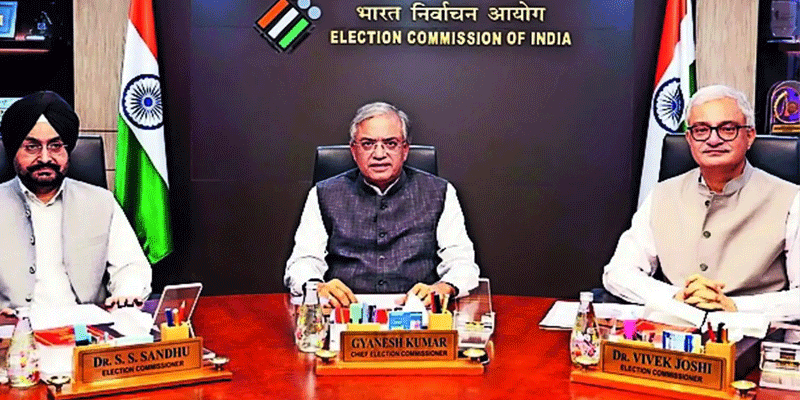
The ECI has firmly rejected these claims. In its submissions and public statements, it maintained that no mass deletions have taken place, stressing that the 58 lakh entries are only part of a draft list subject to verification and objections. According to the Commission, deletions can occur only after due process, including notice, hearing, and documentation.
On the allegation of deaths linked to the exercise, the ECI stated that no causal connection had been established and described the claims as exaggerated. It also defended the timing, arguing that a long-pending revision was necessary to address errors that accumulated during the pandemic years, including duplicate and fictitious entries.
A Larger Democratic Test
The Supreme Court has sought a detailed response from the ECI, indicating concern over public stress while underscoring the need to preserve electoral integrity. The case now sits at the intersection of two constitutional imperatives: protecting the right to vote and ensuring clean electoral rolls.
Balancing Electoral Integrity and Voter Trust
The SIR dispute in West Bengal is no longer just an administrative disagreement; it is a defining political and constitutional moment ahead of the 2026 polls. Whether the exercise is seen as essential reform or targeted exclusion will depend on transparency, judicial scrutiny, and the final shape of the voter rolls. For India’s democracy, the outcome will test how institutions balance procedural rigor with public trust in the electoral process.
(With agency inputs)