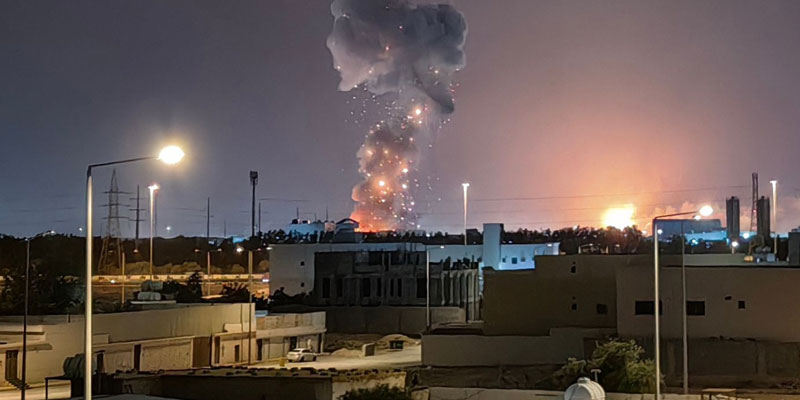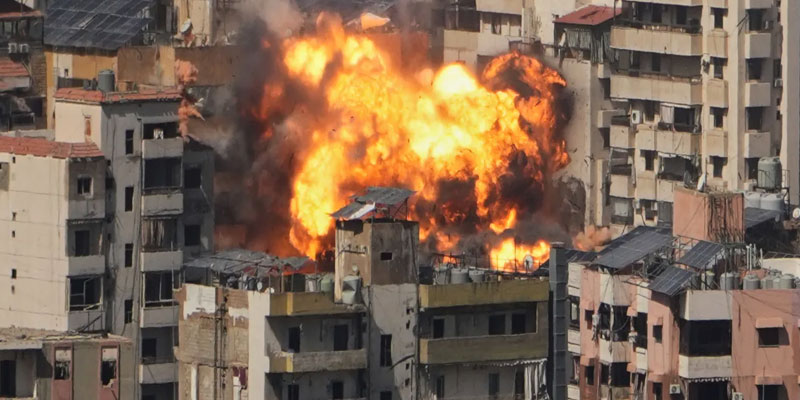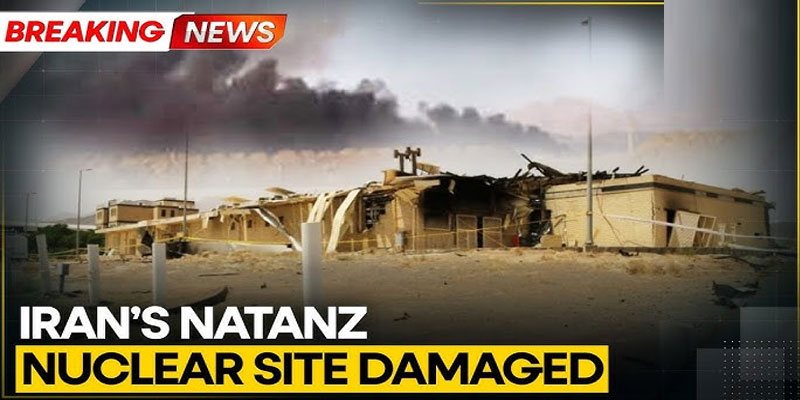
The United States and Israel struck Iran's Natanz nuclear facility, with authorities confirming no radioactive leakage occurred. Even as damage to the site is reported, the absence of a radiological incident highlights a carefully calibrated escalation—one that signals strength without crossing catastrophic thresholds.
Natanz Targeted: Precision Without Fallout
The strike on Natanz, Iran’s flagship uranium enrichment complex, marks a significant escalation in the conflict. According to international monitoring assessments, the damage appears largely confined to above-ground infrastructure and access points to underground facilities.
Crucially, there was no radiological consequence. This suggests the operation aimed to degrade operational capacity—such as power supply, entry routes, and support systems—without breaching sensitive nuclear material storage or triggering contamination.
Strategically, this reflects a dual intent.
· First, it sends a clear warning to Iran against pursuing any accelerated nuclear programme.
· Second, it reassures global observers that escalation can be managed without triggering a nuclear disaster, avoiding the kind of international backlash that would follow a large-scale environmental or humanitarian crisis.
Iran’s Response: Long-Range Signalling
Iran’s retaliation came in the form of missile launches aimed toward Diego Garcia, a key US–UK military base in the Indian Ocean. Although the missiles failed to hit their target—one malfunctioning and another intercepted—the message was unmistakable.
By targeting a base thousands of kilometres away, Iran demonstrated the extended reach of its missile capabilities. This goes beyond immediate regional threats, indicating that even distant strategic assets are within its potential strike envelope.
The timing also carried geopolitical weight. The move followed British support for US operations in securing the Strait of Hormuz, suggesting that Iran is willing to broaden the conflict’s scope to deter external involvement.
“Winding Down” vs Expanding Battlefield
Amid these developments, Donald Trump claimed the US is “close” to achieving its objectives and is considering winding down major operations. Yet, this rhetoric contrasts sharply with the expanding geographic scope of the conflict.
Strikes on nuclear infrastructure and retaliatory missile launches across thousands of kilometres indicate that the confrontation is evolving, not contracting. At the same time, Trump ruled out a ceasefire and suggested that responsibility for securing critical routes like the Strait of Hormuz should shift to other nations.
This reflects a broader recalibration. While the US seeks to maintain military dominance in the short term, it appears increasingly interested in reducing long-term exposure and sharing the burden with allies.
Strategic Implications: Testing Red Lines
The Natanz strike and the attempted attack on Diego Garcia reveal a pattern of controlled escalation. Both sides are probing limits—targeting high-value assets while avoiding actions that would trigger uncontrollable consequences.
For the US and Israel, hitting a nuclear facility without causing contamination demonstrates operational precision and restraint. For Iran, striking at a distant base—even unsuccessfully—signals deterrence capability and strategic depth.
This dynamic suggests that while neither side seeks full-scale escalation, both are willing to push boundaries to strengthen their negotiating position.
A Narrow Path Between Deterrence and Escalation
The events at Natanz and beyond illustrate a conflict entering a more dangerous phase—one defined by calculated risks and expanding reach. While immediate catastrophe has been avoided, the margin for error is shrinking.
Ultimately, the challenge lies in whether these controlled escalations can remain contained. As both sides test red lines, the risk is not just in what is done, but in how far each believes it can go without triggering a wider, more destructive confrontation.
(With agency inputs)