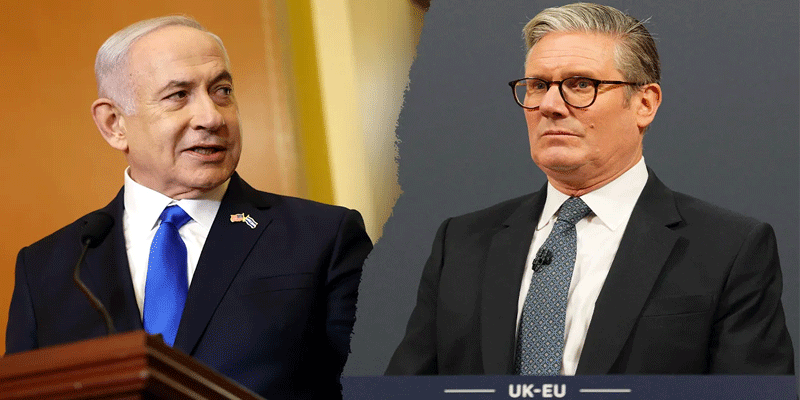
UK-Israel ties have hit a new low after Britain imposed sweeping measures against Israeli settlement activity in the occupied West Bank, while Israel responded by ordering the closure of Britain’s East Jerusalem consulate and imposing entry bans on 12 British nationals. The confrontation marks a dramatic deterioration in relations between two countries with historically close security and diplomatic ties.
From Diplomatic Pressure to Punitive Action
The immediate dispute centres on Israel’s continued settlement expansion and rising settler violence in the West Bank. Britain, alongside France and Canada, has moved beyond conventional diplomatic criticism by announcing restrictions on trade connected to Israeli settlements. Eleven other countries, including Spain, Norway, Sweden and Ireland, have also backed or announced similar measures.
London says the measures are intended to protect the possibility of a two-state solution and respond to what it describes as a rapidly deteriorating situation in the West Bank.
Primary Components of the British Executive Action
The British package includes several significant measures:
· Settlement trade ban: Britain will prohibit imports of goods from Israeli settlements in the West Bank, joining France and Canada in the coordinated action.
· Restrictions on settlement-linked activity: The measures extend to commercial relationships and activities connected with settlement expansion, increasing compliance and due-diligence pressures on British businesses.
· Targeted sanctions: Britain is imposing further measures against individuals and entities associated with settler violence and settlement expansion, building on sanctions introduced earlier in 2026.
· International-law position: London has sharpened its language on the occupation, arguing that Israeli settlement activity violates international law and undermines a viable Palestinian state.
· Two-state objective: Britain and 11 partner countries say settlement expansion must stop because it threatens the territorial basis of a negotiated two-state settlement.
Israel’s Retaliation Raises the Stakes
Israel swiftly rejected Britain’s measures as unacceptable interference and announced reciprocal steps. Foreign Minister Gideon Sa’ar said the British Consulate in East Jerusalem would be closed. The consulate represents British interests in Jerusalem, the West Bank and Gaza and provides political, economic, security and consular engagement with Palestinians.
The latest details indicate that British diplomats assigned to the consulate will lose accreditation within 30 days, while British representatives involved in a US-led Gaza coordination mission and diplomats based in Ramallah are expected to leave within seven days. Israel has also halted British training of Palestinian Authority security personnel and barred 12 British nationals from entering Israel.
A Diplomatic Relationship at a Breaking Point
The dispute reflects a much deeper deterioration in UK-Israel relations following disagreements over Gaza, settlement expansion and Palestinian statehood. Britain’s latest measures also expose growing differences among Western allies: several European governments are moving toward tougher action, while the United States has not followed London’s approach.
The Bigger Test: Pressure Without Closing Doors
The confrontation demonstrates how international patience over settlement expansion is increasingly giving way to economic and diplomatic pressure. Yet punitive measures also risk narrowing channels needed for humanitarian coordination, security cooperation and future negotiations.
The challenge for Britain is therefore to exert meaningful pressure without severing the diplomatic channels needed for peace. If the two-state solution is to remain viable, the coming months will test whether sanctions can change realities on the ground—or merely deepen an already widening diplomatic divide.
(With agency inputs)