Judge Strikes Down Trump-Era H-1B Visa Fee
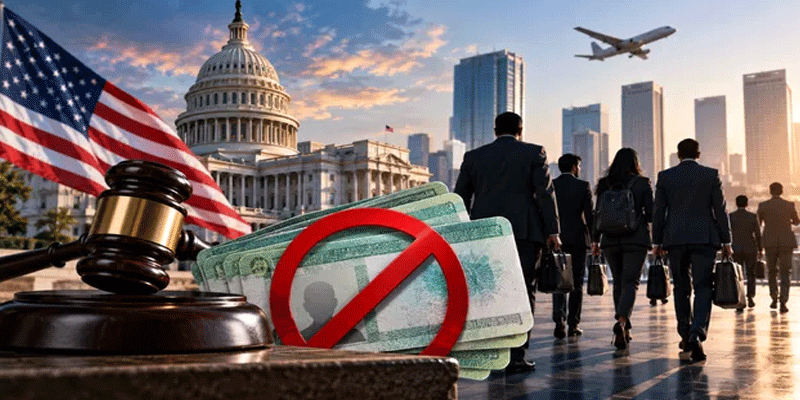
A federal judge in Boston has struck down the Trump administration’s controversial $100,000 fee on new H-1B visa applications, delivering a significant setback to a policy designed to discourage the hiring of foreign workers in the United States. The ruling has generated considerable attention because of its direct implications for Indian technology professionals, multinational firms, universities, and healthcare institutions that rely heavily on skilled migrant talent. The decision also revives a broader constitutional debate over the limits of presidential authority in shaping immigration policy without congressional approval.
Background to the Controversial Policy
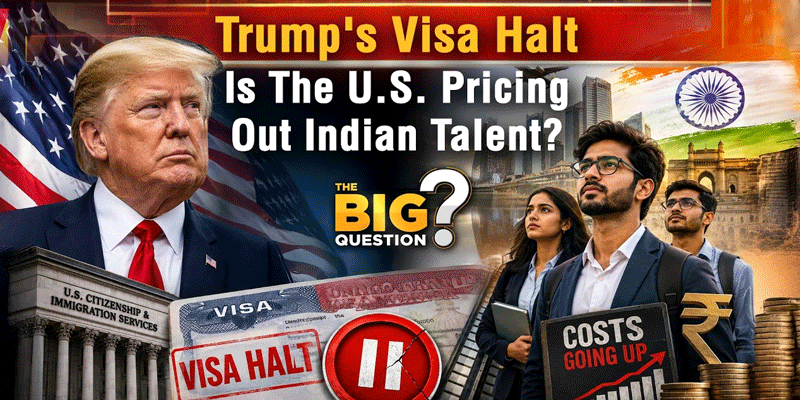
US President Donald Trump introduced the measure through a presidential proclamation in September 2025 as part of a wider immigration overhaul. The administration argued that the H-1B programme was being misused by outsourcing firms and that stricter financial barriers were necessary to protect American jobs.
The proposed fee represented an unprecedented increase compared with the earlier H-1B application charges, which generally ranged between $1,000 and $5,000. The measure specifically targeted fresh H-1B petitions filed from outside the United States. For Indian professionals, the implications were particularly serious because Indians accounted for nearly 71 percent of H-1B visa recipients in 2024. Industry experts warned that the steep fee could sharply increase hiring costs, reduce employment opportunities, and discourage global firms from recruiting overseas talent.
What Happened During the Hearing
Judge Leo Sorokin ruled that the administration had exceeded its constitutional authority by imposing what effectively amounted to a tax without approval from Congress. During the hearing, the court examined whether existing immigration laws granted the president the power to create such a fee under emergency or executive immigration provisions.
The administration argued that broader immigration statutes and presidential powers under Section 212(f) allowed flexibility in regulating entry into the United States. However, the judge rejected this interpretation, stating that while the executive branch possesses authority to administer immigration laws, taxation powers remain exclusively with Congress under the US constitutional framework.
The ruling also highlighted a legal contradiction with a separate December 2025 judgment by Judge Howell, who had earlier upheld the fee under executive authority provisions. Sorokin’s judgment, however, concluded that no statute explicitly empowered the president to impose a new financial levy of this magnitude on visa applicants.
Trump Administration Pushes Back
The US Department of Homeland Security strongly criticised the verdict and accused the judiciary of obstructing immigration reform efforts. In an official response, the department described the judgment as an example of “judicial activism” interfering with President Trump’s immigration agenda.
The administration is expected to challenge the ruling through the appeals process, meaning the legal battle over executive immigration authority could continue in higher courts.
A Landmark Ruling on Immigration Powers and Skilled Mobility
The judgment marks an important moment in the ongoing struggle between executive power and congressional authority in the United States. Beyond its constitutional significance, the ruling offers immediate relief to thousands of Indian professionals and businesses dependent on the H-1B system. It also signals that future immigration reforms, especially those carrying major financial consequences, may face closer judicial scrutiny unless backed clearly by legislative approval.
(With agency inputs)