Iran War Sends Ripples Through India’s Packaged Water Industry
The ongoing conflict involving Iran, Israel, and the United States is now rippling far beyond geopolitics—reaching everyday consumer goods in India. India’s packaged drinking water industry, valued at nearly $5 billion, is feeling the pressure as the cost of plastic packaging materials spikes sharply.
Rising crude oil prices, with Brent Crude climbing above $100 per barrel, have pushed up the prices of petrochemical derivatives such as polyethylene (PE) and polypropylene (PP). These polymers form the backbone of plastic bottles, caps, and packaging materials used across the bottled water sector.
With raw material costs rising nearly 50 percent to about ₹170 per kilogram, manufacturers are grappling with higher production costs just as summer demand—the peak consumption season for bottled water—begins to surge.
Supply Chain Shock from Gulf Disruptions
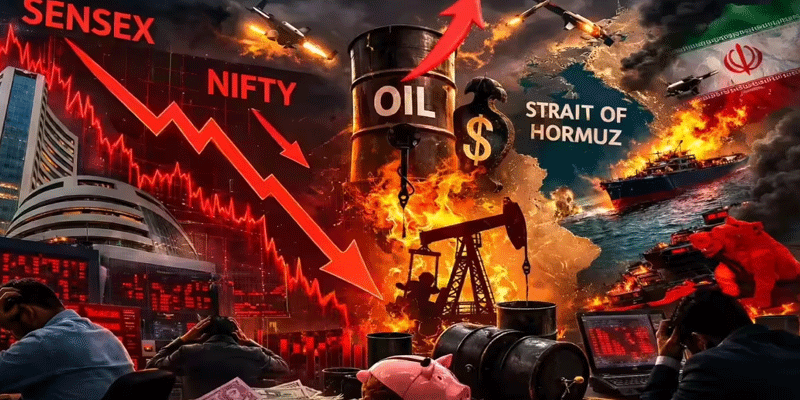
Much of the disruption stems from supply chain turmoil in the Gulf region, a major hub for petrochemical production. The Strait of Hormuz—a crucial shipping corridor for energy and chemical exports—has been affected by military tensions and shipping disruptions linked to the war.
Industry groups estimate that 15 to 30 percent of global PE and PP trade originates from petrochemical facilities in the Gulf. With maritime routes becoming riskier and freight costs rising, shipments to Asian markets, including India, have slowed or become more expensive.
For India’s more than 2,000 small packaged water producers—who account for roughly 90 percent of the market—the sudden spike in input costs is especially challenging. According to the Federation of All India Packaged Drinking Water Manufacturers’ Association, plastic packaging now accounts for the bulk of production expenses.
Industry Structure and Cost Pressures
India’s bottled water market has expanded rapidly in recent years, with annual consumption crossing 15 billion liters and growing at roughly 20 percent each year. The industry is split between multinational brands and thousands of smaller regional bottlers.
Major players such as Aquafina, Kinley, and Bisleri have deeper financial reserves to absorb part of the cost increases in order to maintain market share.
Smaller companies, however, operate on thin margins. Many have already raised distributor prices by around ₹1 per bottle and warn that further increases may be unavoidable if polymer prices remain elevated.
Impact on Consumers and Retailers
For now, retail prices—typically between ₹15 and ₹20 per liter—have largely remained unchanged. Producers are hesitant to pass on the full cost to consumers immediately, fearing a drop in sales or negative public reaction during the summer season.
However, distributors and retailers are already experiencing tighter margins. If raw material costs remain high, industry insiders expect retail prices to increase by ₹2–₹3 per bottle in the coming months.
The price pressures could also spill into other sectors that rely heavily on plastic packaging, including food, beverages, and pharmaceuticals.
A Small Bottle Reflecting Global Turbulence
The turmoil in global energy markets illustrates how geopolitical crises can quickly translate into everyday economic challenges. A conflict thousands of kilometers away is now influencing the price of something as basic as bottled drinking water in India.
While companies may try to absorb short-term costs, prolonged instability in oil and petrochemical markets could reshape pricing across the consumer goods sector. The episode also highlights the importance of strengthening domestic supply chains, expanding recycling efforts, and diversifying raw material sources to reduce vulnerability to global shocks.
(With agency inputs)