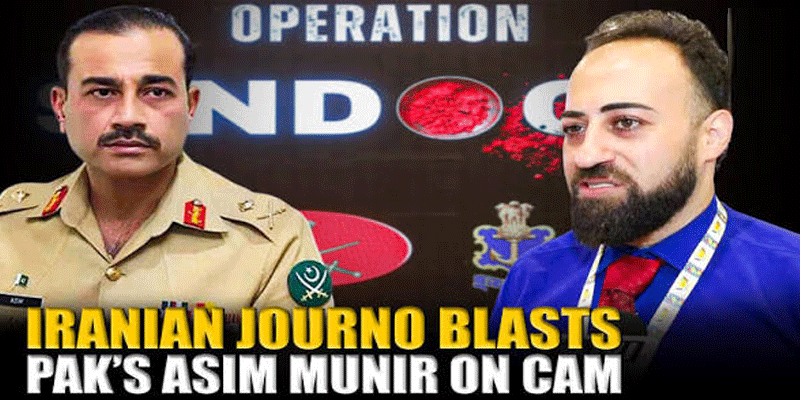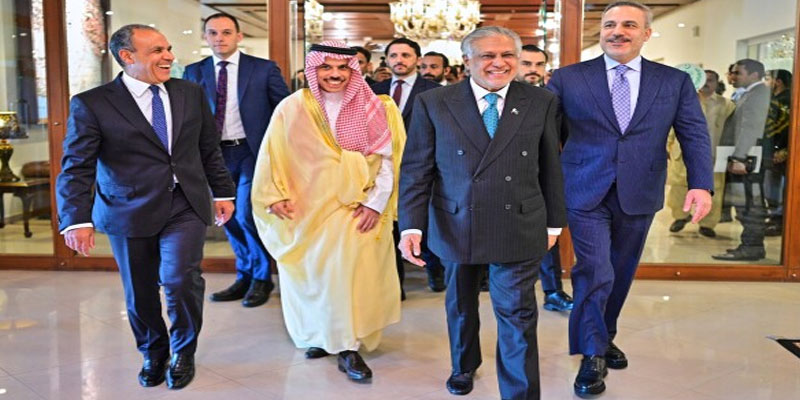
Pakistan’s Army Chief, Asim Munir, arrived in Tehran on April 15, 2026, leading a high-level delegation aimed at reviving fragile peace efforts between Iran and the United States. Welcomed by Iranian Foreign Minister Abbas Araghchi, the visit underscores Islamabad’s growing role as a mediator at a moment when the region stands at the edge of renewed escalation.
Conflict Update: A War on Pause, Not Peace
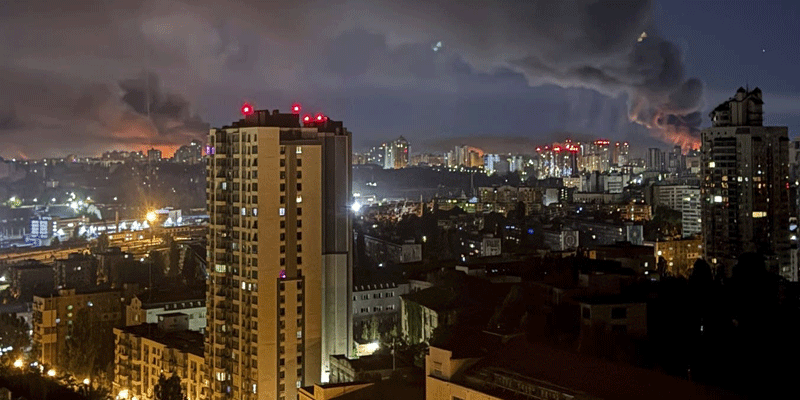
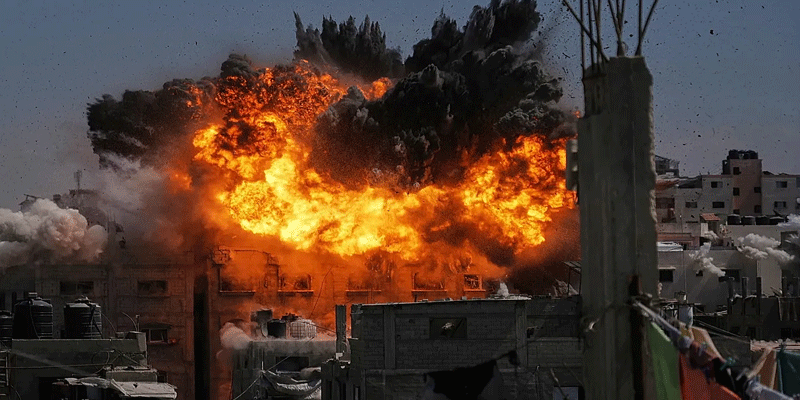
The US–Iran conflict, now nearing two months, has been defined by high-intensity military posturing and proxy confrontations across West Asia. Sparked by disputes over Iran’s nuclear program and compounded by regional tensions involving groups like Hezbollah, the conflict has strained global stability.
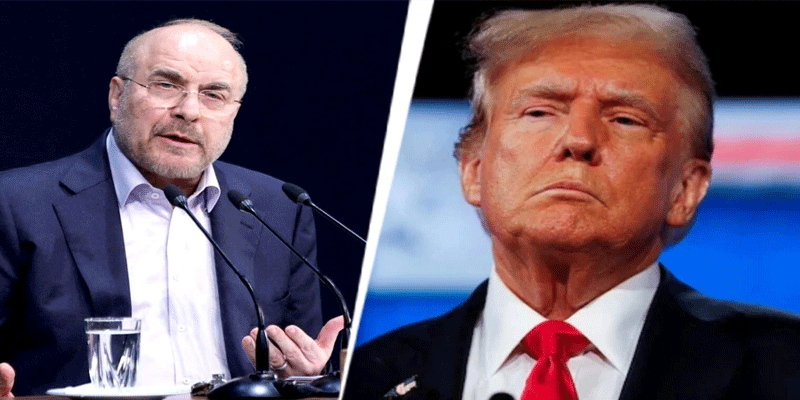
A two-week ceasefire brokered by Pakistan in early April offered temporary relief but remains precarious. Talks held in Islamabad from April 10–12—featuring US Vice President JD Vance and Iranian parliamentary speaker Mohammad Bagher Ghalibaf—collapsed after 21 hours of negotiations. Key sticking points included limits on uranium enrichment, control over the Strait of Hormuz, and Israeli military actions in Lebanon.
Despite the truce, violations have already surfaced, with the United States tightening naval blockades and Iran signaling readiness to resume escalatory measures if provoked. With the ceasefire set to expire on April 22, the window for diplomacy is rapidly closing.
Pakistan’s Mediation: From Peripheral Player to Power Broker
Pakistan’s diplomatic intervention marks a notable shift in its global positioning. Leveraging relationships with Tehran, Washington, and Gulf capitals, Islamabad has emerged as a rare intermediary trusted by both sides.
Munir’s visit—unusual for a serving army chief—carries strategic weight. It reportedly includes fresh proposals and messages from Washington focused on de-escalation. Pakistan’s earlier role in convening direct US-Iran talks has already elevated its credibility, and a second round of negotiations may again be hosted in Islamabad.
This proactive diplomacy also aligns with Pakistan’s broader strategic goals: strengthening ties with Gulf nations, attracting economic support, and asserting regional influence amid competition with India.
Washington’s Signals: Optimism Amid Pressure
US President Donald Trump has struck an optimistic tone, declaring the conflict “close to over” and suggesting a deal is within reach. His remarks, timed with Munir’s Tehran visit, reflect confidence that sustained military pressure combined with diplomatic outreach could yield results.
However, underlying challenges persist. The US continues to demand strict caps on Iran’s nuclear program, while Iran seeks sanctions relief and security guarantees—positions that remain difficult to reconcile.
Strategic Stakes: Beyond Bilateral Tensions
The implications of this conflict extend far beyond US-Iran relations. A breakdown in talks could ignite wider regional instability, drawing in proxy forces across Yemen, Syria, and Lebanon. It could also disrupt global energy markets, particularly if tensions escalate around the Strait of Hormuz.
For Iran, a negotiated settlement offers a path out of economic isolation. For the US, success would reinforce diplomatic credibility. For Pakistan, the stakes are equally high—success could cement its role as a global mediator, while failure risks diplomatic backlash.
A Narrow Path to De-escalation
As ceasefire deadlines loom and tensions simmer, the coming days will be decisive for the future of the US-Iran conflict. Pakistan’s mediation, symbolized by Asim Munir’s Tehran visit, represents a rare opportunity to bridge deep divides. Yet, entrenched positions and regional complexities make success uncertain. Whether diplomacy prevails or conflict resumes will shape not just West Asia, but the broader architecture of global peace and security.
(With agency inputs)