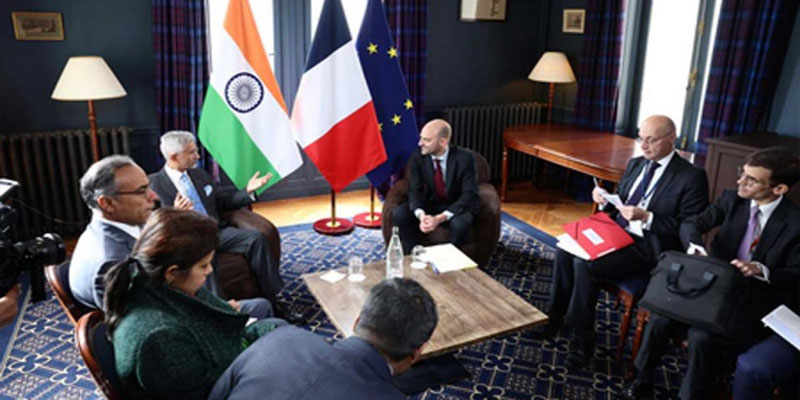
Jaishankar’s High-Stakes Engagement at G7
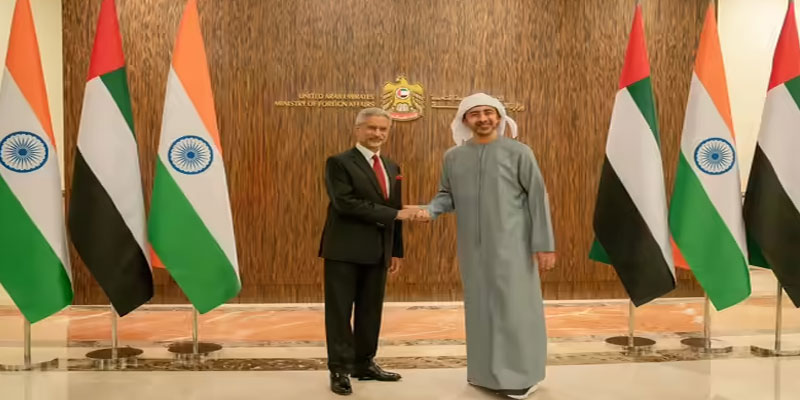
India’s External Affairs Minister S. Jaishankar held a series of crucial bilateral meetings on the sidelines of the G7 Foreign Ministers’ meet, engaging counterparts from Canada and Germany. The discussions centered on strengthening trade ties, advancing the India-Middle East-Europe Economic Corridor (IMEC), addressing the escalating West Asia conflict, and pushing for reforms in global governance institutions. At a time of geopolitical volatility and disrupted energy routes, India positioned itself as a pragmatic and stabilizing voice.
Resetting Ties with Canada
In his meeting with Anita Anand, Jaishankar focused on rebuilding ties that had been strained in recent years. The dialogue covered trade exceeding $10 billion, cooperation in critical minerals such as lithium, and agricultural exchanges including pulses. Education also featured prominently, with over 120,000 Indian students in Canada forming a key bridge.
Importantly, both sides acknowledged progress on sensitive issues, creating space for renewed political engagement. Shared concerns over the safety of diaspora communities and disruptions in oil shipments through the Strait of Hormuz added urgency to the talks, highlighting the interconnected nature of security and economic interests.
Strategic Alignment with Germany
Jaishankar’s engagement with Annalena Baerbock underscored a growing convergence between India and Germany on global challenges. Discussions focused heavily on de-escalation in West Asia, with both sides emphasizing the need to secure critical energy routes.
Germany’s interest in India’s investments in Chabahar Port and potential naval cooperation reflects a shared approach to safeguarding trade corridors. The IMEC initiative also gained traction in these talks, with European infrastructure readiness boosting confidence in the corridor’s long-term viability despite delays caused by regional conflicts.
IMEC and Supply Chain Resilience
A central theme of Jaishankar’s engagements was the need for resilient and diversified supply chains. The IMEC project—linking India to Europe through the Middle East—was highlighted as a strategic alternative to existing routes. By reducing transit time between Asia and Europe by up to 40%, the corridor has the potential to reshape global trade dynamics.
At a time when disruptions in West Asia have sharply impacted oil flows and shipping, such initiatives gain added significance. India’s push for IMEC also aligns with broader efforts to reduce overdependence on single trade routes and enhance economic security.
Pushing for Global Governance Reforms
Beyond bilateral ties, Jaishankar used the G7 platform to advocate reforms in global institutions such as the United Nations Security Council and Bretton Woods bodies. He argued that current structures are outdated and ill-equipped to handle modern crises, from conflicts to economic shocks.
Support from countries like Canada and Germany for a greater Indian role reflects a gradual shift toward a more multipolar global order. These discussions tie directly into India’s broader strategy of balancing relationships across major powers while amplifying the voice of the Global South.
India’s Expanding Diplomatic Footprint
Jaishankar’s engagements at the G7 highlight India’s evolving role as a bridge between developed economies and emerging markets. By focusing on trade resilience, strategic corridors, and diplomatic de-escalation, India is positioning itself as a key stakeholder in shaping global outcomes.
The real impact of these discussions will unfold over time—through strengthened partnerships, progress on IMEC, and tangible reforms in global governance. For now, India’s proactive diplomacy signals a clear intent: to move from being a participant in global affairs to becoming a decisive influence in them.
(With agency inputs)