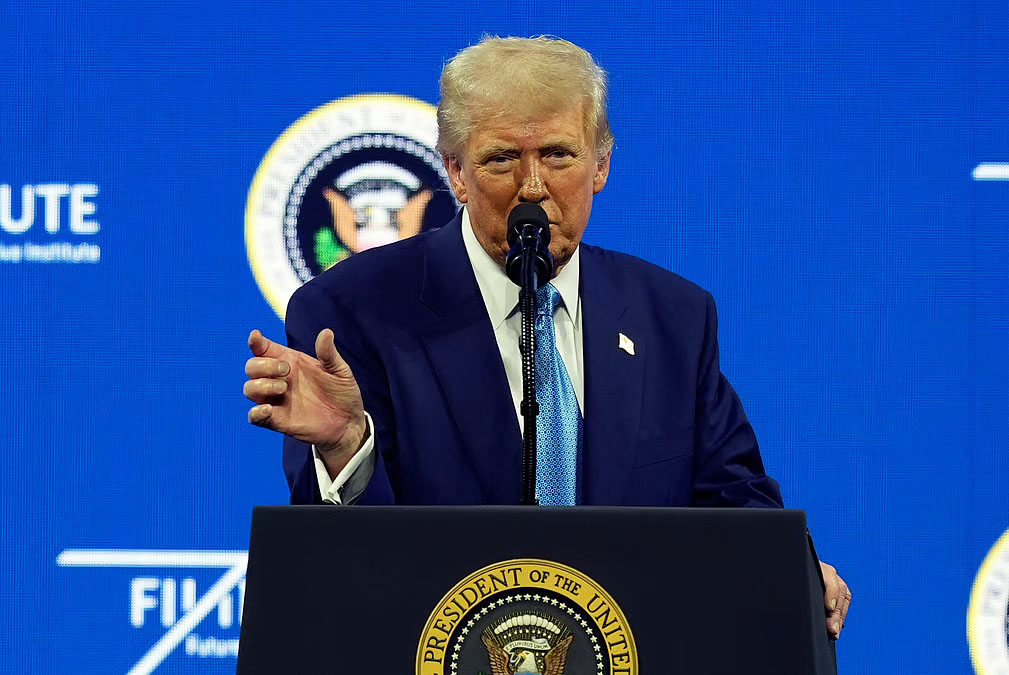
The White House has launched “Trump TV,” a 24/7 digital streaming service carrying presidential remarks, administration announcements and selected archival footage, as a growing confrontation with major US news organisations moves into the courts. The launch follows President Donald Trump’s decision to bar CNN, MS NOW and Politico journalists from the White House, while major television networks temporarily halted shared presidential pool coverage.
From Press Access Dispute to Wider Showdown
The White House press pool has traditionally allowed television networks to share the costs and logistics of covering the president. A designated network provides video and audio feeds that other broadcasters can use, ensuring presidential events receive broad coverage even when every organisation cannot maintain its own camera crew.
The latest dispute escalated on September 19, when the White House barred reporters from CNN, MS NOW and Politico after Trump accused the organisations of publishing what he described as “fake news.” Their credentials were confiscated, prompting the outlets to challenge the decision.
Major Networks Suspend Presidential Pool Coverage
The exclusion of CNN created an immediate problem because the network is one of the broadcasters participating in the rotating television pool. ABC, CBS, NBC and Fox News subsequently suspended their participation in presidential pool coverage, saying the public has an interest in receiving independent information about the government.
The impact became visible during a White House helipad event on September 21, when Trump’s remarks could not be heard through the normal television pool feed. The episode highlighted how dependent presidential coverage is on the shared system.
Trump TV Creates a Direct Government Feed
Against that backdrop, the White House launched “TRUMP TV: The Essentials Station” on September 21 through its YouTube presence and website. The administration describes it as a continuously updated stream featuring major presidential remarks, administration announcements and selected highlights.
The initial programming included archival material from Trump’s 2025 inauguration and his 2020 Mount Rushmore speech, indicating that the platform is not simply a replacement for a conventional live television pool.
Its significance lies in the administration gaining a direct distribution channel that does not depend on editorial decisions by traditional broadcasters.
The Legal Battle Moves to Federal Court
CNN, MS NOW and Politico filed a federal lawsuit on September 21, arguing that their exclusion violates First Amendment protections and due-process rights. They are seeking temporary relief restoring their access while the case proceeds. The administration maintains that White House access is a privilege and has defended its decision.
The dispute therefore raises questions extending beyond three individual outlets: can presidential press access be restricted because of the content of a news organisation’s coverage?
A New Model for Presidential Communication?
Trump TV does not eliminate the need for independent journalism, but it gives the White House an increasingly prominent alternative route to reach audiences directly. Supporters can view that as a way to ensure presidential messages reach the public without what they regard as hostile or selective coverage. Critics argue that government-produced footage cannot substitute for independent reporting and scrutiny.
The Courtroom Will Define the Boundaries
The immediate legal proceedings will determine whether the administration can maintain the restrictions and what standards should govern White House media access. Beyond the lawsuit, the episode illustrates a broader transformation in presidential communication: the White House is increasingly capable of speaking directly to the public while traditional media organisations contest their access to presidential events. The balance between direct government communication and independent journalistic scrutiny is now at the centre of the dispute.
(With agency inputs)