A Sudden Strike in the Persian Gulf
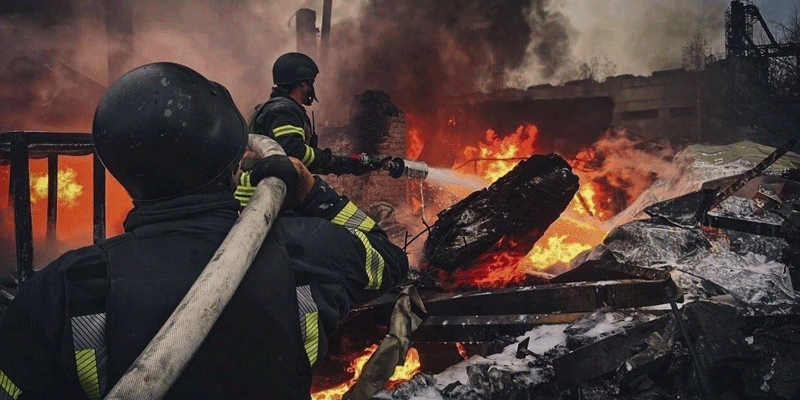
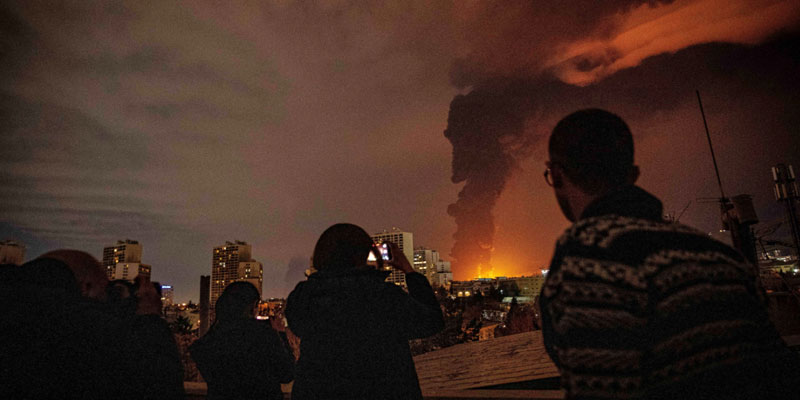
Tensions in the Middle East escalated sharply after the United States launched bombing raids on Kharg Island, Iran’s key oil export hub in the Persian Gulf. The attack, announced on March 13, 2026 by US President Donald Trump, reportedly targeted military facilities on the island while deliberately avoiding its oil export infrastructure.
The strike was framed as a warning to Iran against any attempts to disrupt global energy routes through the nearby Strait of Hormuz—one of the world’s most critical maritime chokepoints for oil shipments. Although the island’s energy facilities were spared, the attack immediately drew global attention to Kharg Island’s strategic and economic importance.
Located roughly 25 kilometers off Iran’s southwestern coast near Bushehr Province, the small island—about six kilometers long—has long served as the backbone of Iran’s oil export system.
Why Kharg Island Matters Strategically
Kharg Island is often described as the “crown jewel” of Iran’s oil infrastructure. Since the oil boom of the 1960s and 1970s, it has functioned as the country’s primary crude oil loading terminal. Massive pipelines connect the island to major oil fields across Iran, allowing crude to be transported, stored in giant tanks, and loaded onto supertankers for export.
Because of this concentration of infrastructure, Kharg Island represents both a strategic asset and a vulnerability. Any serious disruption could sharply limit Iran’s ability to export oil. In geopolitical terms, control or destruction of the island would significantly weaken Iran’s economic and military capacity.
For this reason, analysts often view Kharg as a key leverage point in the broader confrontation involving Iran, the United States, and regional allies.
How Critical Kharg Island Is to Iran’s Economy
Oil exports are the lifeblood of Iran’s economy, and Kharg Island handles nearly all of them. Around 90 percent of the country’s crude exports pass through the terminal, making it the central node of Iran’s energy revenue system.
Despite sanctions, Iran continues to sell significant volumes of oil—primarily to China. Revenues from these shipments fund essential government spending, including subsidies, infrastructure, defense programs, and regional operations.
Energy analysts note that there are few viable alternatives if Kharg Island becomes inoperable. While Iran operates smaller export terminals elsewhere, none match Kharg’s scale or efficiency. Losing it—even temporarily—would severely reduce export capacity, cut off billions in revenue, and place enormous strain on Iran’s economy.
The global energy market would also feel the shock. With tensions already high in the Middle East, any interruption in Iranian exports could push oil prices sharply upward and intensify fears about supply disruptions.
Iran’s Reaction to the US Bombing
Iranian leaders responded with strong condemnation and warnings of retaliation. Officials described the strike as a dangerous escalation and accused Washington of crossing a “red line.”
Iran’s parliament speaker, Mohammad‑Bagher Ghalibaf, had previously warned that any attack on Iranian territory in the Gulf would trigger severe consequences. Following the strike, Iranian military officials threatened to target US-linked assets and energy infrastructure across the region.
Tehran also sought to downplay the immediate damage, claiming that its critical oil facilities remained intact and that operations on Kharg Island were continuing. However, the rhetoric from Iranian leaders suggested that the confrontation could widen if further strikes occur.
A Small Island with Global Consequences
Kharg Island may be geographically small, but its geopolitical and economic significance is immense. It is the gateway through which most of Iran’s oil reaches global markets—and the financial pillar supporting the country’s economy.
The US bombing raid underscores how central this island is to the strategic calculations of both sides. As tensions grow around the Persian Gulf and the Strait of Hormuz, Kharg Island stands as a reminder that in modern geopolitics, a single piece of infrastructure can shape the stability of an entire region—and influence energy markets worldwide.
(With agency inputs)