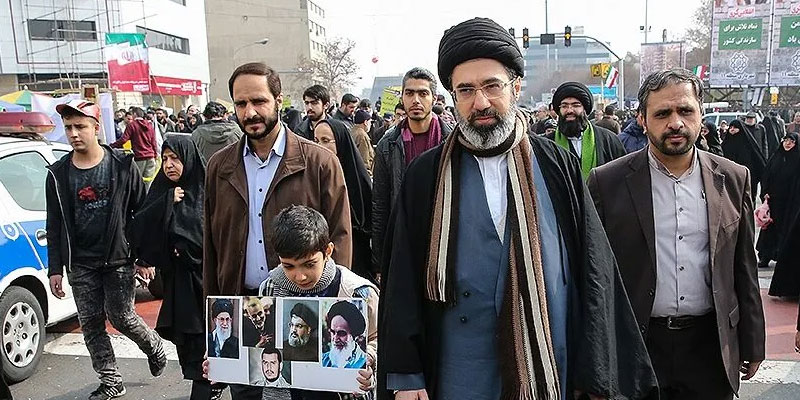
Iran’s newly selected Supreme Leader, Mojtaba Khamenei, delivered his first public message on March 12, 2026, days after assuming the powerful post following the death of his father, Ali Khamenei. The address came amid an intensifying regional war triggered by joint U.S.–Israeli strikes that killed the elder Khamenei and targeted Iran’s strategic infrastructure.
The statement, broadcast through Iranian state television but delivered only as an audio recording without the leader appearing on screen, immediately fueled speculation about Mojtaba Khamenei’s health and security situation. Yet despite the unusual format, the tone of the message was unmistakably firm. In what analysts have begun calling a new “Mojtaba Doctrine,” the leader laid out a vision centered on resistance, retaliation, and strategic pressure against Iran’s adversaries.
A Defiant Vow of Revenge
The most striking element of the speech was Khamenei’s vow to avenge those he described as “martyrs” of the recent conflict. He specifically referenced his father’s death and civilian casualties, including dozens of schoolgirls killed in a strike in Minab.
The message framed retaliation as both a moral obligation and a strategic imperative. According to Khamenei, Iran would either extract “compensation” from its enemies or destroy equivalent strategic assets. The language signaled that Tehran intends to continue asymmetric retaliation through missiles, drones, and allied militias rather than seeking rapid de-escalation.
The Strait of Hormuz as Strategic Leverage
Another key message centered on the Strait of Hormuz, one of the world’s most critical energy chokepoints. Khamenei reaffirmed that Iran could keep the passage closed as a “pressure tool” against adversaries.
Such a stance carries enormous economic implications. Nearly one-fifth of global crude oil shipments pass through the strait, and prolonged disruption could push energy prices sharply higher. By invoking Hormuz as leverage, Iran appears willing to wage economic warfare against the global system to counter military pressure.
Direct Challenge to U.S. Military Presence
Khamenei’s address also included an ultimatum to the United States, demanding the closure of American military bases across the Gulf region. He dismissed Washington’s security commitments to regional allies as “false promises” and warned that installations hosting U.S. forces could become targets if they remain operational.
This threat raises the stakes for Gulf states hosting American troops and increases the risk of broader confrontation involving countries such as Saudi Arabia and the United Arab Emirates.
Calls for Unity and Regional Alignment
Domestically, Khamenei appealed for national solidarity and resilience. He urged citizens to support war-affected communities and called on Iran’s armed forces to strengthen “effective defense” across multiple fronts.
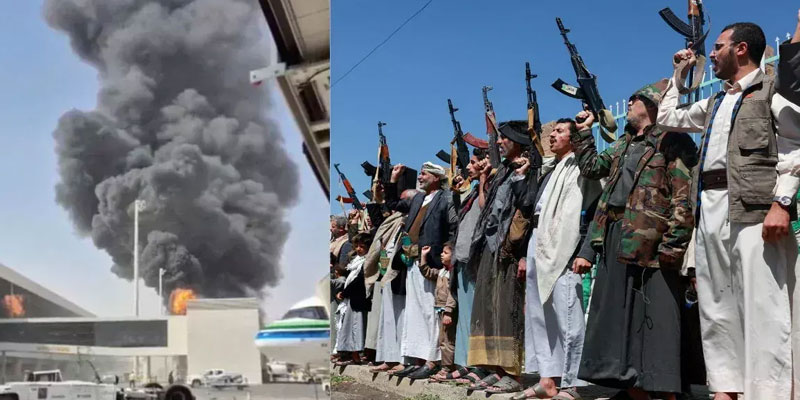
At the regional level, he extended conditional friendship to neighboring countries while urging them to distance themselves from what he called “aggressors.” He also praised the so-called “Resistance Front,” referring to Iran-aligned groups such as Hezbollah and Yemen’s Houthi movement, indicating Tehran’s continued reliance on proxy networks.
Major Strategic Takeaways
Taken together, the speech suggests strong continuity with the confrontational policies of Ali Khamenei. Rather than signaling a shift toward diplomacy, Mojtaba Khamenei emphasized endurance, retaliation, and regional power projection.
Economically, his insistence on leveraging the Strait of Hormuz risks deepening the global energy shock already pushing oil prices higher. Militarily, threats against U.S. bases raise the possibility of direct clashes that could draw more regional actors into the conflict.
Politically, the speech attempts to consolidate domestic unity while reinforcing Iran’s leadership within the network of resistance groups across the Middle East.
A Hardline Beginning
Mojtaba Khamenei’s first address as Supreme Leader offers an early glimpse into Iran’s strategic direction. The message combined defiance, ideological resolve, and calculated geopolitical signaling. While the absence of a visual appearance has fueled speculation about his condition, the substance of the speech leaves little ambiguity: Tehran intends to maintain a posture of resistance rather than compromise.
As the Middle East war unfolds, Khamenei’s doctrine suggests a prolonged confrontation shaped by economic pressure, proxy conflicts, and strategic brinkmanship—an outlook that could define regional geopolitics for years to come.
(With agency inputs)