Government Unveils Ambitious Electric Mobility Roadmap
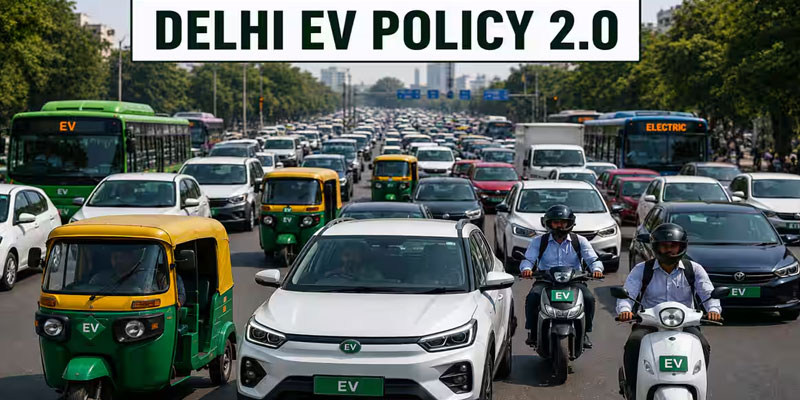
The Delhi government has finalised an ambitious Electric Vehicle (EV) Policy aimed at accelerating clean mobility while tackling the Capital's persistent air pollution. Effective from July 1, 2026, the policy offers incentives of up to Rs 1 lakh for eligible electric four-wheelers through scrappage-linked benefits, direct subsidies for electric two-wheelers, auto-rickshaws and goods carriers, besides waiving road tax and registration fees for EVs priced up to Rs 30 lakh. More significantly, it lays down a phased plan to restrict registrations of polluting internal-combustion vehicles, with new petrol two-wheelers set to be barred from April 1, 2028, marking one of the country's most aggressive transitions towards electric mobility.
Tackling Pollution Through Cleaner Transport
Delhi's EV policy is rooted in the city's long-standing struggle with hazardous air pollution, where vehicular emissions remain among the leading contributors to deteriorating air quality. Building upon the earlier EV framework introduced to encourage electric mobility, the new policy goes a step further by combining financial incentives with regulatory restrictions. Instead of merely promoting EV adoption, it seeks to gradually reduce dependence on petrol, diesel and CNG-powered vehicles while simultaneously expanding charging infrastructure and strengthening the broader electric mobility ecosystem.
Key Features of the New Policy
· Scrappage incentive: Up to Rs 1 lakh for eligible buyers replacing BS-IV or older petrol and diesel cars with qualifying electric four-wheelers.
· Electric two-wheelers: Direct subsidy of up to Rs 30,000 to make EVs more affordable for individual buyers.
· Electric auto-rickshaws: Financial assistance of up to Rs 50,000 to encourage cleaner public transport.
· Electric goods carriers: Incentives of up to Rs 1 lakh for small commercial electric cargo vehicles.
· Tax benefits: Zero road tax and registration-fee waiver for electric vehicles priced up to Rs 30 lakh.
· Phased restrictions: New registrations of petrol, diesel and CNG vehicles will be progressively curtailed, with new petrol two-wheelers set to be effectively barred from April 1, 2028.
· Charging ecosystem: The government plans substantial investment in expanding charging infrastructure and strengthening the overall EV ecosystem to support large-scale adoption.
Advantages and Challenges
The policy promises several long-term benefits. Greater EV adoption could substantially reduce vehicular emissions, helping improve Delhi's air quality while lowering fuel expenses and maintenance costs for vehicle owners. It is also expected to boost investment in charging infrastructure, battery services, domestic EV manufacturing and related employment opportunities.
However, the transition also presents challenges. Despite financial incentives, electric vehicles remain costlier than conventional alternatives for many households. Delivery workers, small business owners and low-income commuters who depend heavily on affordable petrol two-wheelers may face financial pressure during the transition. The policy's success will also depend on whether charging infrastructure expands quickly enough to support growing demand. Without adequate charging facilities and reliable electricity supply, mandatory restrictions on conventional vehicles could prove inconvenient for users.
Impact on the Public
For consumers, the policy creates stronger financial incentives to switch to electric vehicles while signalling that conventional vehicles will gradually become less viable in Delhi. Fleet operators and commercial transport providers are likely to accelerate EV adoption to benefit from lower operating costs and regulatory certainty. At the same time, households planning future vehicle purchases will increasingly factor in charging availability, resale value and long-term policy direction before making investment decisions.
Balancing Ambition with Execution
Delhi's latest EV policy represents a decisive shift from encouraging electric mobility to actively restructuring the city's vehicle fleet. While its environmental objectives are clear, its ultimate success will depend on effective implementation, timely expansion of charging infrastructure, efficient delivery of incentives and ensuring that the transition remains affordable and accessible for ordinary commuters. If these elements progress together, the policy could become a model for sustainable urban transport across India.
(With agency inputs)