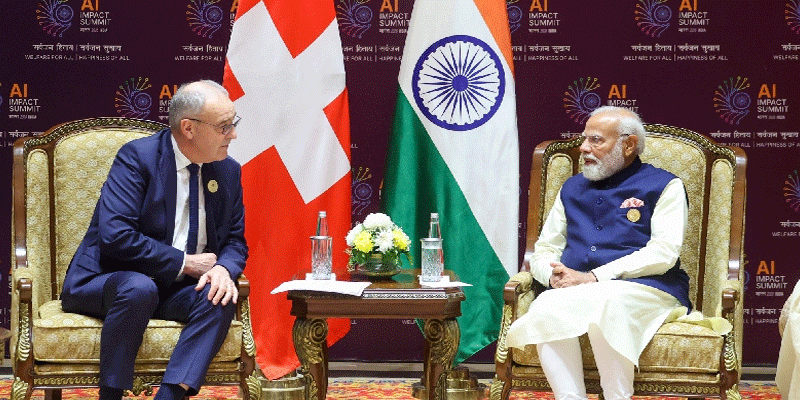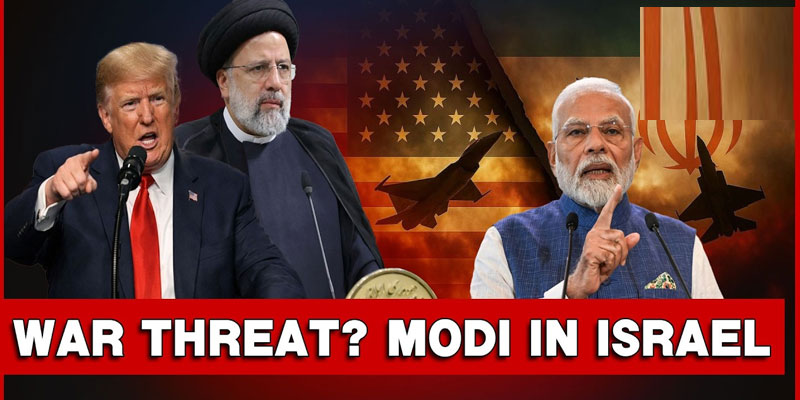
While New Delhi issued no formal statement following the Cabinet Committee on Security (CCS) meeting or the killing of Iran’s Supreme Leader Ayatollah Ali Khamenei, Prime Minister Narendra Modi moved swiftly on the diplomatic front. In a call with UAE President Sheikh Mohamed bin Zayed Al Nahyan, Modi condoled the loss of lives in the Emirates and strongly condemned attacks on the UAE. The carefully calibrated outreach, followed by a conversation with Israeli Prime Minister Benjamin Netanyahu, signaled India’s attempt to balance principle with pragmatism as the US–Israel–Iran war reshapes West Asia.
Modi–UAE Call: Solidarity and Strategic Reassurance
On March 1, 2026, Modi spoke with MBZ amid heightened tensions after Iranian retaliatory strikes targeted Gulf territories. He “strongly condemned the recent attacks on the UAE” and expressed condolences for lives lost. Importantly, he thanked the UAE leadership for safeguarding the 3.5 million-strong Indian community residing there.
The conversation underscored India’s solidarity with the UAE while emphasizing “de-escalation, regional peace, security and stability.” With bilateral trade exceeding $100 billion annually and deep cooperation spanning energy, infrastructure, and fintech, the UAE is one of India’s most critical West Asian partners. By condemning aggression against Emirati sovereignty, Modi reassured both Abu Dhabi and the vast Indian diaspora.
Modi–Netanyahu Conversation: Civilian Safety First
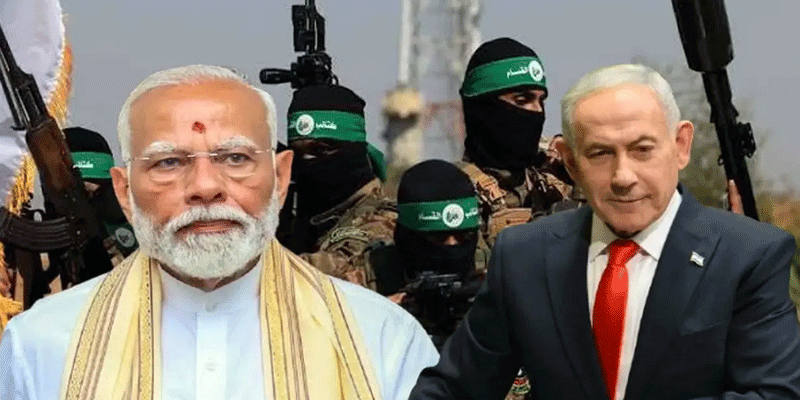
Modi’s subsequent call to Netanyahu conveyed “India’s concerns over recent developments” and stressed the “safety of civilians.” Posting on X, Modi reiterated the need for an early cessation of hostilities.
This outreach was significant. India has strengthened defense and technology ties with Israel in recent years, particularly after the October 7 crisis. Yet Modi avoided endorsing the targeted killing of Khamenei or escalating rhetoric. Instead, he framed India’s position around humanitarian priorities and restraint—aligning with New Delhi’s longstanding doctrine that regional disputes require political, not purely military, solutions.
World Leaders React: A Fractured Global Order
The global response to Khamenei’s killing and the ensuing war highlights sharp geopolitical divides.
US President Donald Trump warned that “Iran will be hit very hard… like never before,” hailing the assassination as an opportunity for regime change. Netanyahu declared that “he who aimed to eliminate Israel has been eliminated,” calling it a decisive blow to the so-called axis of evil.
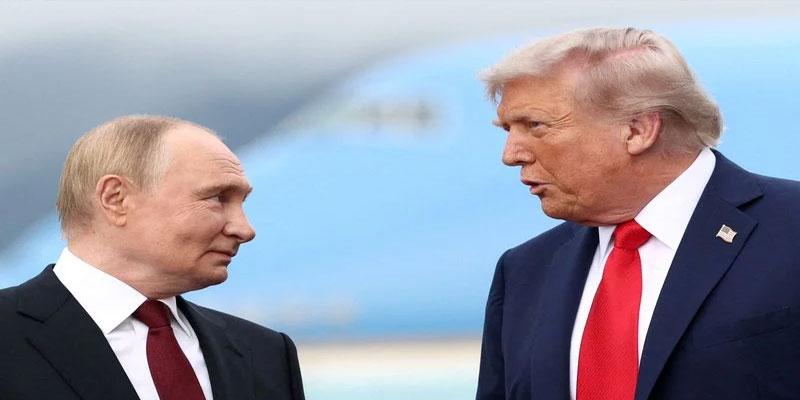
In contrast, Chinese President Xi Jinping, through Foreign Minister Wang Yi, termed the strikes “unacceptable” and demanded a ceasefire while upholding Iran’s territorial integrity. Russian President Vladimir Putin described the killing as a “murder in cynical violation of law,” pressing for diplomacy. French President Emmanuel Macron stressed that there is “no military solution” to nuclear disputes.
Turkey’s Recep Tayyip Erdogan expressed sorrow and urged restraint, while Canadian Prime Minister Mark Carney backed the strikes, blaming Iran for regional instability.
The reactions underscore a multipolar moment: Western powers largely back US–Israeli action, while Russia and China defend Iran’s sovereignty.
India’s Balancing Act: Strategic Autonomy in Action
Modi’s outreach reflects India’s nuanced West Asia calculus. By condemning Iranian strikes on the UAE yet urging Israel to halt hostilities, India preserves ties with both sides. Before the war, Iran accounted for roughly 5% of India’s oil imports; Israel remains a vital defense and innovation partner. Meanwhile, 9.6 million Indians across the Gulf send home over $100 billion in remittances annually.
India’s approach aligns with its G20 ethos—dialogue over escalation—and reinforces its identity as a potential peacemaker. The restraint also protects India’s broader alignments, from the Quad partnership with the US to its BRICS engagement alongside China and Russia.
Calibrated Leadership in a Volatile Region
In a deeply polarized global environment, Modi’s diplomacy demonstrates calculated equilibrium. By expressing solidarity with partners, condemning attacks on civilians, and advocating de-escalation without rhetorical excess, India safeguards its diaspora, economic interests, and strategic autonomy. As the US–Israel–Iran war threatens to redraw West Asia’s power map, New Delhi’s measured voice may prove essential—not just for protecting national interests, but for sustaining the fragile possibility of dialogue in a region at war.
(With agency inputs)