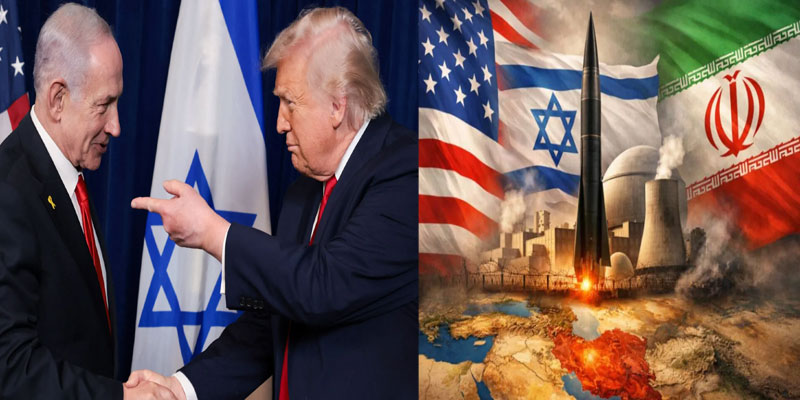
The US–Israel–Iran war, which erupted on February 28, 2026, has hurled West Asia into its gravest crisis in decades. What began as a coordinated strike has spiraled into a regional confrontation marked by assassinations, missile barrages, diplomatic ruptures, and market panic. At the epicenter lies the killing of Iran’s Supreme Leader, a move that has shattered long-standing power structures and set off a volatile chain reaction across the Middle East.
Decapitation Strike and a Leadership Vacuum in Tehran
In a sweeping joint operation—codenamed Operation Roaring Lion and Epic Fury—US and Israeli forces targeted senior Iranian leadership in Tehran. The strikes killed Supreme Leader Ayatollah Ali Khamenei (86), alongside IRGC chief Hossein Salami, Defense Minister Mohammad Bagheri, and several nuclear scientists. The IDF confirmed that Khamenei’s compound was struck using CIA intelligence. President Donald Trump hailed the action on Truth Social as a “regime decapitation” intended to secure peace.
The sudden removal of Iran’s apex authority has triggered a fragile transition. Hardline judiciary head Ayatollah Alireza Arafi was appointed interim Supreme Leader during a mandated 40-day mourning period. Yet beneath the surface, power struggles are intensifying. Reformists and pragmatic factions have been side-lined, while conservative elements maneuver for dominance. The risk of factional infighting—or even internal revolt—looms large.
Escalating Military Exchanges Across the Region
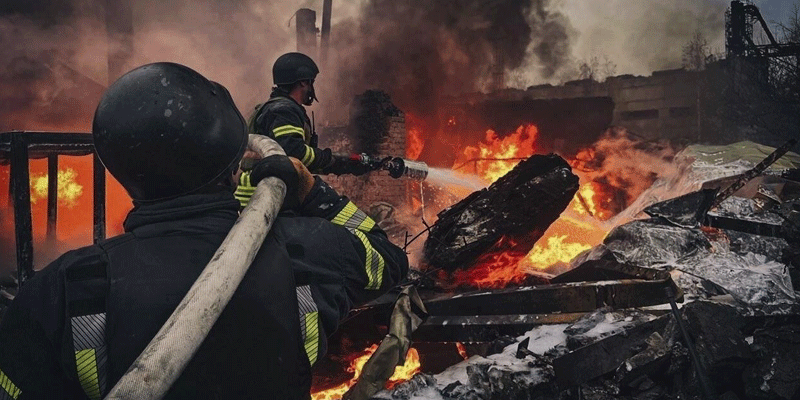
Military operations have escalated rapidly. Israel and the US continue coordinated airstrikes on nuclear facilities at Natanz Nuclear Facility and Fordow Fuel Enrichment Plant, as well as missile factories and command centers, with reported fatalities exceeding 201.
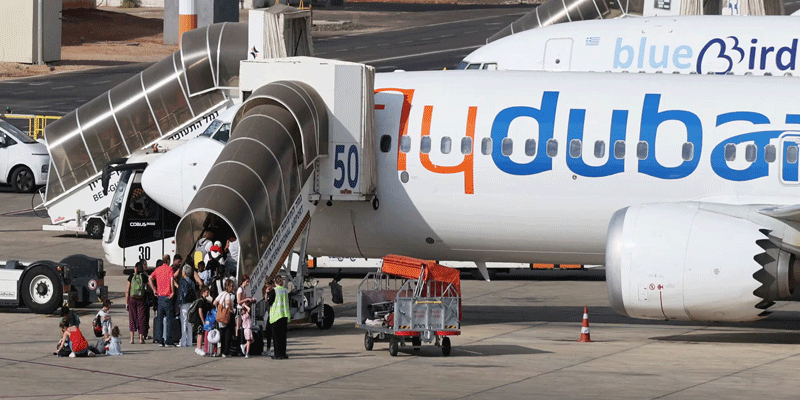
Iran responded with over 300 missiles and drones targeting Israel and Gulf states including Dubai and Abu Dhabi, forcing market closures for two days. Attacks extended toward Qatar, Bahrain, and Kuwait, though most projectiles were intercepted.
In Lebanon, Israeli forces killed senior Hezbollah commander Mohammad Raad in Beirut’s southern suburbs, collapsing cease-fires and dragging Lebanon into open confrontation. Air raid sirens echoed in Kuwait and Bahrain as regional defense systems scrambled. The IDF confirmed fresh missile launches from Iran toward Israeli territory, urging civilians into protected shelters under Home Front Command directives.
Tehran has declared “no negotiations” with Washington, vowing a “crushing response.”
Diplomatic Shockwaves and Economic Fallout
The conflict’s reverberations extend far beyond the battlefield. The US Embassy in Pakistan suspended visa services amid Iran-linked protests, while three US troops were killed in retaliatory strikes. India activated emergency helplines and a war room through its Ministry of External Affairs to assist over 10 million nationals in West Asia, with evacuations underway.
Oil markets reacted sharply, with prices surging 10 percent to $85 per barrel. The UAE faces additional strain from Houthi and Hezbollah-linked disruptions. The threat to the Strait of Hormuz has intensified concerns of supply shocks, particularly for import-dependent nations such as India, which faces an estimated $10 billion exposure in energy imports.
Strategic Calculus and the Road Ahead
Strategically, Trump’s revived “maximum pressure” doctrine appears aimed at exploiting Iran’s vulnerability following stalled diplomatic talks, potentially pushing toward regime change. For Israeli Prime Minister Benjamin Netanyahu, decisive action may consolidate domestic political support amid Gaza fatigue.
Yet risks abound. Iran’s proxy network shows strain—Hezbollah weakened; Houthis active—but an IRGC rally could transform swift tactical gains into a prolonged quagmire. Diplomatic mediation efforts led by China and Qatar have faltered, and the region braces for a weeks-long campaign.
A Region at the Edge
The assassination of Iran’s Supreme Leader has fundamentally altered the strategic landscape of West Asia. While US–Israeli air superiority offers short-term military advantage, the longer arc of this conflict remains uncertain. Leadership turmoil in Tehran, regional proxy entanglements, economic volatility, and the collapse of diplomatic channels point toward protracted instability rather than swift resolution. The war may have begun as a decapitation strike—but its consequences threaten to redraw the geopolitical map of the Middle East for years to come.
(With agency inputs)